


The Japandi style is one of the most-loved trends in the world of interior design: it springs from the encounter between Japanese aesthetics and Scandinavian comfort. The result? Essential yet welcoming rooms, tidy but never “cold”.
What is the Japandi style
The term Japandi combines “Japan” and “Scandi” and describes an approach to furnishing that merges Japanese essentiality with the warm, functional side of the Scandinavian style. It’s perfect for anyone seeking an atmosphere of order, serenity and harmony without sacrificing personality.
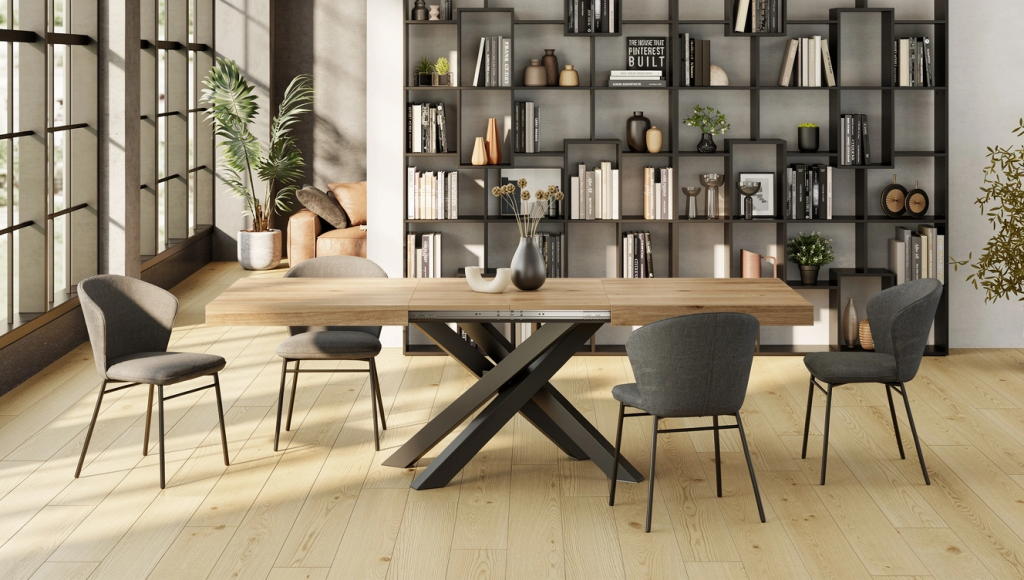
The basic rules of Japandi (without rigidity)
In Japandi design every element has its role: no fillers, no overload. You choose quality, reduce visual noise and make room for light.
Japandi style and Nordic style: differences and similarities
Many people search for “Nordic-style furniture” and end up on Japandi because the two worlds are similar. They share a love of simplicity, functionality and natural palettes. But Japandi introduces contrasts and deep tones more clearly, making the whole more “zen” and sophisticated.
If you’re interested in a broader overview of interior styles, Japandi is often the ideal bridge between minimalism and cosiness: a natural evolution of Scandinavian style in a more contemplative key.
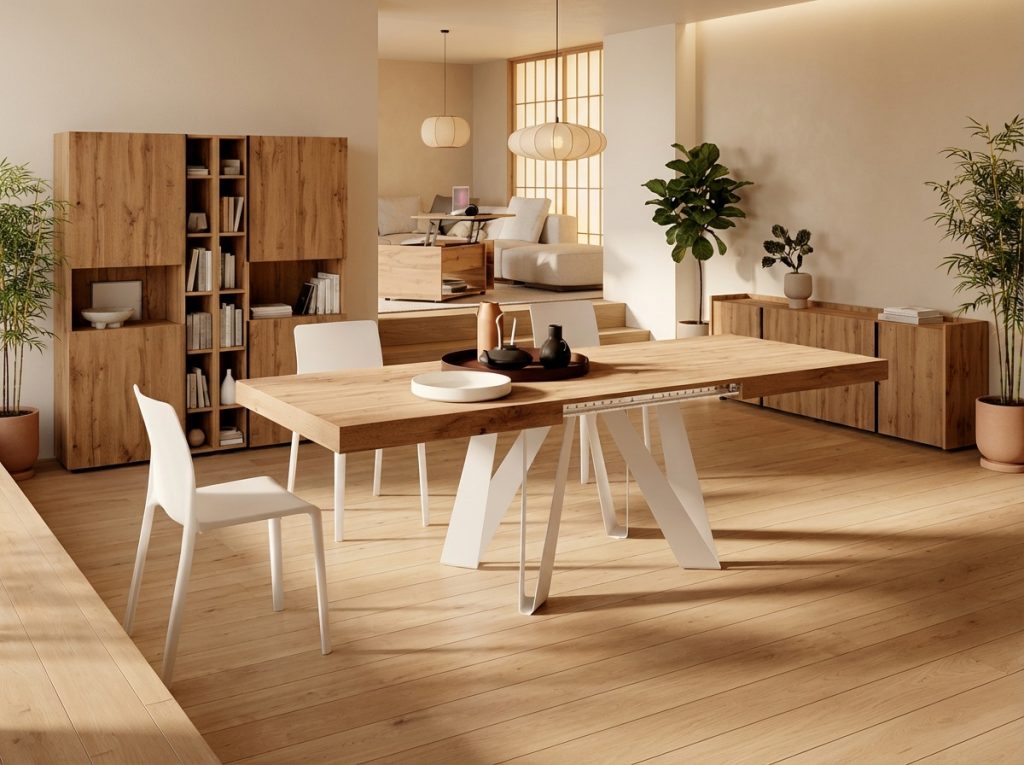
Japandi colours
The Japandi style palette starts from neutral, natural shades: warm whites, beige, ivory, soft greys. It then adds depth with dark details and graphic touches. The result is a balance that lets rooms “breathe”.
Black in the Japandi style
Black is a signature: thin profiles, details, light structures. Used in moderation, it brings order and creates rhythm without weighing down.
Japandi materials
Japandi materials focus on tactile textures and matt finishes. The aim isn’t to “shine”, but to convey calm, solidity and naturalness.
Which materials to really use at home
Surfaces with a wood effect (light or dark), ceramics, glass, black metal, rattan and natural fibres work very well. Yes also to fabrics like cotton and linen, especially in neutral tones.
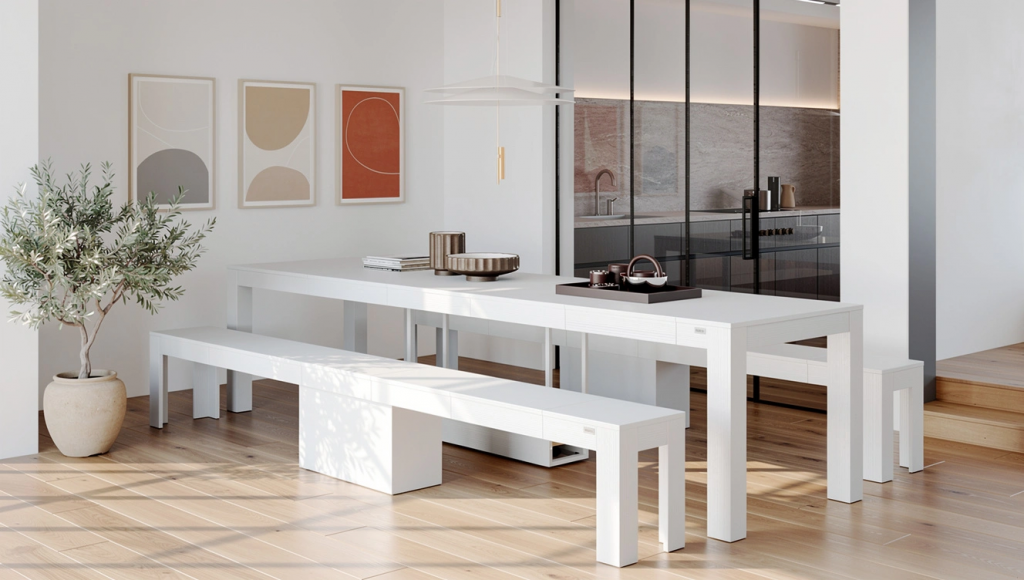
Japandi furniture: how to choose it
Japanese and Scandinavian furniture have one thing in common: they don’t like excess. In Japandi you choose essential, proportioned pieces with clean lines and light volumes.
Characteristics of Japandi-style furniture
Look for simple shapes, clean edges, furnishings that don’t “shout”. Better a few pieces, but consistent with each other. The secret is continuity: materials, colours and proportions must communicate with one another.
Japandi living room
A Japandi living room is a place designed for relaxation: free space, light, a few well‑chosen elements. The sofa may be neutral and soft, while dark details (like a metal frame) add character.
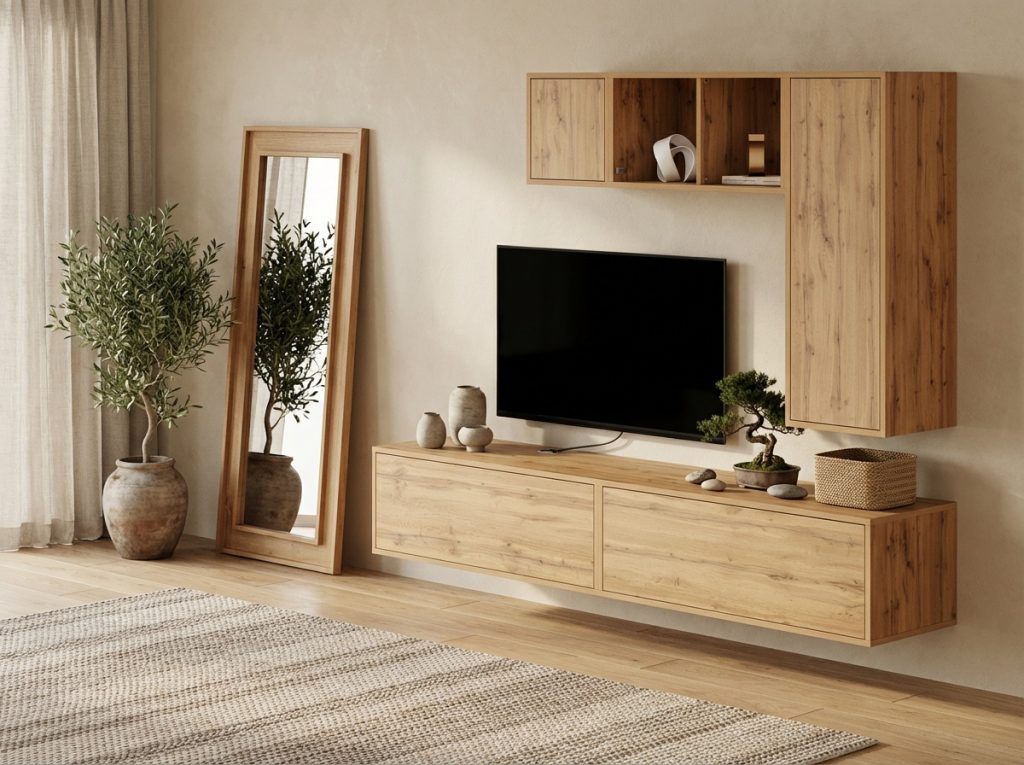
How to achieve the Japandi effect without turning everything upside down
Start by eliminating the superfluous and choose a focal point: a low piece of furniture, an ordered composition, a “clean” wall. Then work on palette and texture: neutrals, matt finishes, tactile materials.
Japandi dining room
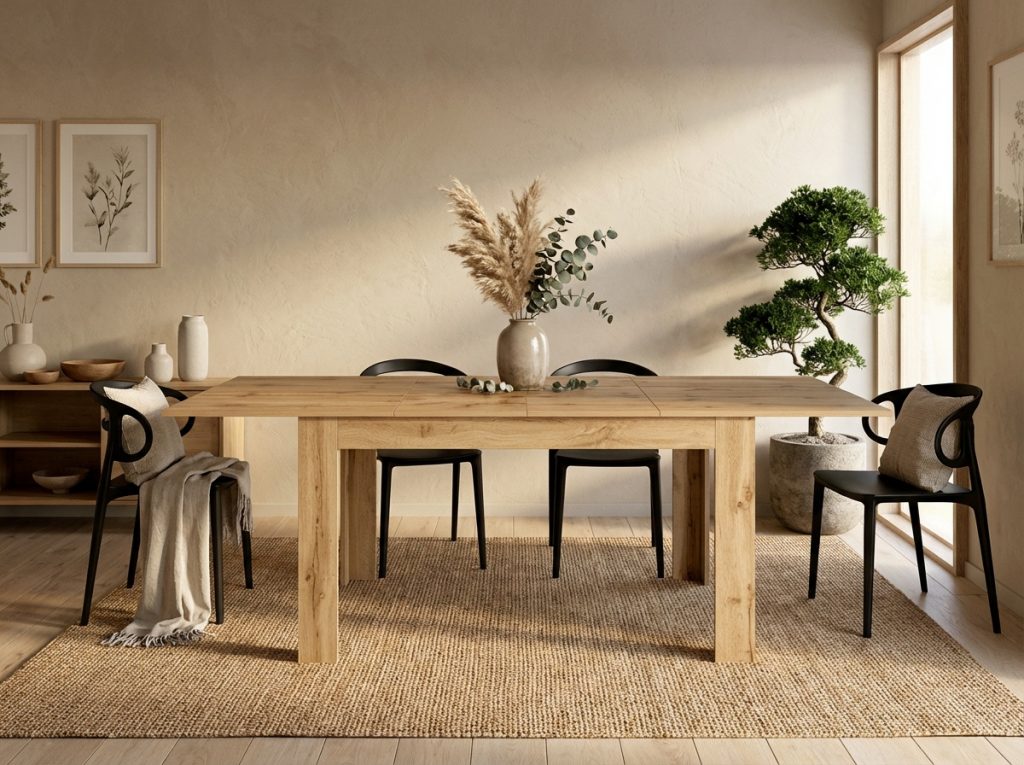
The Japandi dining room focuses on discreet conviviality: the table takes centre stage, the chairs are light, the colours balanced. The overall effect should feel calm but not anonymous.
Details that always work
A minimalist centrepiece, a handcrafted ceramic piece, a lamp with a simple shape: a little goes a long way when it’s chosen well.
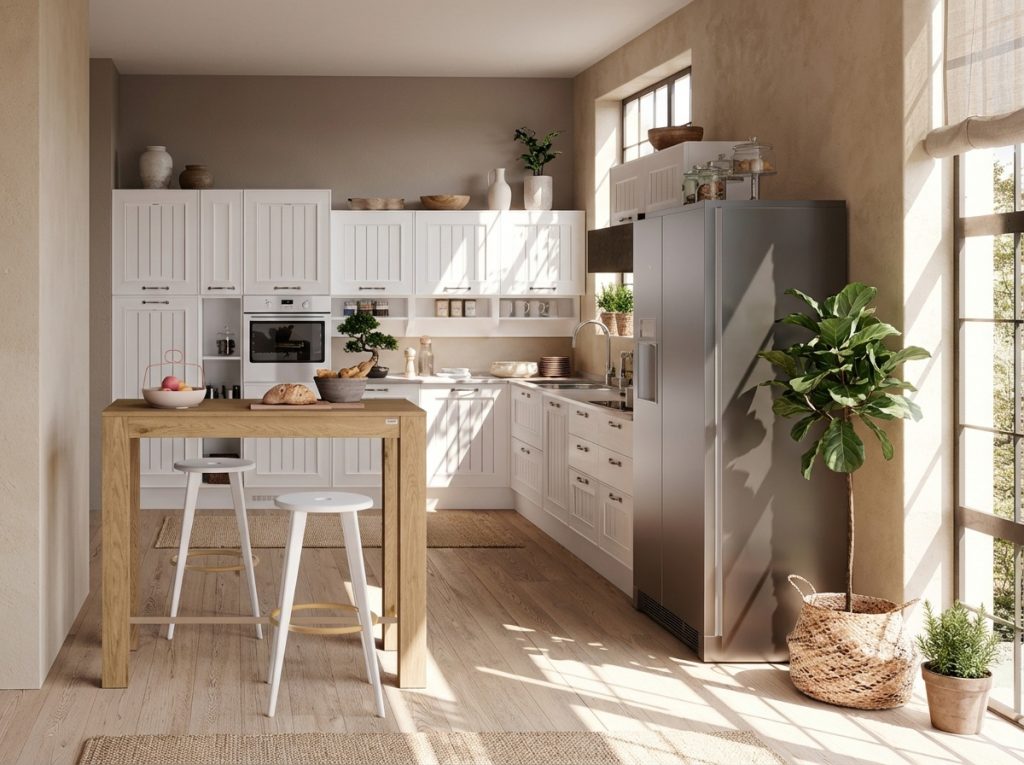
Japandi kitchen
The Japandi kitchen is practical and tidy: clean surfaces, few objects on display, a coherent palette. Perfect if you love the idea of a “light space” even in everyday activities.
A simple (and very Japandi) tip
Keep the worktop as free as possible. This isn’t minimalism “for show”: it’s a choice that really makes the kitchen more liveable.
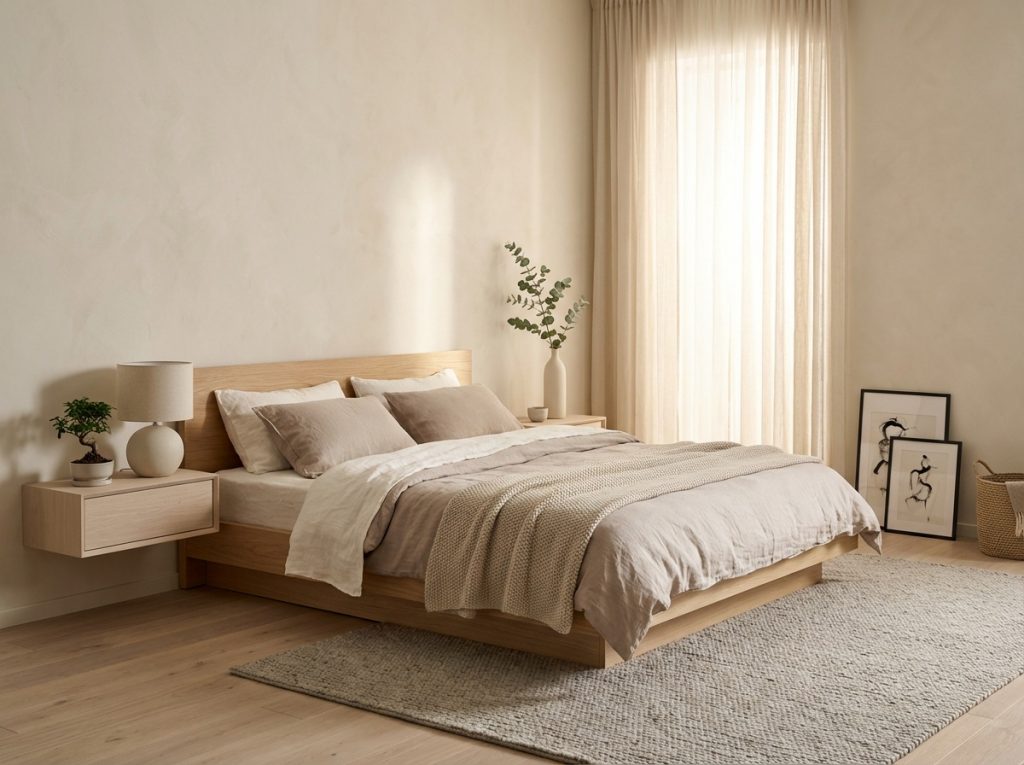
Japandi bedroom
The Japandi bedroom invites rest: few elements, natural textiles, soft lights. The bed is simple, the bedside tables essential, and a bench at the foot of the bed is the classic detail that completes the atmosphere.
Recommended palette
Warm, neutral tones with a dark accent (even a small one) add depth without breaking the harmony.
Japandi decorations
There’s one rule here: few, but with presence. Japandi decorations don’t “fill up”: they complete. The idea is to choose objects that make sense, not just take up space.

What looks good (without weighing down)
Handmade ceramics, minimal vases, abstract prints, monochrome candles and natural textiles. If it seems “too much”, it probably is: in Japandi you’re very happy with less.
Plants and Japandi style
Plants are fundamental: they bring rhythm, life and a sense of natural calm. In Japandi they’re often few but important, with large leaves and elegant shapes.
Why choose the Japandi style
Choosing the Japandi style means creating a more orderly, breathable and easy‑to‑live‑in home. It combines the essential and the welcoming, minimalism and care. And above all: it’s a style that doesn’t tire.
If you’d like to continue exploring different ways of “bringing harmony” to spaces, I recommend reading
Feng Shui Home Décor
and, for a more decisive and contemporary mood,
Industrial‑style furnishings: the complete guide to industrial chic décor.


