


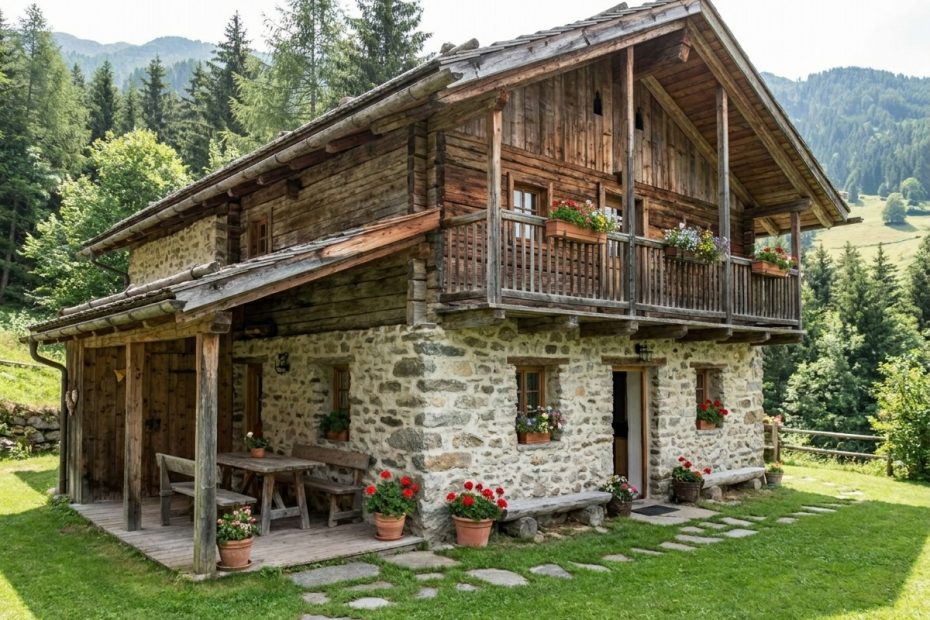
Furnishing a mountain house means finding the right balance between atmosphere, functionality, and comfort. It’s not just about adding a few wooden elements and calling it done: the choices you make — materials, palette, furniture proportions — need to work together cohesively. Whether it’s a chalet, a renovated farmhouse, or a modern apartment in the mountains, the same principles apply.
What really makes mountain house décor work
A well-furnished mountain home has one key quality: it looks like it belongs there. Not a forced “rustic” feel, not a generic vacation rental, but a space that feels warm, considered, and lived-in. To get there, you need to work with natural materials, carefully chosen colors, and furniture that’s built to last — both aesthetically and practically.
The mountain environment naturally calls for certain elements: solid wood, natural stone, soft textiles. But the real skill lies in combining them without tipping into folksy excess. The goal is warmth, not kitsch.
Materials and palette for a warm, natural look
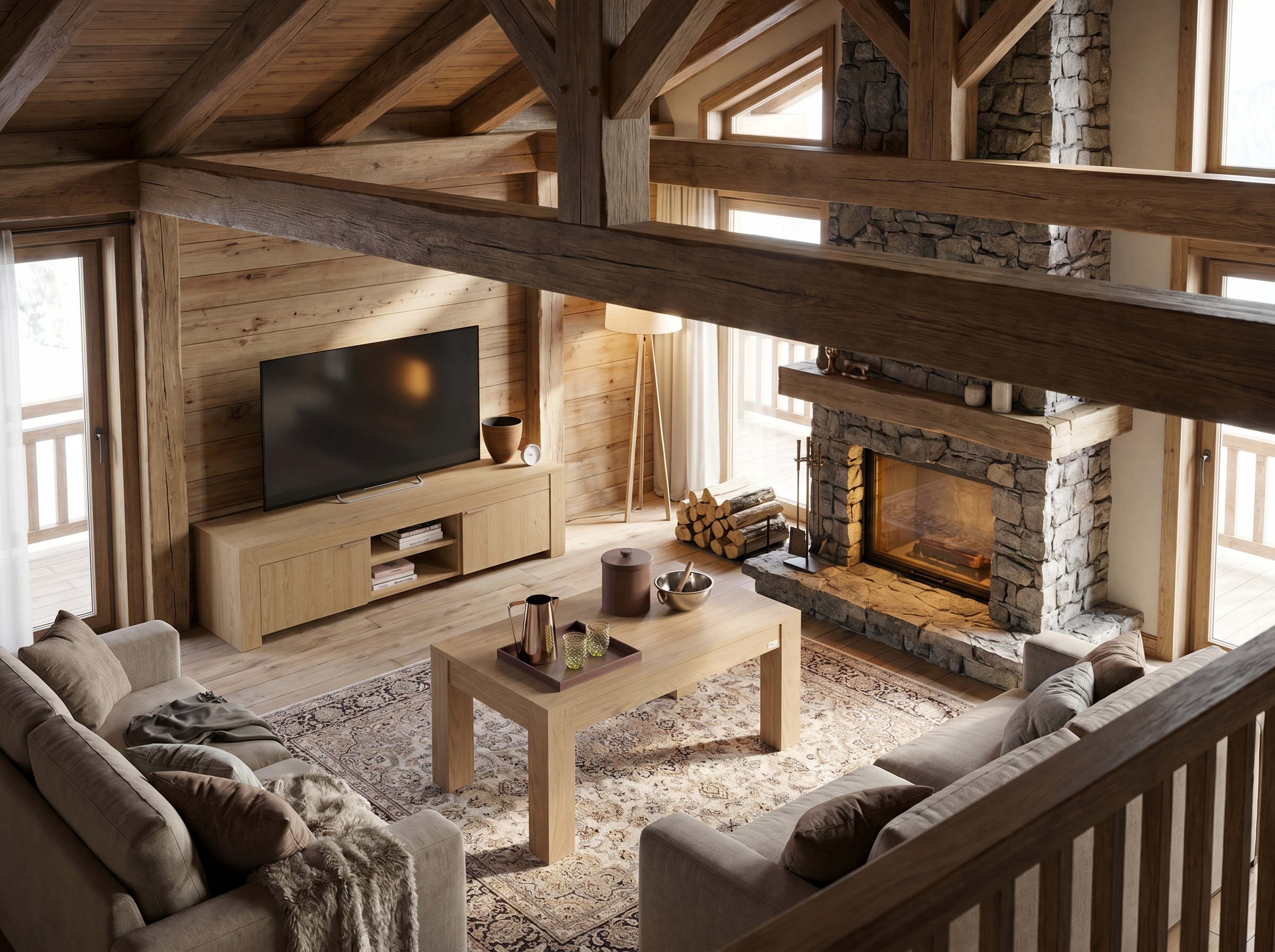
Wood is the undisputed protagonist. The right choice depends on the mood you want to create: a rustic oak effect brings a rugged, aged character, while canaletto walnut and oak offer a cleaner, more contemporary finish that still feels grounded in nature.
For the color palette, keep it close to what you’d find outside: warm beiges, earthy browns, deep greens, slate grays, and off-whites. These tones work together naturally and never feel dated. Avoid anything too bright or synthetic — bold colors are best saved for small accents like throw pillows or lampshades.
Stone, iron, and linen are the ideal companions to wood. Used sparingly, they add texture and depth without overwhelming the space.
The décor styles that suit the mountains best
Not all styles translate well to a mountain setting, but a few do exceptionally. Scandinavian style at altitude is a natural fit: clean lines, functional furniture, neutral tones, and quality materials align perfectly with mountain living. Nothing superfluous, nothing forced.
Alternatively, mountain Japandi — the blend of Japanese minimalism and Scandinavian simplicity — works beautifully in spaces where you want calm and intentionality. Fewer pieces, better chosen. A style that breathes.
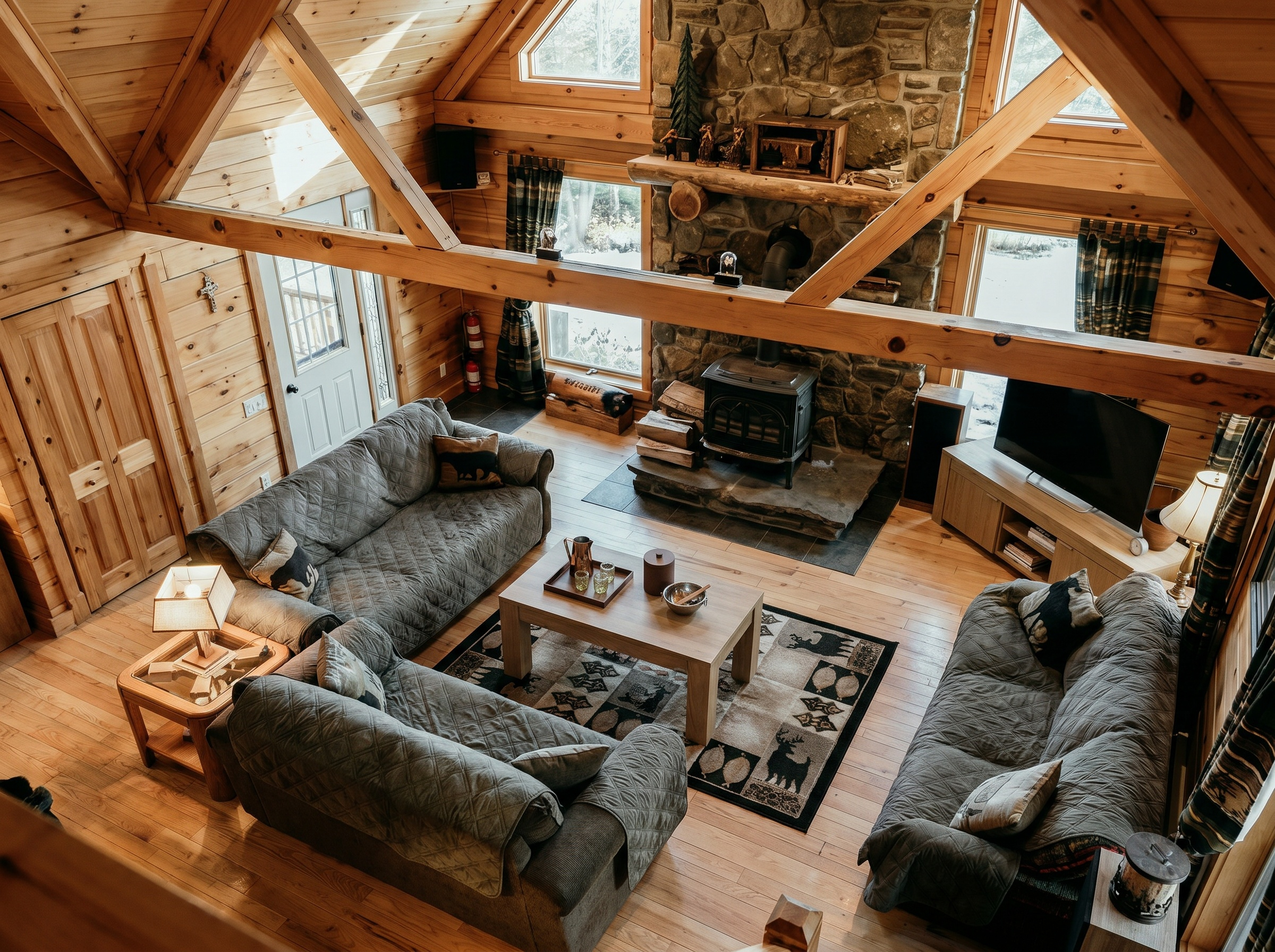
Traditional alpine style still has its place, but works best when modernized: exposed wooden beams yes, but paired with clean-lined furniture. Plaid blankets yes, but used as accents rather than the entire decorative concept.
How to furnish the living room: the heart of the home
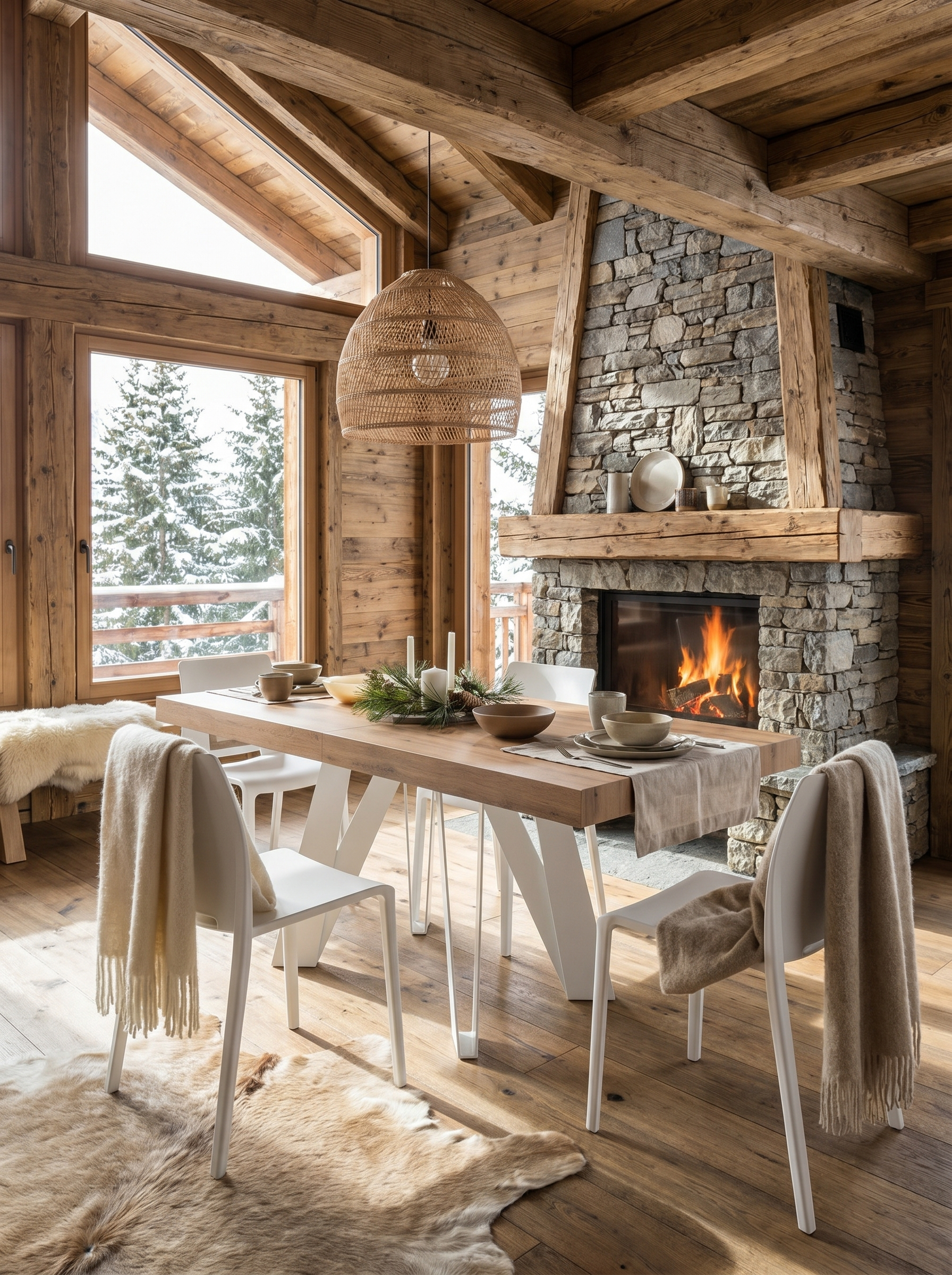
In a mountain house, the living room is where everyone gathers — after a day on the slopes, after a hike, in the evening by the fire. It needs to be welcoming and practical in equal measure.
If space is limited, an extendable console table is a smart solution: it serves as a sideboard when folded and expands into a dining table when needed. A cupboard and a living room TV unit in solid wood complete the room with both storage and character.
A large sofa with washable covers is a must. A statement rug anchors the seating area, and good lighting — warm, layered — does the rest. Explore the full Mobili Fiver living room furniture collection for coordinated options in natural wood finishes.
Kitchen and dining area: small, welcoming, and clever
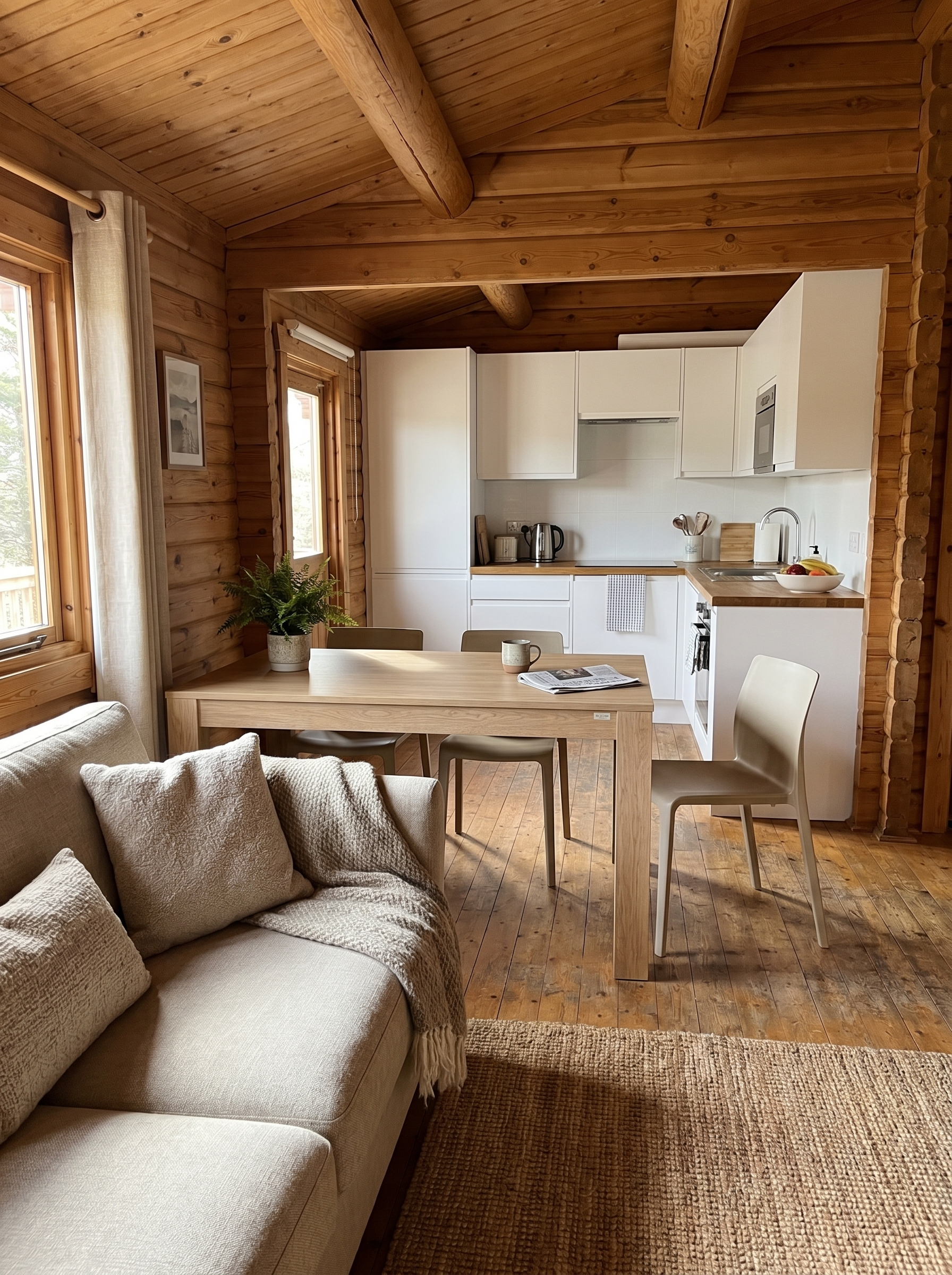
Mountain kitchens are often compact, but they need to work hard. The key is smart, space-saving furniture. An extendable table is the ideal centerpiece of the dining area: minimal when you’re just two people, generous when friends come to stay. Pair it with extendable benches that tuck neatly underneath.
For the kitchen itself, keep surfaces clear and storage well organized. Open shelves in wood, a few plants, and practical but attractive accessories are all you need to make the space feel lived-in without being cluttered.
Bedroom: quiet, wood, and a few well-chosen pieces
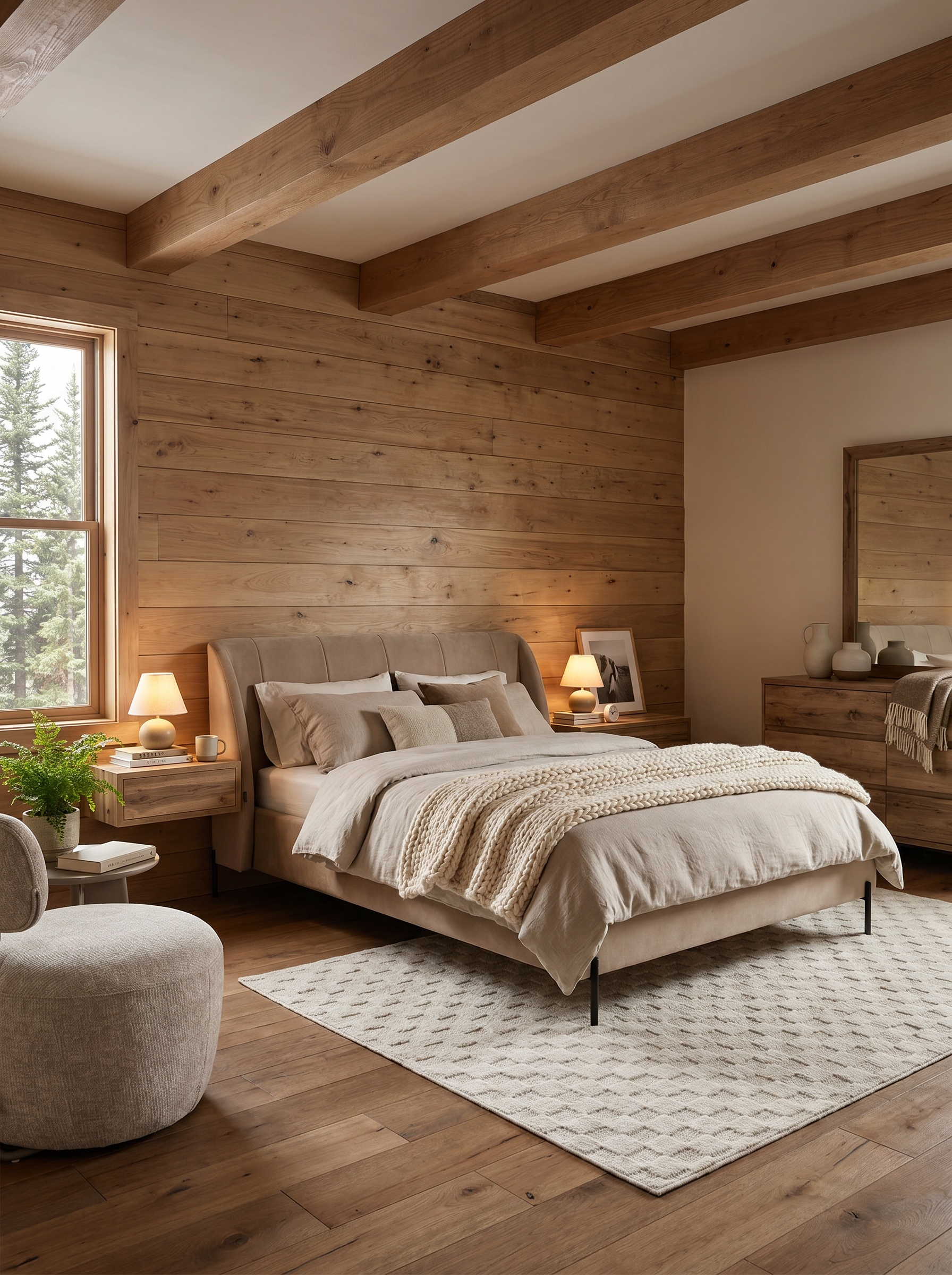
The mountain bedroom should be a place of genuine rest. Keep it simple: a solid bed frame in natural wood, good quality linen in calm tones, and nothing on the floor that shouldn’t be there.
Dressers and nightstands in matching finishes bring order and coherence. Drawer units and bedroom benches at the foot of the bed add both storage and a finishing touch. Avoid anything shiny or overtly decorative — in a mountain bedroom, restraint is the point.
Bathroom: a touch of mountain style
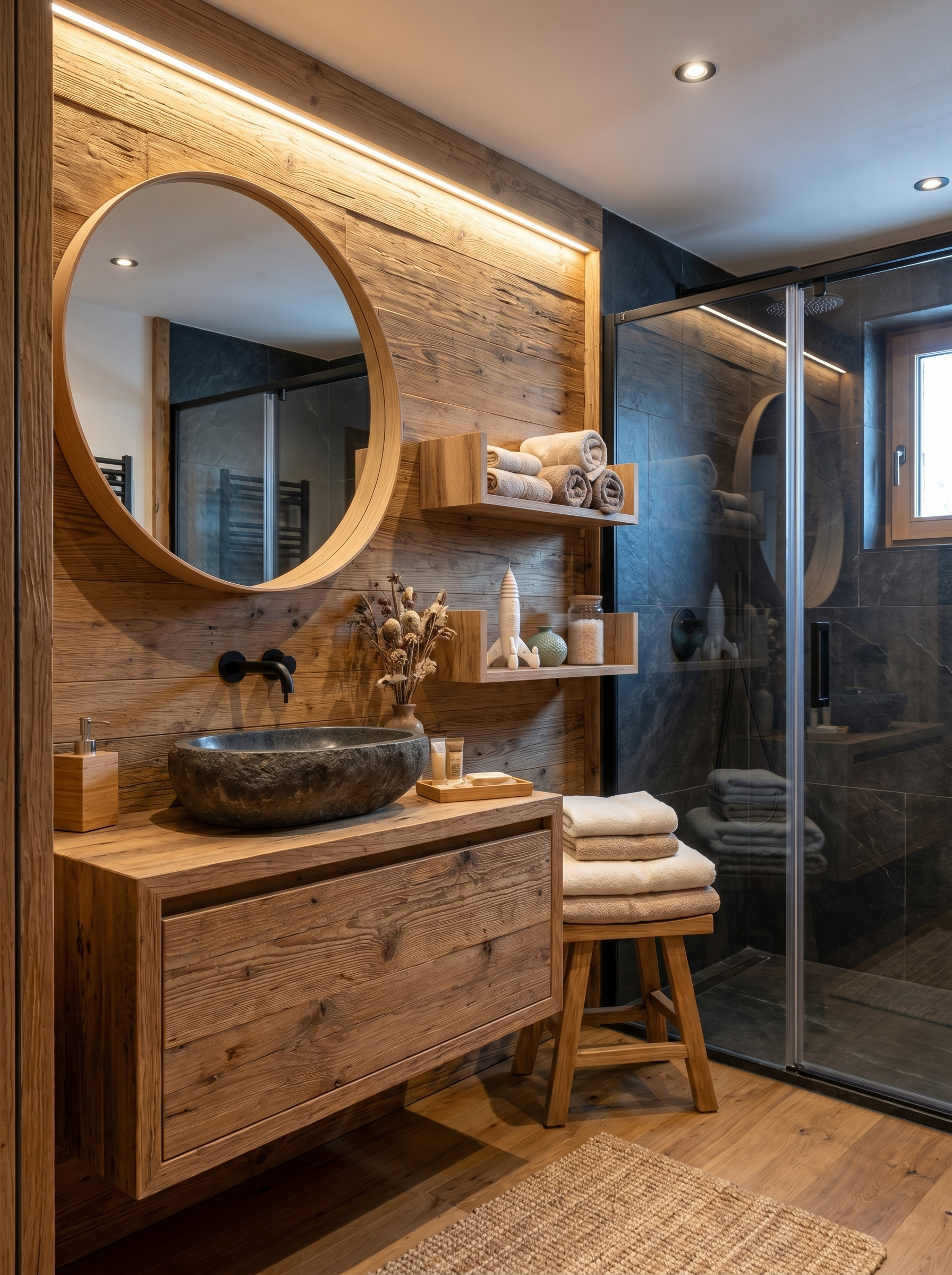
The bathroom doesn’t need a complete transformation to feel in tune with the rest of the house. A few well-chosen elements are enough: wood-effect or natural stone tiles, brushed metal fixtures, and some thoughtful storage.
Bathroom wall units and bathroom shelves in wood-effect finishes bring warmth and tie the room into the overall aesthetic. A few natural accessories — a wooden tray, a linen towel, a plant — complete the picture without overcomplicating it.
How to furnish a small mountain house?
When the mountain house is small, every choice matters even more. The golden rule: prioritize multi-functional furniture, avoid anything that blocks natural light, and keep the color palette consistent throughout to create a sense of flow.
Extendable and modular pieces are your best friends. Wall-mounted storage keeps floor space free. And mirrors — used thoughtfully — can make even a compact space feel open and airy.
Textiles, lighting, and details that actually create atmosphere
The finishing touches matter more than you might think. A well-chosen rug in neutral tones or a subtle pattern defines the seating area and adds warmth underfoot. A table runner in natural fabric brings texture to the dining table.
For lighting, avoid anything too harsh or cold. Warm-toned bulbs, table lamps, floor lamps, and where possible, candles create the layered, intimate glow that makes a mountain house feel truly cozy after dark.
Decorative details should feel natural and unforced: a few pinecones, a piece of driftwood, a hand-thrown ceramic bowl. The mountain aesthetic is about what you don’t add as much as what you do.
Mistakes to avoid so you don’t overload the space
Too much wood on every surface. Wood works beautifully, but if floors, walls, ceiling, and all the furniture are the same material, the effect becomes oppressive. Break it up with plaster, stone, or painted surfaces.
Overdoing the alpine theme. Antlers on every wall, plaid on every cushion — the result is a souvenir shop, not a home. Use thematic elements sparingly and intentionally.
Underestimating storage. Mountain houses attract outdoor gear, boots, ski equipment, blankets, and board games. Plan storage properly from the start.
Ignoring natural light. In the mountains, light is precious. Keep windows clear, use light-colored walls in darker rooms, and don’t block views with heavy curtains or oversized furniture.