


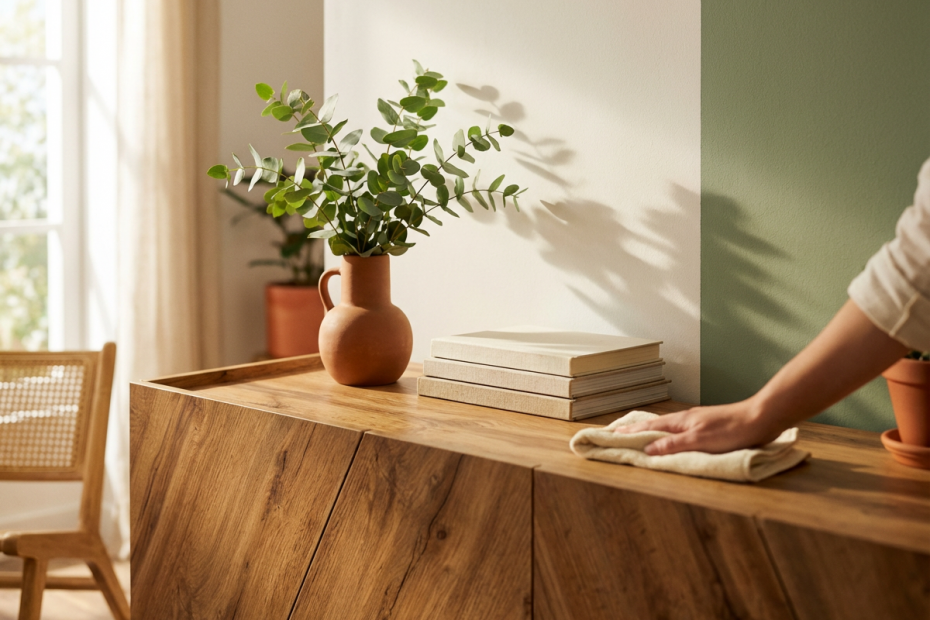
Working out how to clean wood without damaging it is one of those household missions that sound simple — until suspicious marks appear, surfaces turn dull, and you start thinking: “Maybe I went a bit too far”. The truth is that wood, and wood-effect materials too, aren’t hard to look after: you just need to resist the temptation to improvise.
Whether it’s a table, a bookcase or a sideboard, the rule is always the same: clean properly, clean gently, and don’t turn your furniture into an applied-chemistry experiment.
Where to start: solid wood, melamine or wood-effect laminate?
Before you reach for cloth and cleaner, it’s worth telling your materials apart. Not every “wooden” piece of furniture is the same thing, and treating them all identically is one of the most common mistakes. Let’s see how to handle each of these surfaces.
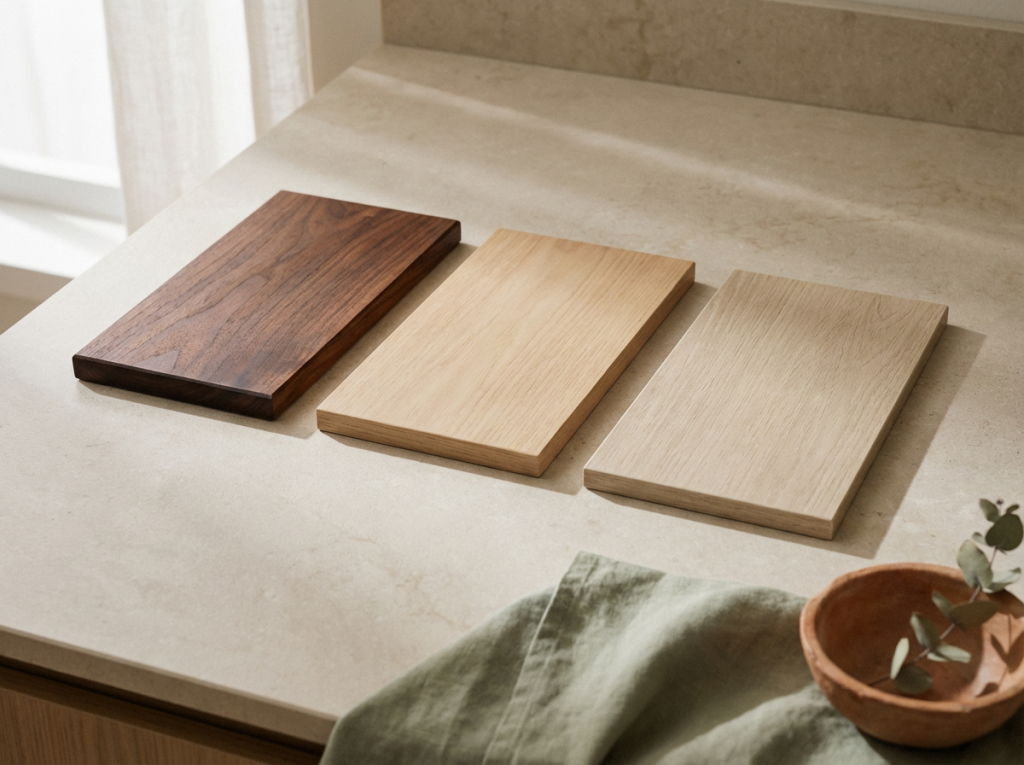
How to clean natural or lacquered wood
Natural wood needs a gentle touch, because it’s more sensitive to moisture and harsh products. For daily cleaning a soft cloth — dry or barely damp — followed by a mild, dedicated cleaner is enough. The key is not to soak the surface and to dry it straight away, to avoid marks, swelling, or the dull look furniture takes on when it decides to get its revenge.
Lacquered wood calls for even more care. Here you’ll want a clean microfibre cloth, very little cleaner, and a light touch.
How to clean melamine
Melamine is practical to look after on a daily basis, but that’s no reason to take it for granted. A soft cloth and a cleaner formulated for this kind of surface are enough to do a good job. Avoid standing water and overly oily products, which can leave less-than-elegant residue.
How to clean wood-effect laminate
If you’re wondering how to clean wood-effect laminate, the answer is simple: light cleaning, a soft cloth, and dry the surface right away. Unlike solid wood, laminate doesn’t need nourishing products like heavy oils or waxes — these actually risk making the surface look worse.
Clean wood regularly to keep it healthy and beautiful
For everyday cleaning, the simplest method is still the best. First remove dust with a soft, dry or barely damp cloth. Then move on to the actual cleaning with a dedicated product, still without soaking the surface.
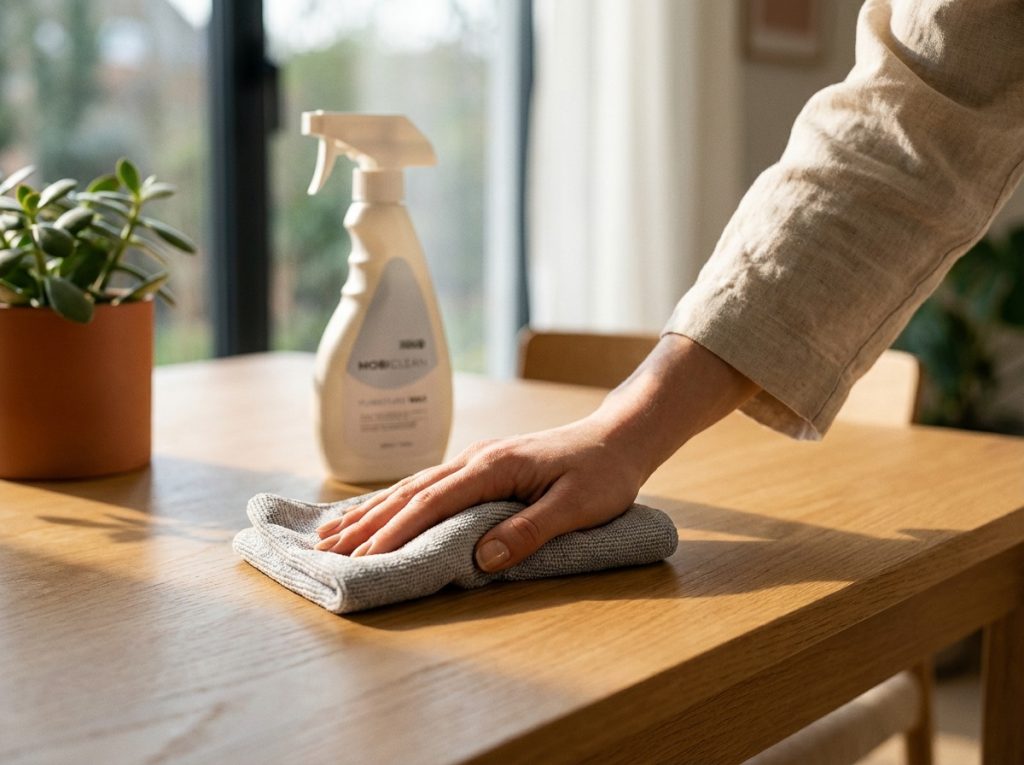
That’s why it helps to choose formulas made for these surfaces. A product like Mobiclean Detergent, Professional Formula for Melamine and Wood from Mobili Fiver is a practical choice for frequent maintenance, and it works even on stubborn stains. Thanks to its antistatic action, it also helps to keep dust from settling on your furniture.
After applying Mobiclean Detergent, for complete care of your wooden and melamine furniture reach for Mobiclean Wax, Professional Formula for Melamine and Wood: designed to enhance the material without weighing it down, it brings surfaces to life and restores their original shine.
How to clean outdoor wooden furniture
Outdoor wooden furniture faces an extra challenge: on top of everyday dust, fingerprints and stains, it has to contend with moisture, sun, temperature swings, and dirt that turns up without asking.
For routine cleaning, just remove dust and residue with a soft cloth or a non-abrasive sponge, then use a mild cleaner suited to the surface, always going easy on the water.
Outdoors the basic rule still applies: cleaning regularly is far more effective than coming in late with drastic methods, once the dirt has already made itself at home.

Mistakes to avoid at all costs
There are also a few mistakes to steer well clear of: using pure alcohol, bleach, ammonia, direct steam, abrasive sponges, too much water, or overly aggressive cleaners.
Natural remedies deserve the same common sense: Marseille soap or very mild solutions can work in certain cases, but vinegar, bicarbonate, lemon or improvised home mixes aren’t always the safest choice, especially on lacquered, laminated or delicately finished surfaces.
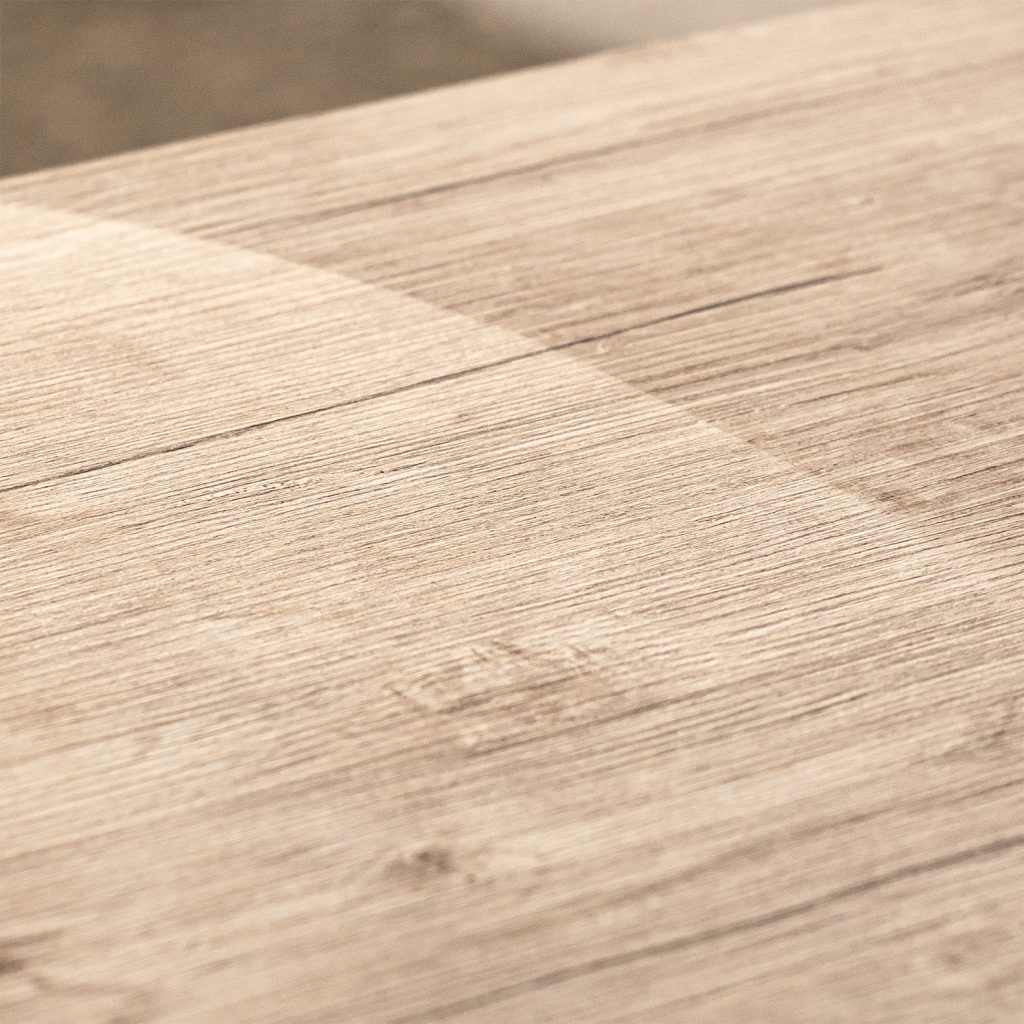
A few practical tips that really make the difference
To keep wood looking its best over time, a handful of simple habits go a long way. First, always use soft, clean cloths that have been well wrung out. Second, dry off any water residue straight away. Third — and probably the most underrated — don’t improvise with “miracle” products found online between one tutorial and the next domestic disaster.
Regular maintenance is still the smartest approach. A few things done well almost always beat the desperate Sunday-afternoon rescue operation.
When a piece of furniture has been cleaned the right way, you can tell at a glance: the surface is even, there are no marks, the material keeps its character and the room overall looks better cared for. And all without spending hours polishing a door as though it were a museum exhibit.
The secret to cleaning wood without ruining it is much less complicated than it sounds: just treat it with care, avoid the wrong products and keep on top of it regularly. That way surfaces, furniture and kitchens hold their looks for longer — no marks, no stress, and no turning cleaning into a test of domestic courage.


