


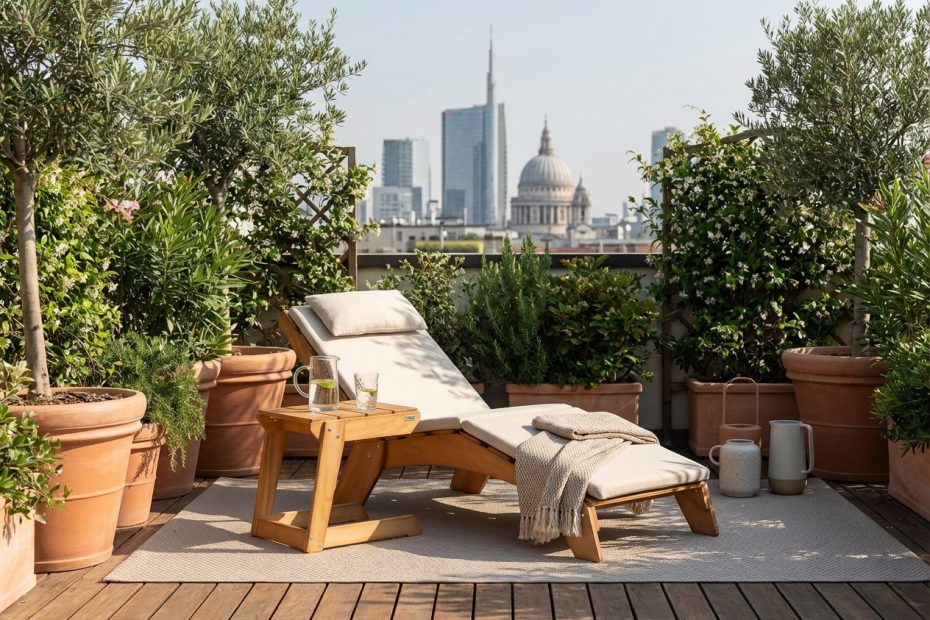
When we think about how to furnish an open terrace, we immediately imagine a space to be truly lived in, not just looked at. With the right choices, we can transform it into a pleasant, well-kept, and functional environment where we look forward to spending time outdoors during the warm season.
To achieve a good result, it’s best to start with a simple idea: understanding how we want to use the terrace. Some imagine it as a small dining area, others prefer a more secluded corner with comfortable seating, and some want to give ample space to greenery. When the function is clear, furnishing an apartment terrace becomes much simpler.
Where to Start When Furnishing a Terrace
Before choosing tables, chairs, and accessories, observe the space carefully. The available square footage matters, but sun exposure, wind, and the amount of time actually spent outside during the week also count.
If we mainly use the terrace for lunch or dinner outdoors, it makes sense to organize the social area well. If, instead, you are looking for a more relaxing space, you can focus on comfortable seating, soft textiles, and lighting capable of creating an atmosphere.
The style should also be defined immediately. Choosing a clear direction helps build a harmonious whole and avoids a cluttered effect. Neutral tones, natural-looking materials, and clean lines are often an effective base to give the terrace a coherent identity.
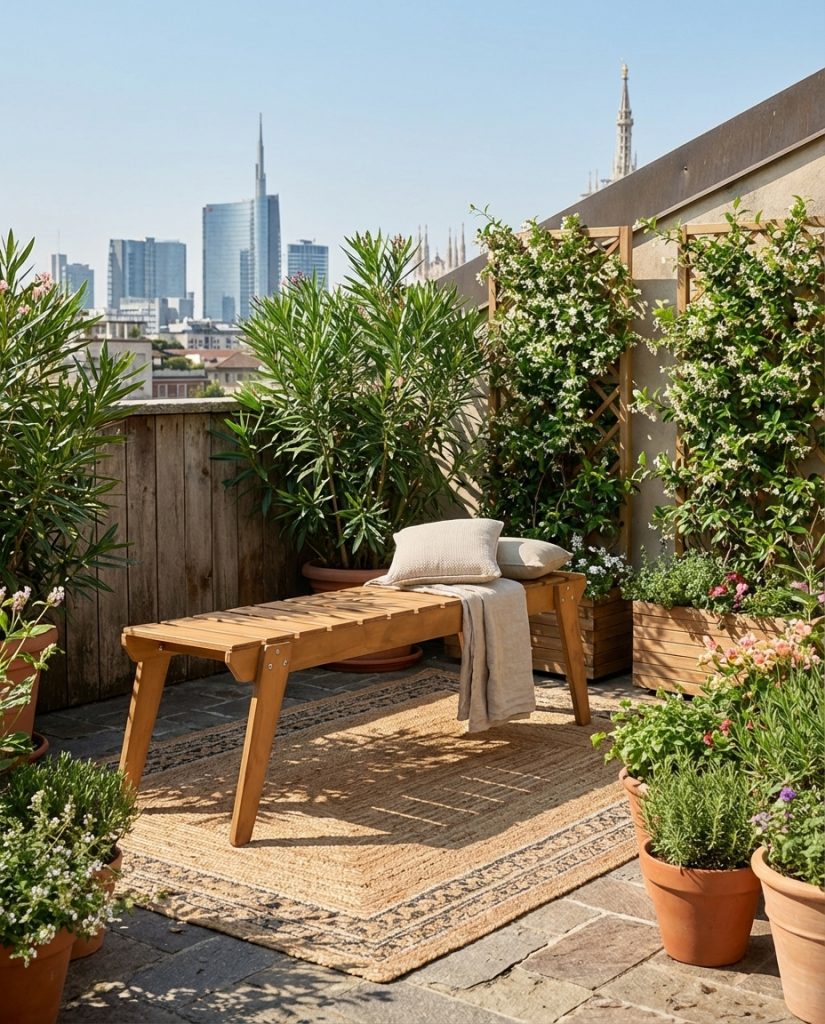
How to Furnish a Small Open Terrace: Space-Saving Solutions
Furnishing a small terrace is a challenge won with the right selection of furniture, not by giving up. The goal is to maximize every inch without creating clutter.
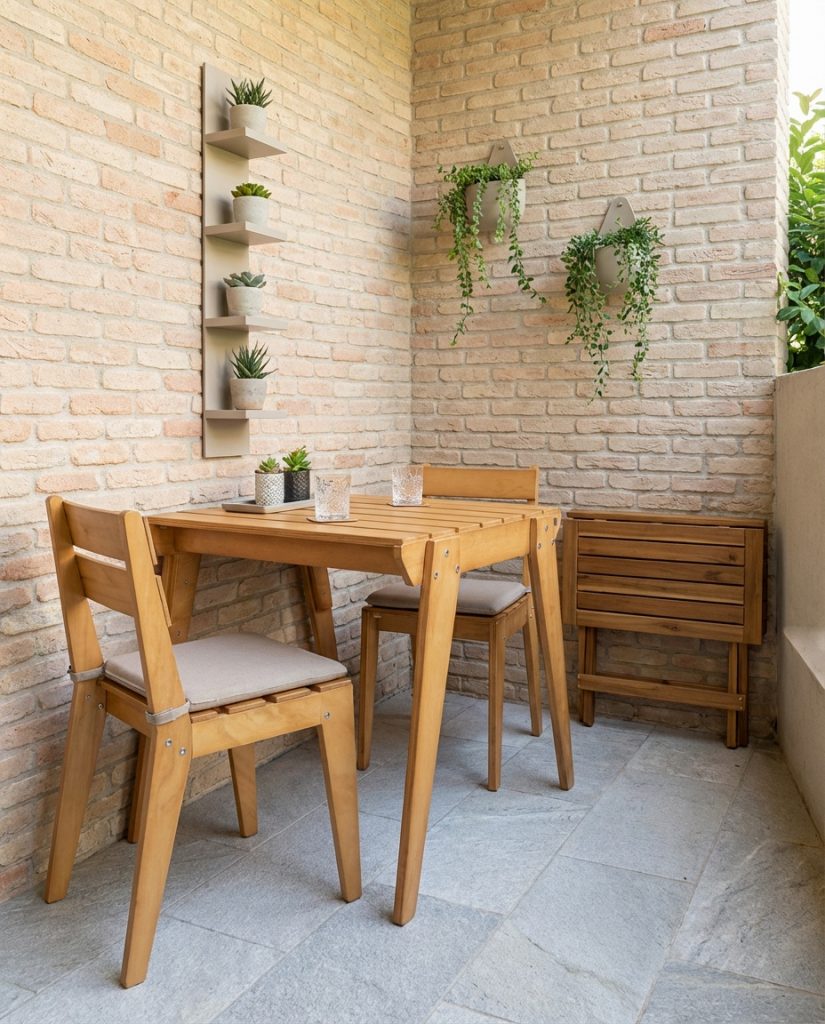
The first principle is to focus on multi-functional and folding furniture: stackable chairs, space-saving tables, and extendable consoles are precious allies because they adapt to the number of people present and can be tucked away when not needed. Thinking vertically also helps: wall shelves, hanging planters, and plant grids free up the floor and make the space feel airier.
If you want to create a versatile dining area, an outdoor extendable console table can be a very practical solution: when closed, it is a convenient support point; when open, it is perfect for welcoming guests. Mobili Fiver outdoor extendable consoles can accommodate up to 12 people: easy to open and close, they are equipped with convenient leaf-holders that keep the outdoor space tidy at all times.
Pair the outdoor console with Mobili Fiver outdoor chairs: lightweight and minimalist in design, they are specifically designed for outdoor spaces and are resistant to sunlight and atmospheric agents. They are also perfect for furnishing a summer terrace in a beach house, where wind and salt air put furniture to the test.
How to Furnish a Large Terrace: Structuring the Space
If you are thinking about how to furnish a large terrace, the key is to give structure to the space. An ample surface offers many possibilities but needs a clear composition to feel truly welcoming.
We can imagine different areas, connecting them naturally: a dining area, a relaxation corner, and a space dedicated to plants. If the terrace is a penthouse, this “outdoor rooms” approach is particularly effective: each zone has its own visual identity, but the whole remains harmonious.
On generous square footage, elements with a stronger visual presence work well, such as large pots, significant outdoor rugs, or a terrace umbrella capable of visually defining the dining area. Light points guide the eye and better define the atmosphere during evening hours.
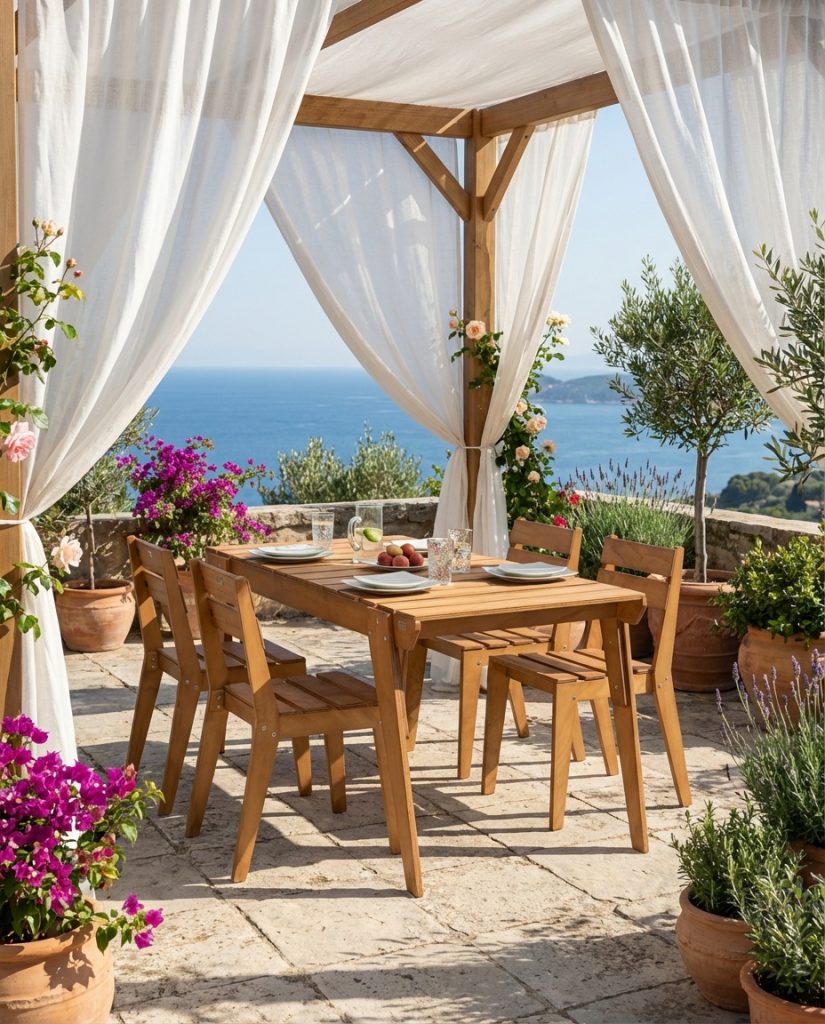
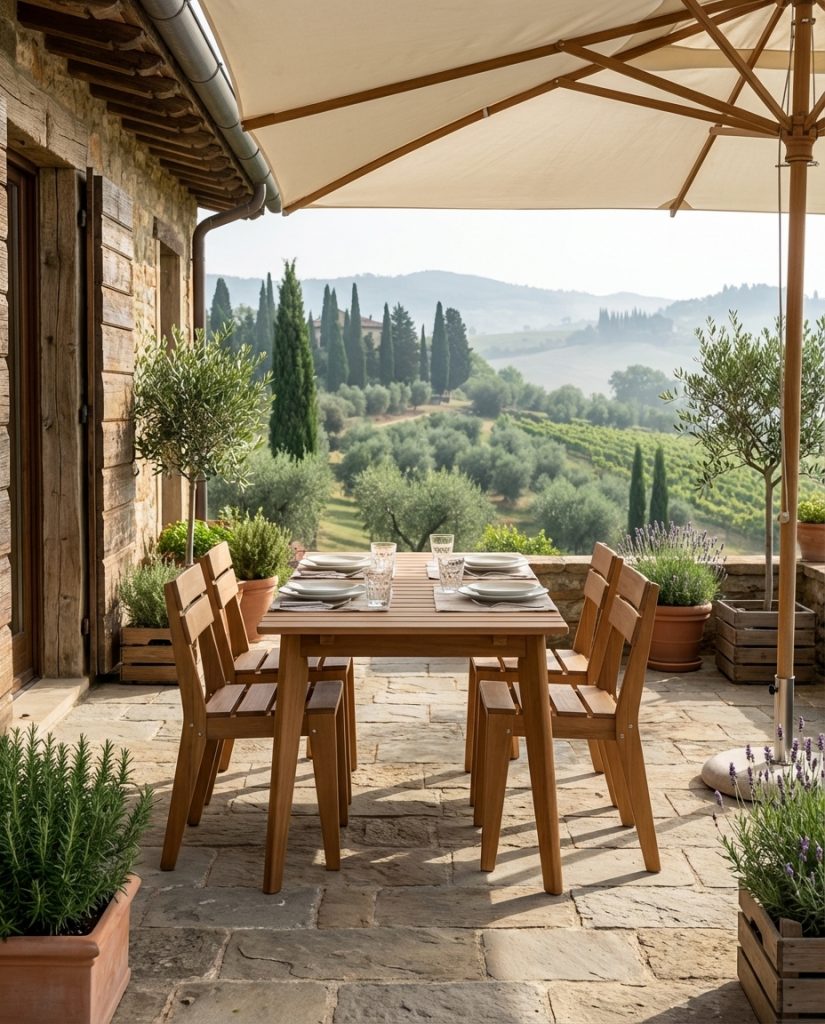
Umbrellas, Gazebos, and Sun Protection
An open terrace exposed to the sun during the central hours of the day needs a shade solution. Several options exist depending on available space and budget.
The terrace umbrella is the most flexible solution: it can be moved, closed when not needed, and does not require permanent installation. For larger terraces, a cantilever umbrella allows you to shade a dining area without a central pole getting in the way.
A terrace gazebo, on the other hand, is the ideal choice for those who want to create a true outdoor room. It offers protection even from light rain and creates a visual perimeter that defines the relaxation space. Before installing one, it is wise to check building regulations and local ordinances.
For those who prefer solutions more integrated into the architecture, sail shades and side curtains are an elegant alternative that also protects from the wind and ensures greater privacy.
Terrace Plants: Using Greenery to Furnish
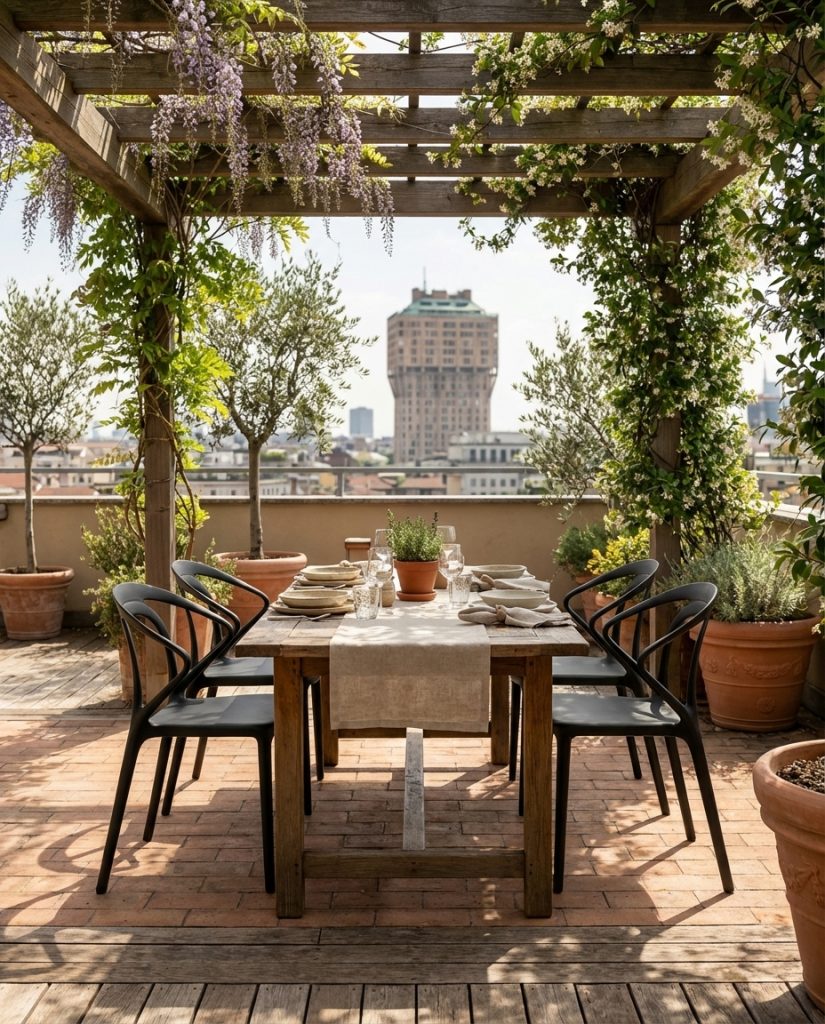
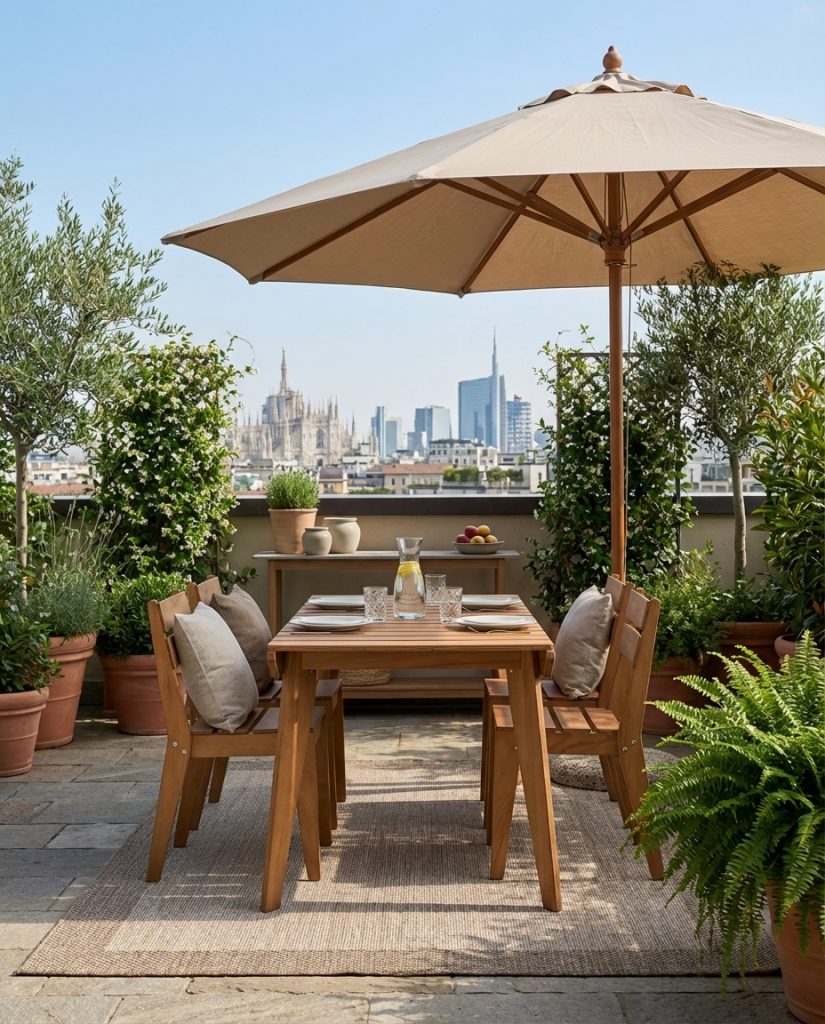
Terrace plants are not just a decorative detail: they are true furnishing elements capable of transforming the space, creating natural boundaries between zones, and making the terrace more welcoming.
For those with limited space, vertical planters and wall grids allow for growing herbs, succulents, or climbing flowers without taking up floor space. On a large terrace, large pots with broad-leaf plants create a significant visual presence and naturally divide different areas.
Certain plants are particularly suitable for terraces exposed to sun and wind: lavender, rosemary, bougainvillea, and succulents resist difficult weather conditions well. For shadier terraces, ferns, begonias, and hydrangeas are excellent alternatives.
A practical tip: choose pots made of the same material or within the same color palette to maintain a coherent look, even when the plants are different.

Complete the Terrace Decor with the Right Lighting
Terrace lighting truly changes how we live in the space during evening hours: well-designed light makes the environment more welcoming and enhances everything built with furniture and decorations.
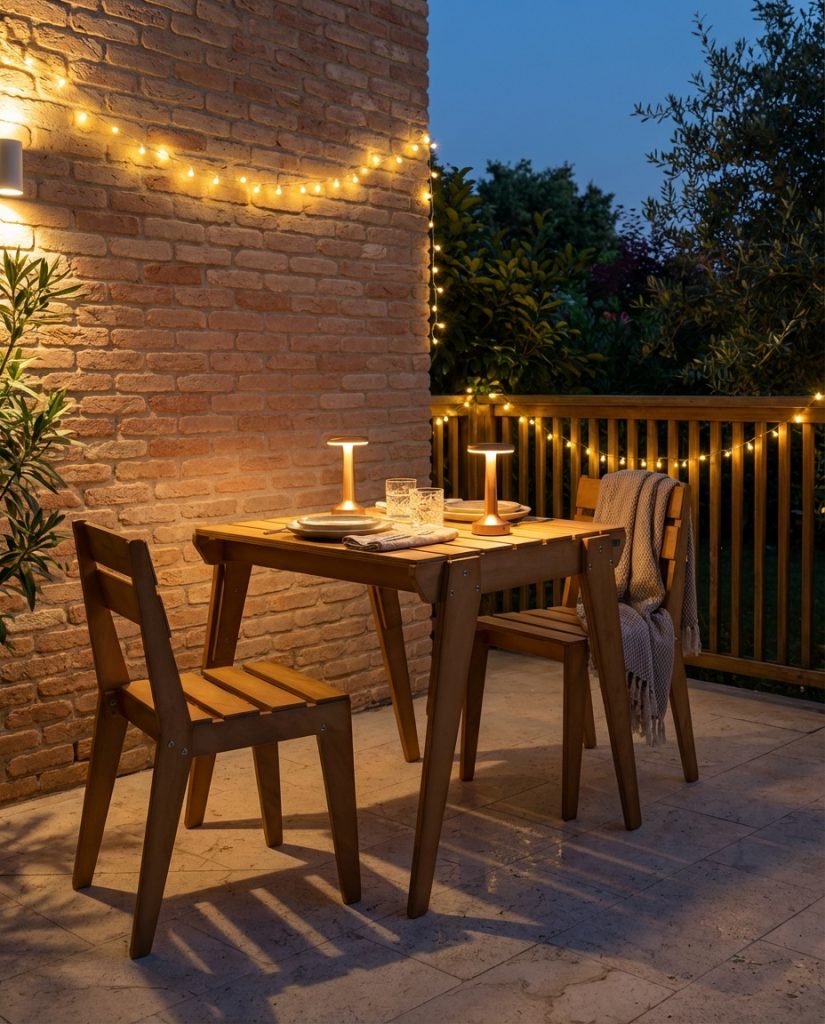
On the dining table, small portable lamps make the atmosphere warmer and more intimate, perfect for setting the table on the terrace for a relaxing dinner.
If the terrace is large enough, a floor lamp with diffused light also creates the right atmosphere and adds a touch of design. Conversely, if space is tight, ceiling lights or wall sconces optimize the furniture layout.
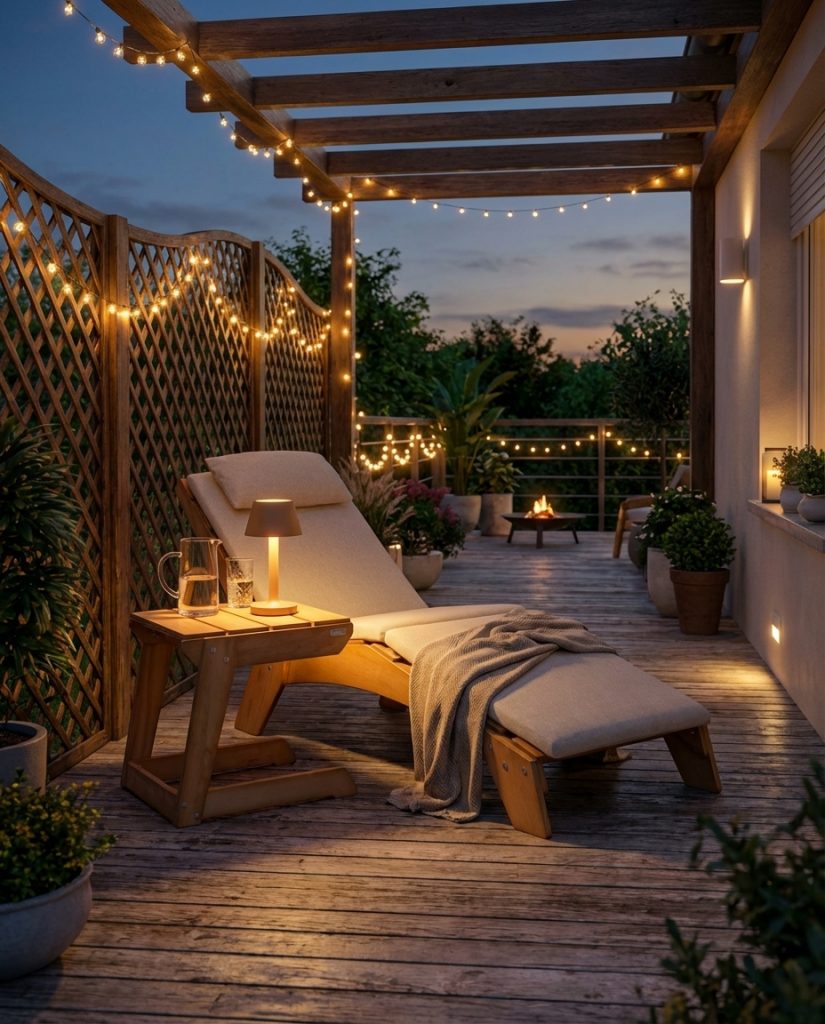
Finally, if you like string lights, small chains of bulbs or LEDs can enrich the atmosphere: hang them along the walls or the terrace railing for a boho and dreamy effect.
Terrace Flooring
Terrace flooring is the primary element upon which everything else is built: choosing the wrong one, aesthetically or for durability, compromises the final result regardless of how beautiful the furniture is.
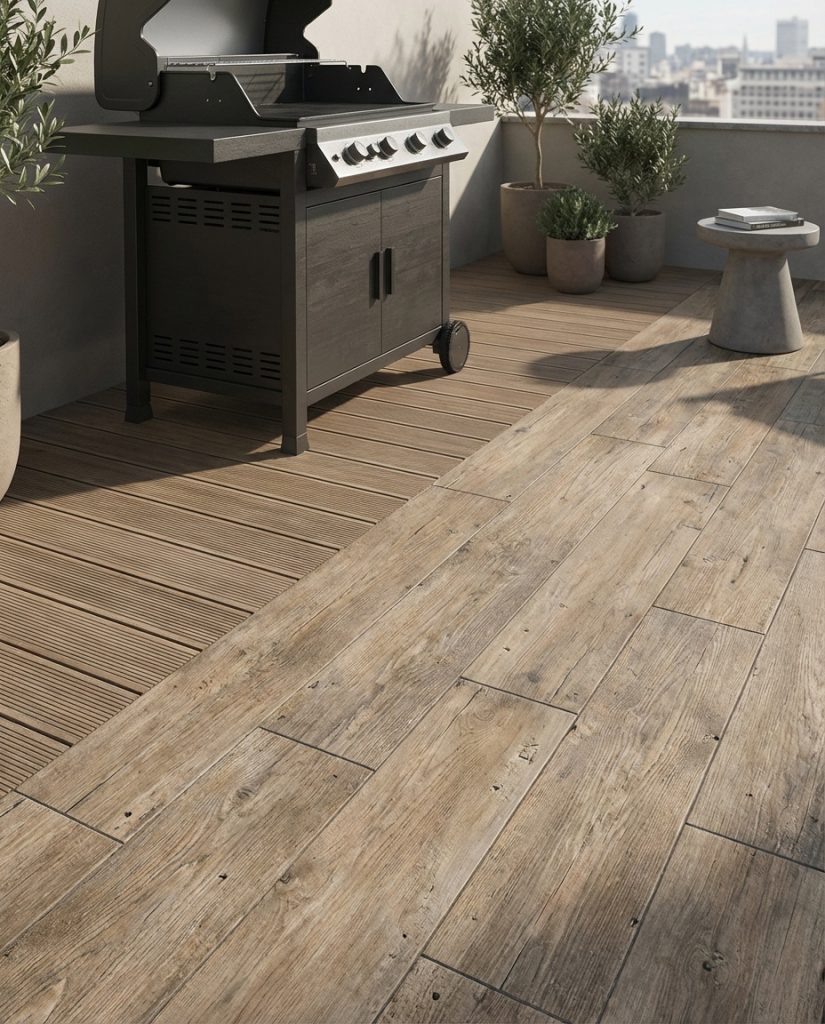
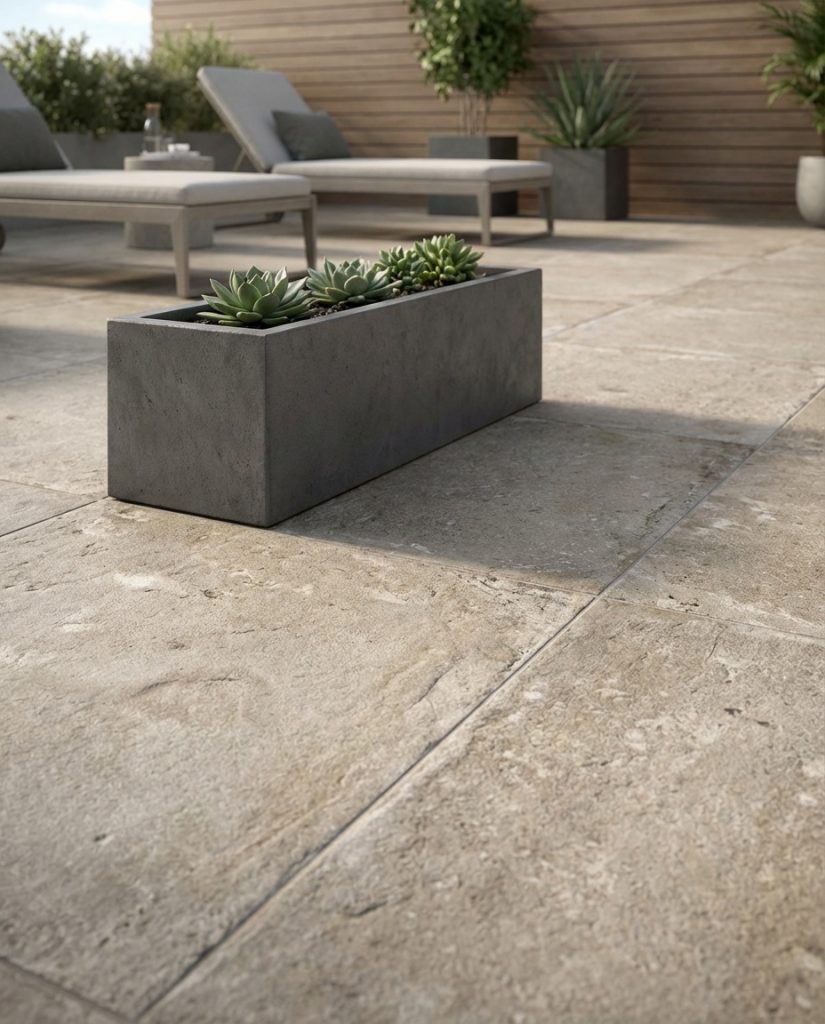
Terrace tiles are the most common choice: sturdy, easy to clean, and available in endless formats and colors. Wood-effect or stone-effect porcelain stoneware variants are particularly appreciated because they combine natural aesthetics with resistance to atmospheric agents. For a warmer and more contemporary look, composite wood (WPC) decking represents a practical alternative: it doesn’t splinter like natural wood, requires no seasonal treatments, and immediately creates a cozy atmosphere.
A practical tip: whatever material you choose, ensure it is non-slip, especially if children are present or if the terrace gets wet frequently, and that it has good UV resistance so it doesn’t fade during the summer.
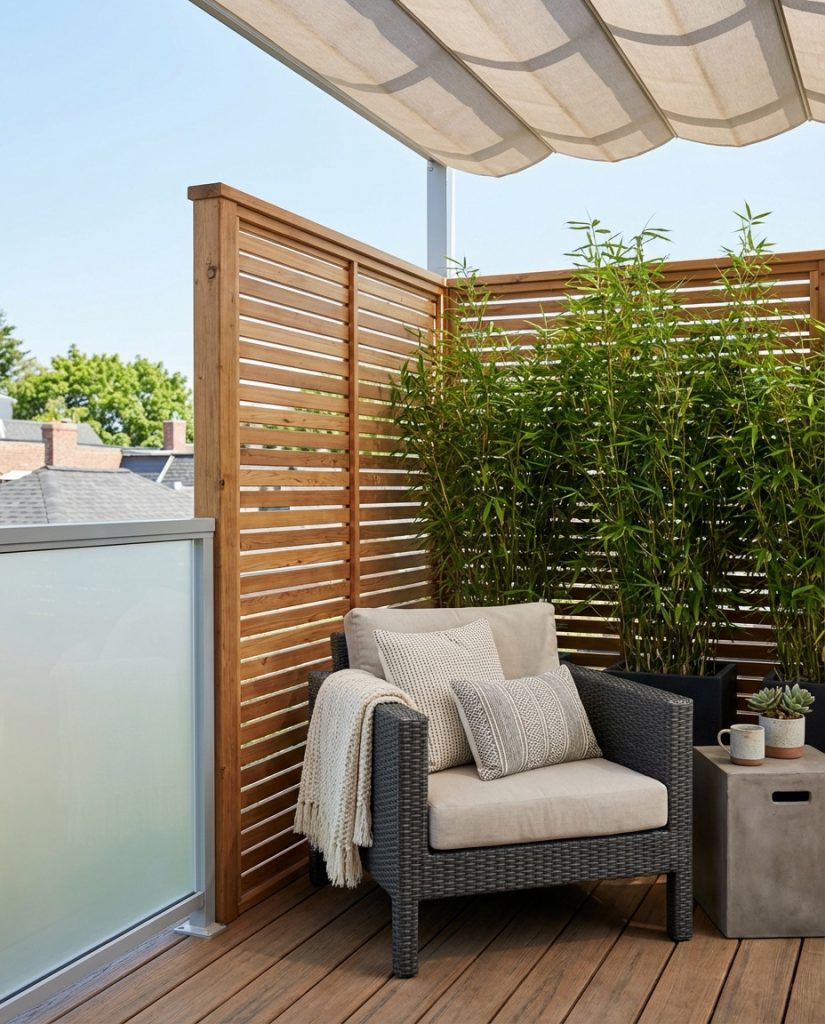
Privacy and Wind Protection: Creating a Sheltered Space
An open terrace exposed to neighbors’ gazes or the wind is a difficult space to enjoy, even if beautifully furnished. Solving the problem of terrace privacy and atmospheric protection is often priority number one, especially in apartment contexts.
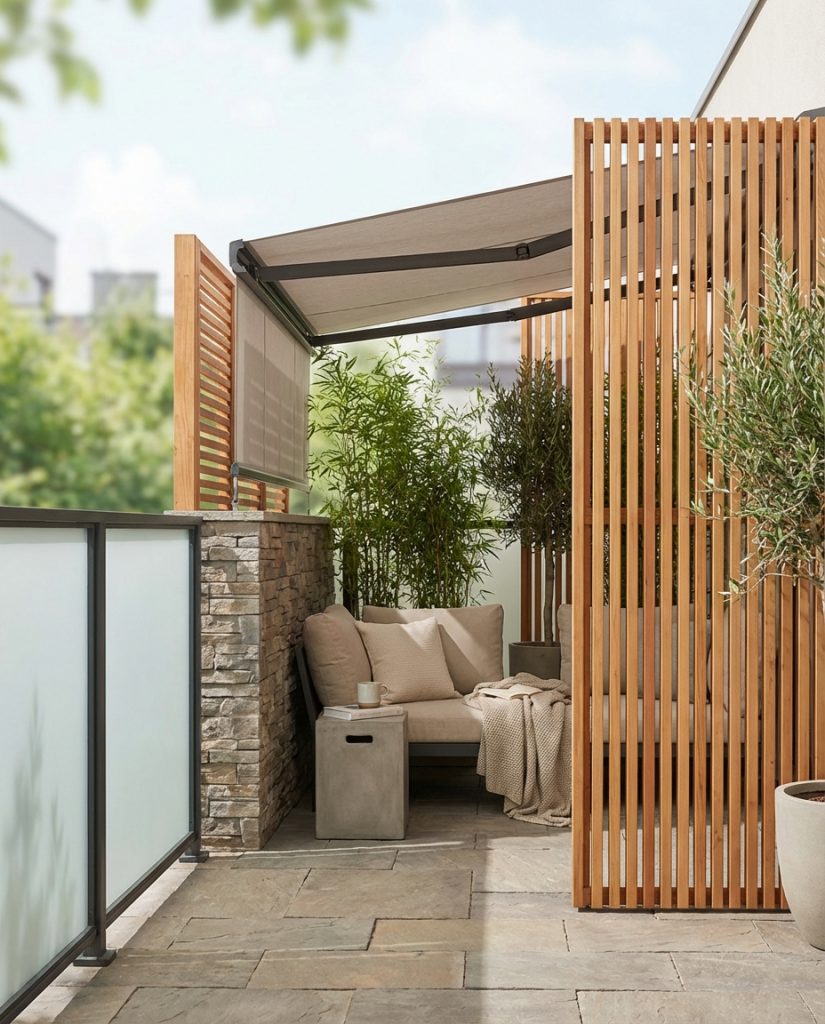
The most versatile solution is the terrace screen: available in different materials—wood, rattan, PVC, technical fabric—it can be positioned where needed, requires no permanent installation, and moves easily. Self-supporting models are ideal for terraces where you cannot drill into the railing.
For more durable protection, fixed or semi-fixed windbreak panels made of glass, polycarbonate, or wooden slats create an effective barrier against the wind while preserving brightness. They also integrate a decorative element.
Hedges in pots combine the function of a natural screen with the aesthetic value of greenery. It is one of the most popular solutions because it addresses privacy, wind, and decor in a single element.
How to spruce up an outdoor terrace on a budget
Furnishing a terrace doesn’t necessarily require a large budget. Many of the most effective upgrades are also the most affordable.
Outdoor cushions and rugs are the quickest fix: they completely transform the atmosphere at a low cost and are easy to find even at budget furniture stores. A rug visually defines the relaxation or dining area, even without walls.
Aromatic plants in small pots—basil, mint, thyme—add greenery, fragrance, and practicality in the kitchen at minimal cost. Battery-powered lights (lanterns, LED string lights, solar lamps) let you illuminate the terrace without cables or electrical work.
Finally, painting old outdoor furniture in coordinating colors is one of the most effective ways to refresh the look of your terrace without buying anything new.
FAQ: Frequently Asked Questions
How do you make an open terrace cozy? The combination of three elements transforms any terrace: comfortable furniture (at least one soft seat), greenery (even just a few pots), and evening lighting (lamps or LED lights). These three elements together are enough to create a warm atmosphere even in a small space.
Which plants are suitable for a sun-exposed terrace? Lavender, rosemary, bougainvillea, geraniums, and succulents are among the hardiest choices for sunny and windy terraces. If the terrace is shaded, prefer ferns, begonias, and hydrangeas.
How to furnish a small terrace without spending much? Focus on folding or stackable furniture, use vertical space with wall planters, and add cushions and an outdoor rug to define zones. A few well-chosen elements are enough to achieve a polished result.
Is it possible to install a gazebo on an apartment terrace? It depends on the condominium regulations and local municipal ordinances. Generally, temporary and removable structures are permitted, while fixed ones require authorization. It is always advisable to check before purchasing.


