


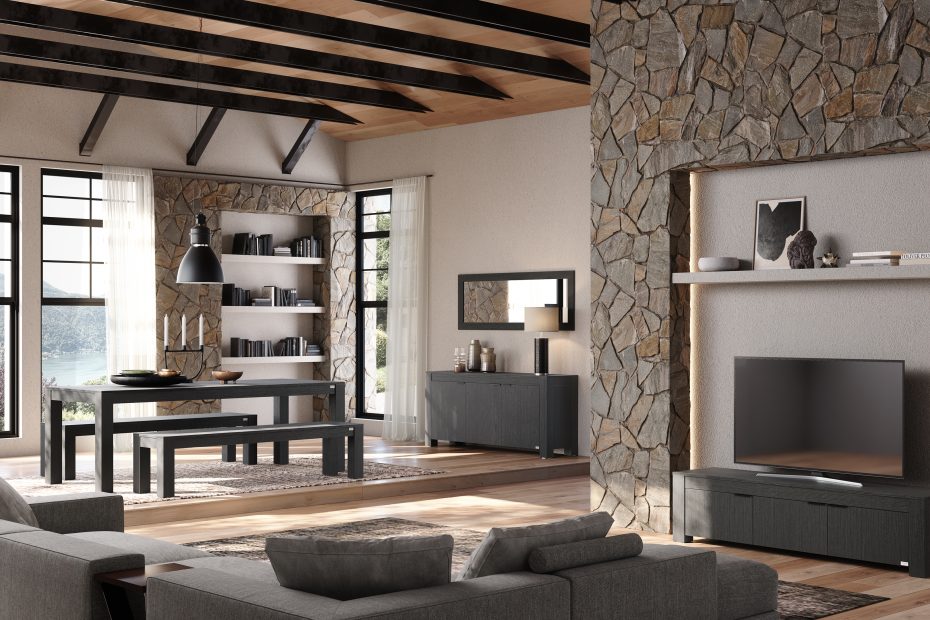
Open-plan living is wonderful. At first, at least. Light, airy, sociable. But then real life kicks in: you’re cooking, you turn toward the sofa, and you get the feeling that the living room is participating a little too closely in the preparation of dinner. And that’s when the question arises: how to separate the living room and kitchen without turning your home into a construction zone?
The good news is that in most cases, you don’t need to put up walls or overhaul your floor plan. Separating spaces well often just requires working with the furniture, which has one great advantage: it organizes the space without rigidity. In practice, it creates order without taking away the sense of open breathing room.
How to separate your living room and kitchen with furniture
If the goal is to distinguish the two zones without losing light and continuity, furniture is almost always the smartest solution. It’s flexible, practical and doesn’t require you to spend weeks living with drills, contractors and that unsettling phrase: “it’ll only take a few days”. Bookcases, cupboards and other well-proportioned pieces can separate the kitchen from the living room simply, without making the space feel heavy. For some concrete inspiration, discover Mobili Fiver’s furniture range, where design and functionality combine to organize your spaces with balance.
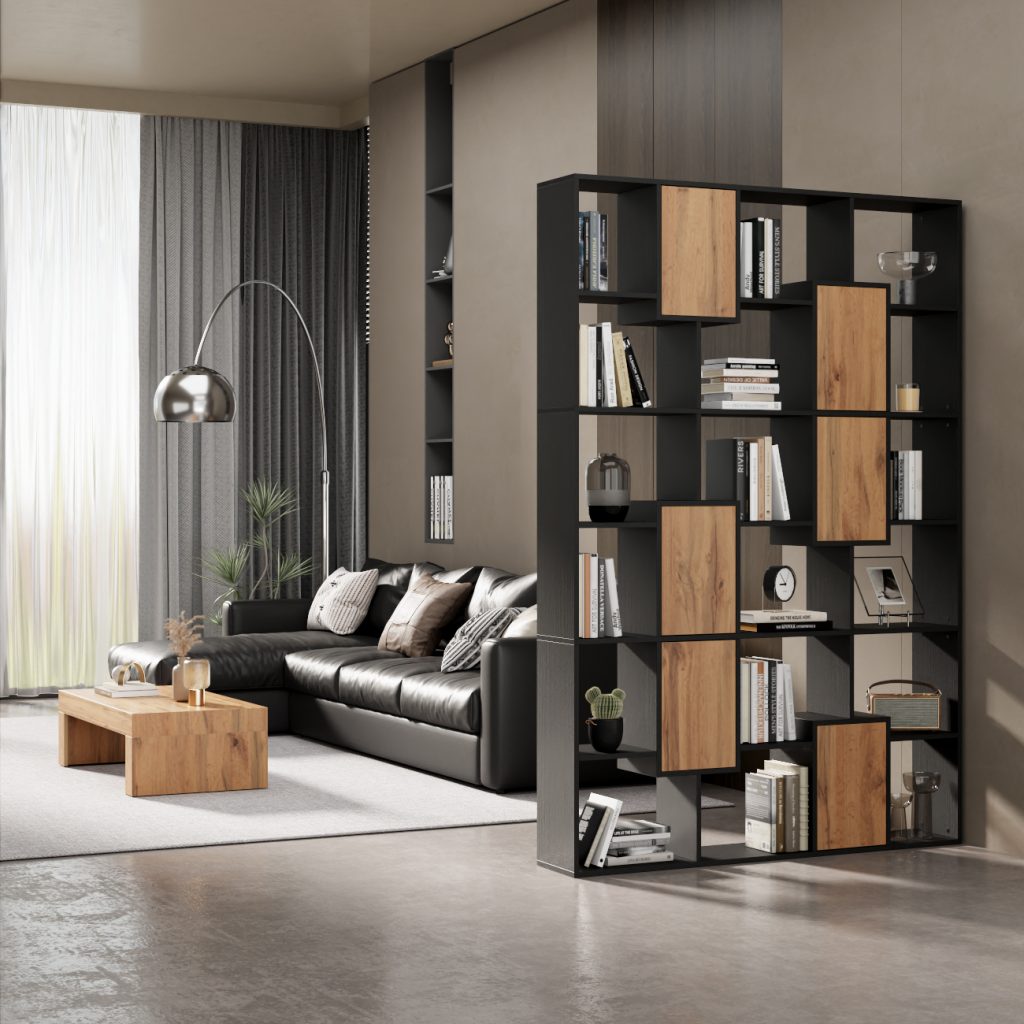
1. Double-sided bookcases
Open or double-sided bookcases are among the most effective solutions for separating the kitchen from the living room. They create a visual filter like a dividing wall, but without any real closure: they let light through, keep the perspective open and help to give a clearer purpose to each area.
They are particularly useful when you want to divide without overwhelming. Positioned between the dining table and the sofa, or between the working area and the relaxation zone, they act as a boundary in a very natural way. They also add useful space for books, decorative objects and everything you want to display with a certain aesthetic dignity.
2. Cupboards and low furniture
If you prefer a more discreet separation, cupboards and low furniture are an excellent choice. They define the spaces without interrupting the sightline and without giving the impression that an obstacle has been placed in the middle of the room.
The advantage is twofold: they mark the transition between kitchen and living room, while also adding storage. And storage is never a secondary concern at home, especially when there’s always some object you’re not sure where to put but which, for mysterious reasons, you can’t throw away.
3. Peninsulas and kitchen islands
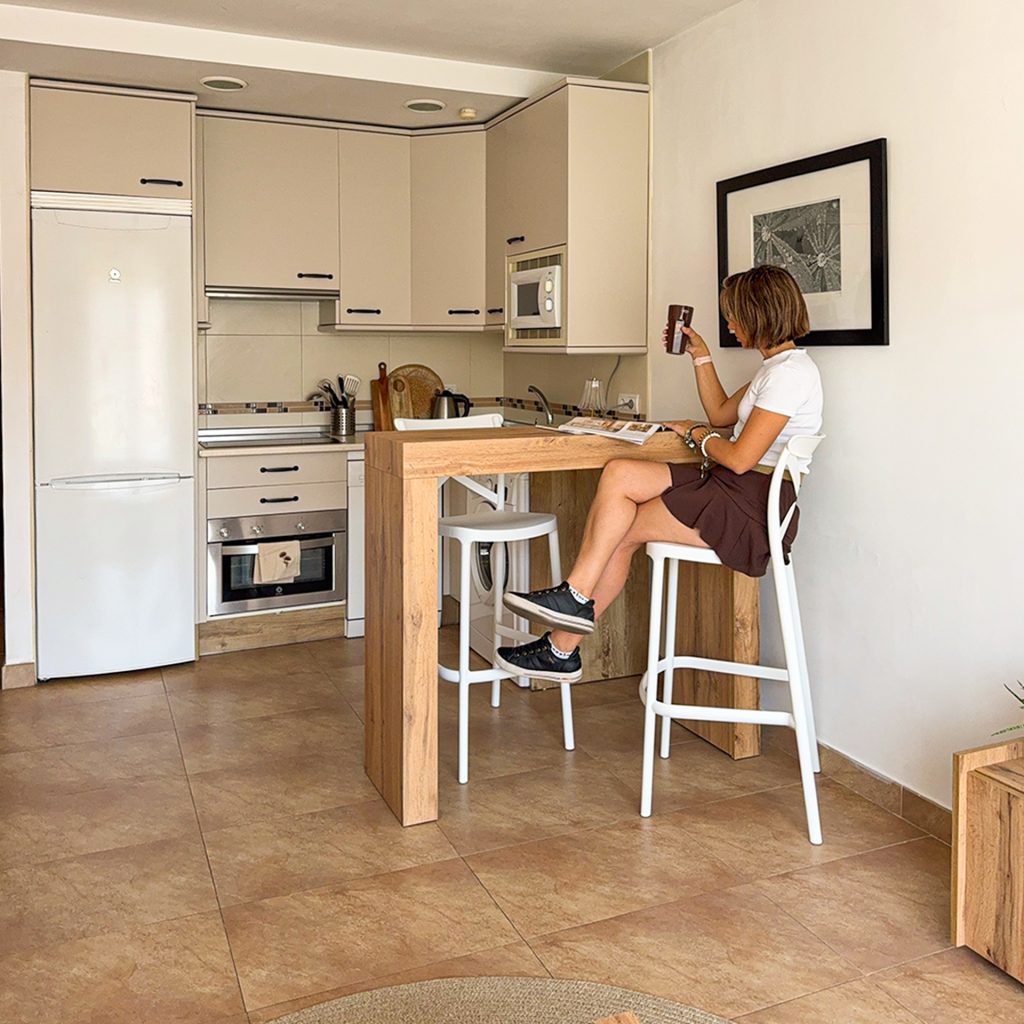
When the separation also needs to be functional, peninsulas and kitchen islands are in a class of their own. They define the kitchen area right away, add counter space and often become the spot where you have breakfast, drink a quick coffee or improvise an aperitif that was meant to be brief but ends up lasting three hours.
The peninsula in particular is perfect for creating a visual break while maintaining a direct dialogue between kitchen and living room. It separates, but without being standoffish.
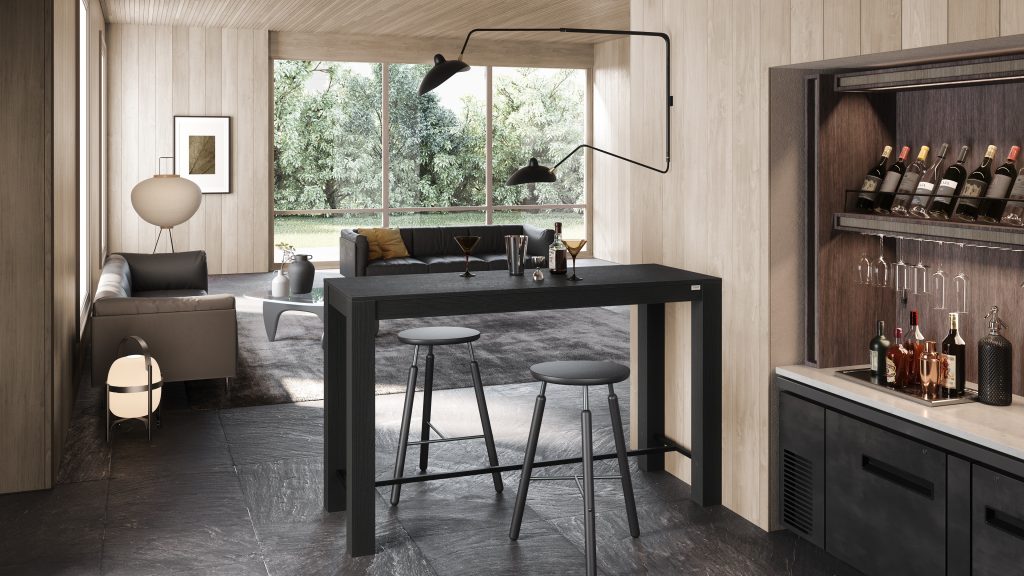
4. Using the sofa as a dividing element
The sofa can do much more than just sit there and accommodate throws and streaming nights. If positioned with its back toward the kitchen, it immediately helps to define the living area and create a visual threshold between the two spaces.
It’s a simple, accessible and very effective solution, especially when you don’t want to add too much furniture. It takes very little to make clear where the kitchen ends and where the official territory of relaxation begins.
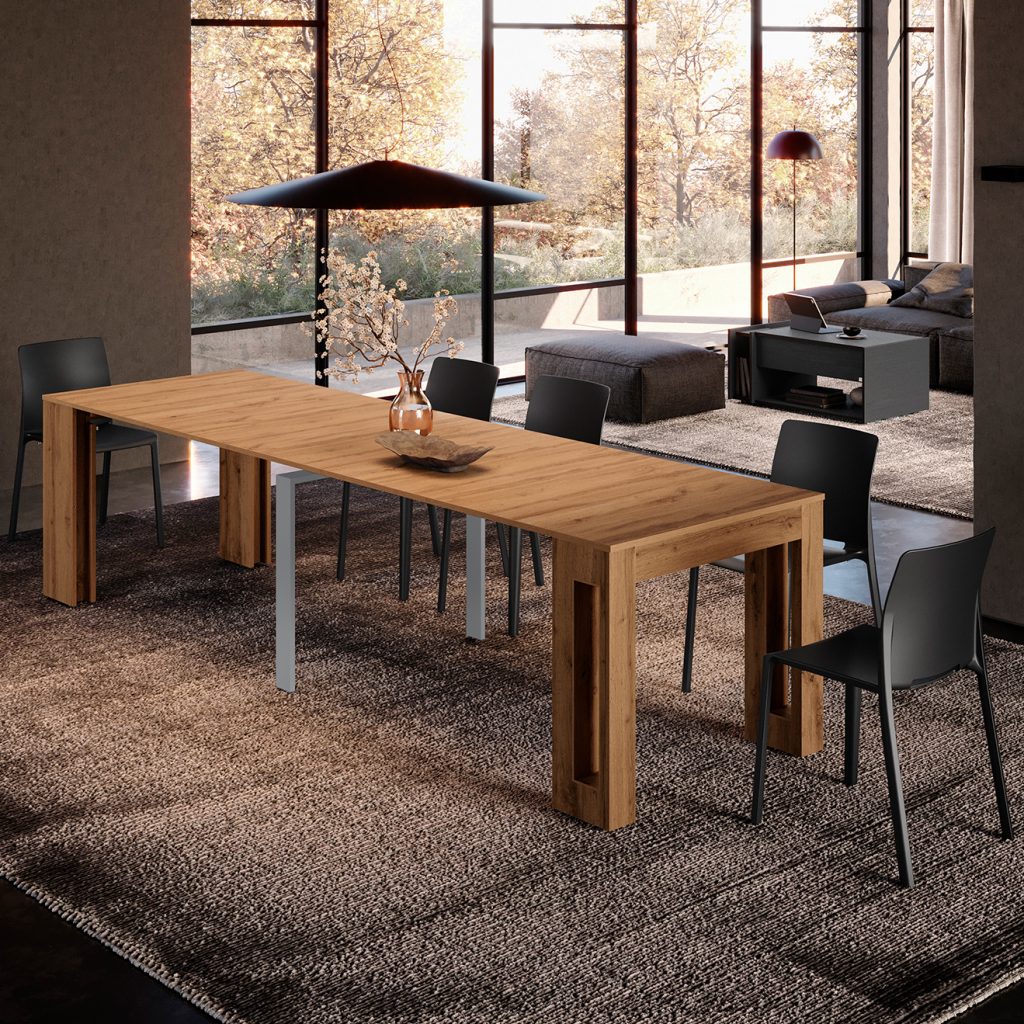
5. The dining table as a connecting zone
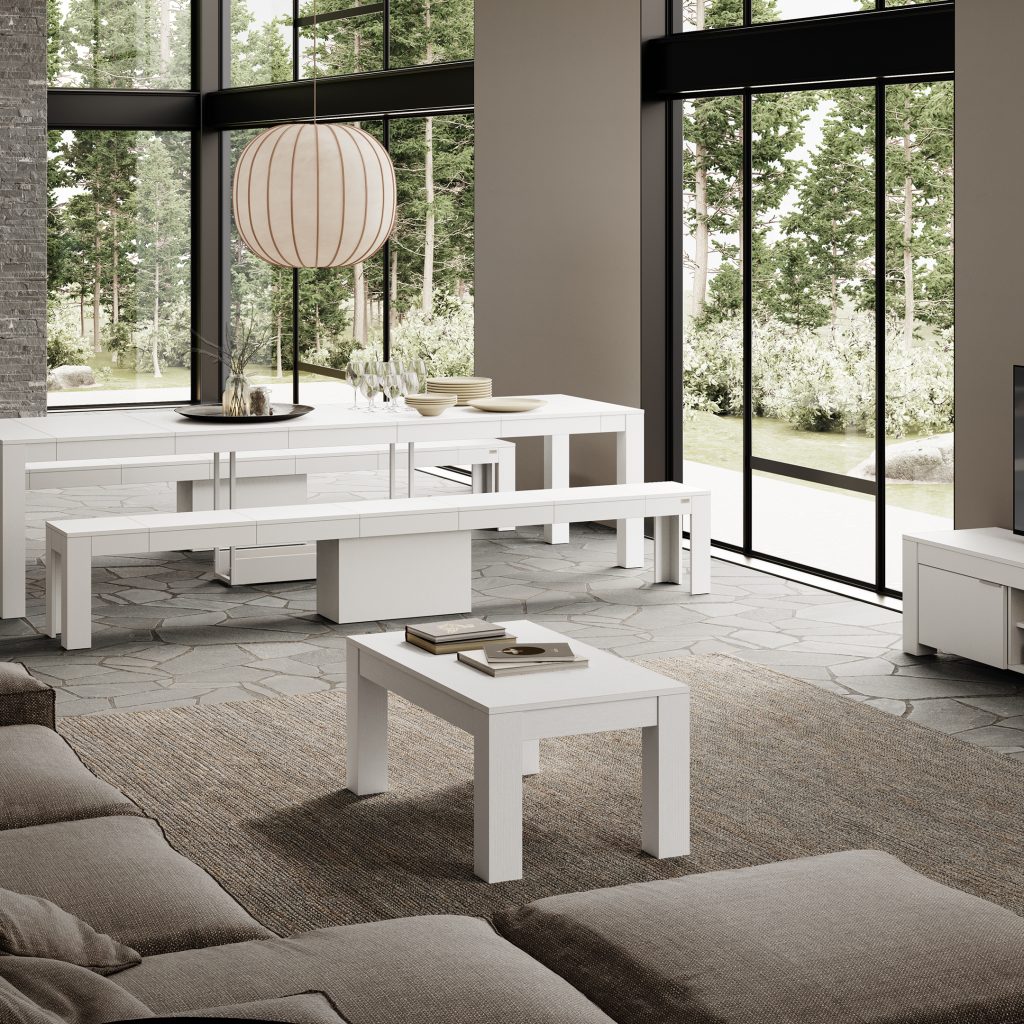
In many open-plan homes, the dining table is the element that links the kitchen and the living room. It doesn’t divide sharply, but it organizes the space and clarifies its sequence: first you prepare, then you eat, then you move to the sofa with every intention of getting up right away. An intention that, as we know, rarely lasts long.
Used well, the dining table creates a natural transition between the two areas and helps to better distribute the functions without breaking the overall harmony.
Separating kitchen and living room with structural solutions
There are open-plan spaces that work perfectly well with a light division, and others that call for a slightly more decisive boundary. In these cases, solutions that separate the two spaces more clearly can be considered, while still maintaining an overall sense of harmony.
Glass partitions and sliding panels are very popular because they separate without removing light. They are a good solution when you want a more decisive filter but still want to maintain a certain visual openness.
A low partition wall or divider can help to better mark the boundary between kitchen and living room, especially in projects already conceived with renovation in mind.
Different colors, cladding and finishes can also help to distinguish the two zones. They don’t truly separate the space, but they make the layout easier to read.
How to separate the living room and kitchen in small open-plan spaces
When square footage isn’t generous, the temptation to overdo it is always lurking. But in small open-plan spaces it’s better to go for lightweight, well-proportioned elements. An open bookcase, a low cupboard or a well-positioned sofa can be enough to create an effective separation without making the room feel cramped.
A compact peninsula can also work very well, as long as it genuinely improves the use of the kitchen and doesn’t become an obstacle with delusions of grandeur.
What to keep in mind before separating your kitchen and living room
Before choosing how to separate your living room and kitchen, it’s worth considering some very practical aspects. The first is proportion: the dividing piece of furniture must be suited to the room’s dimensions and not look out of scale. The second is the flow of movement, which must remain comfortable and natural, without turning the open-plan space into an obstacle course. The third is attention to light, which must be preserved especially in smaller spaces, where any element that is too solid or bulky risks making the whole feel heavy.
When proportion, light and style find the right balance, even a simple solution can do a great deal of work. And often it’s precisely the right furniture that achieves it best.