


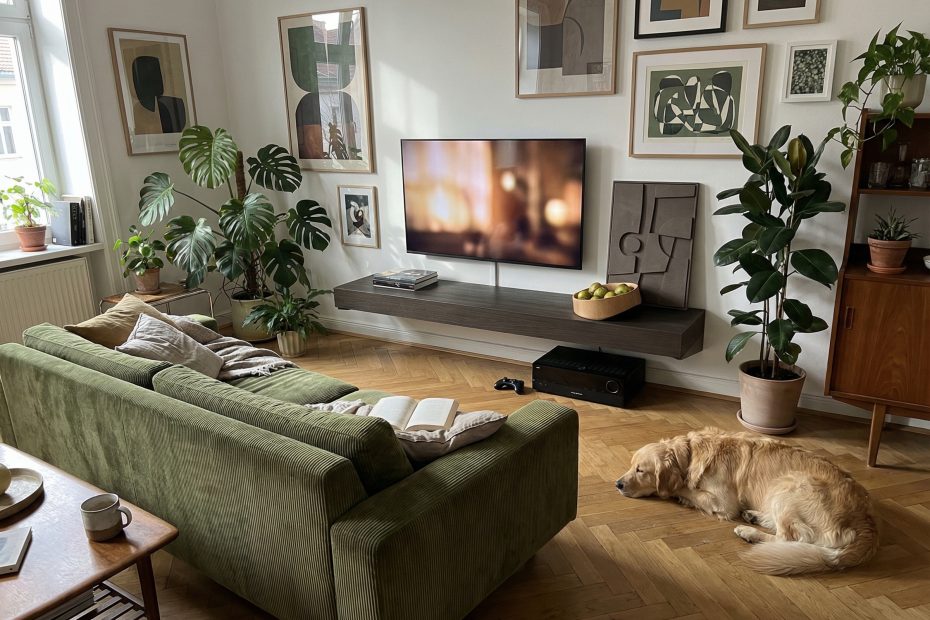
Figuring out the right TV height from the floor is one of those details that seems secondary—until you find yourself on the sofa watching the screen in “giraffe mode.” In reality, height matters immensely, both for your physical comfort and the visual balance of the wall.
The starting rule is simple: the center of the screen should be roughly at eye level when you are watching TV in your usual position. In the living room, the most common reference point is between 39–43 inches (approx. 100 and 110 cm) from the floor. This is the best baseline to determine where to place your television.
The Right TV Height Isn’t Just About the TV
When trying to determine the correct height, the risk is thinking that knowing the screen’s inches is enough. Actually, things are a bit more interesting: the height of the sofa, the viewing distance, and whether the TV is wall-mounted or placed on a stand all come into play.
For example, if you watch TV from a low, deep sofa, your gaze will be more relaxed and slightly tilted downward. If the seating is higher or firmer, the center of the screen can move up a few centimeters. In short: standard measurements help, but the ultimate “litmus test” is always the position you sit in every day.

How TV Height Changes Based on Inches
The general rule is still that the center of the screen should be at eye level, but the larger the TV, the more the overall dimensions change.
A 55-inch TV in the living room, for example, works well when the center of the screen is positioned about 39-43 inches (100–110 cm) above the floor. With a 65-inch TV, you can stay within the same range, perhaps moving up slightly to 41-43 inches (105–110 cm). If, on the other hand, you switch to a 75-inch TV, you need to be more careful: the screen takes up much more vertical space, and mounting it too high means turning every movie into an unwanted neck-stretching session.
In short, screen size matters, but it doesn’t change the basic logic: you don’t hang the TV “where it looks good on the wall,” but where it looks good from the couch.
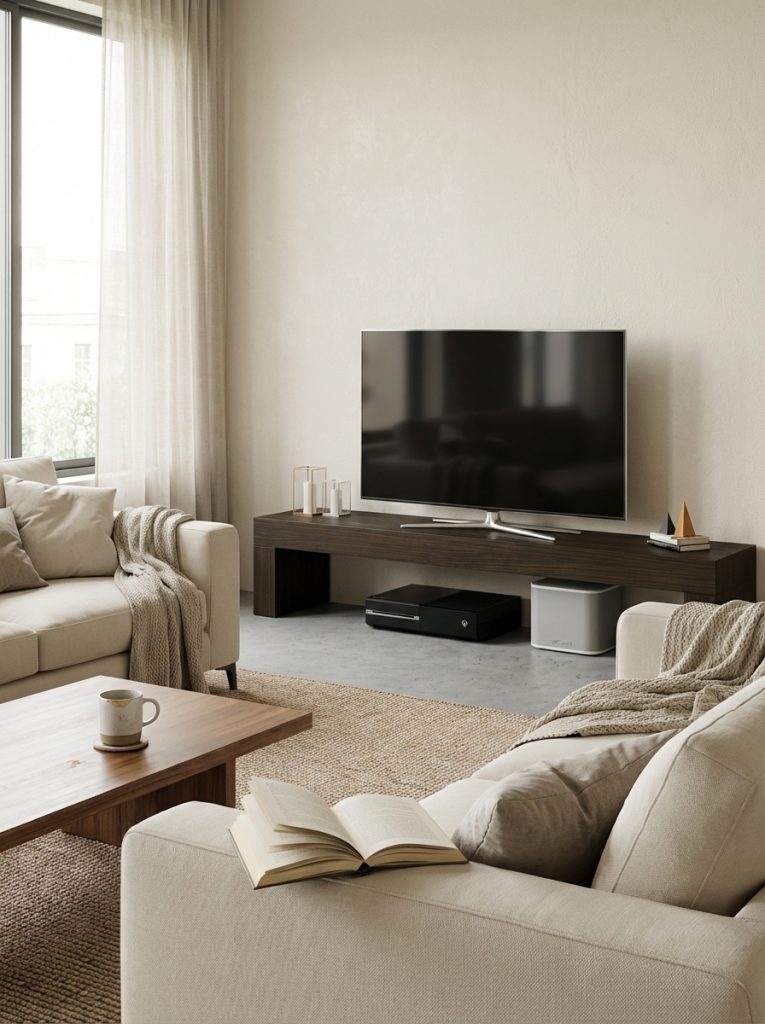
Living Room or Bedroom? How Measurements Shift
This is where many people go wrong. In the living room, you usually watch TV while sitting, so the center of the screen stays around 39-43 inches (100–110 cm). In the bedroom, however, your posture changes: you are more reclined, often half-lying down with questionable dignity but great comfort.
Because of this, a bedroom TV can be positioned a bit higher, with the screen center generally rising to between 45-51 inches (approx. 115 and 130 cm) from the floor.
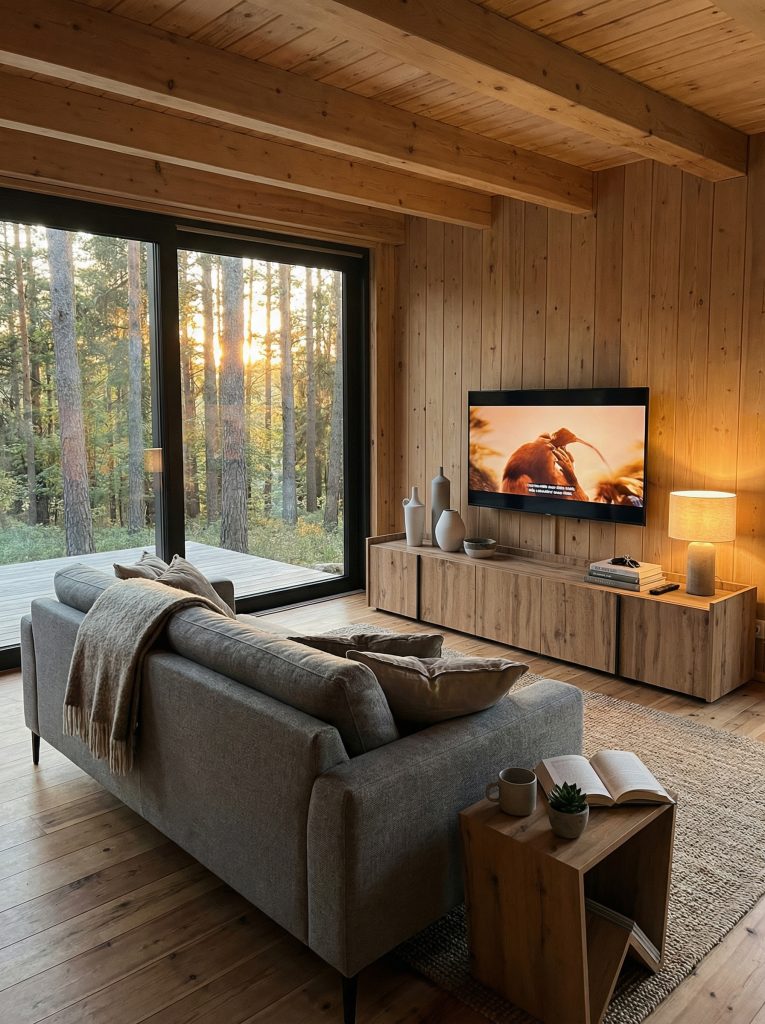
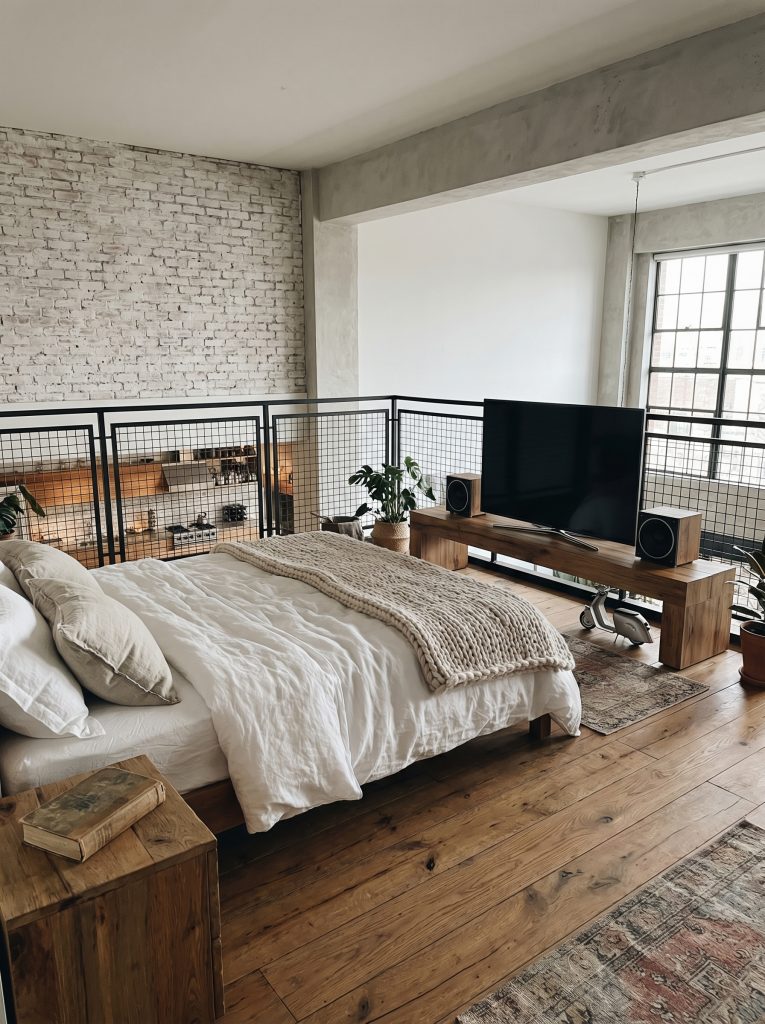
How High Should the TV Cabinet Be?
Beyond wall mounting, TVs are often placed on a piece of furniture. So, it’s worth asking: how do you choose a TV stand and how high should it be?
For floor-standing TV units, a versatile height range is between 18 and 24 inches (45 and 60 cm). This works well both visually and practically, avoiding the “TV is too low” effect and the less elegant look of a cabinet turned into a “celebratory pedestal.”

When installing a wall-mounted TV stand, you should always start by determining the final position of the screen, not the stand itself. Since the center of the TV in the living room should be positioned between 39 and 43 inches (100 and 110 cm) above the floor, the stand should be placed low enough so that the screen does not extend beyond this range.
In practice, the bottom edge of a floating unit is usually kept between 8 and 14 inches (20 and 35 cm) from the floor. A floating unit mounted too high risks pushing the screen out of alignment with your eyes, especially if the sofa is low.

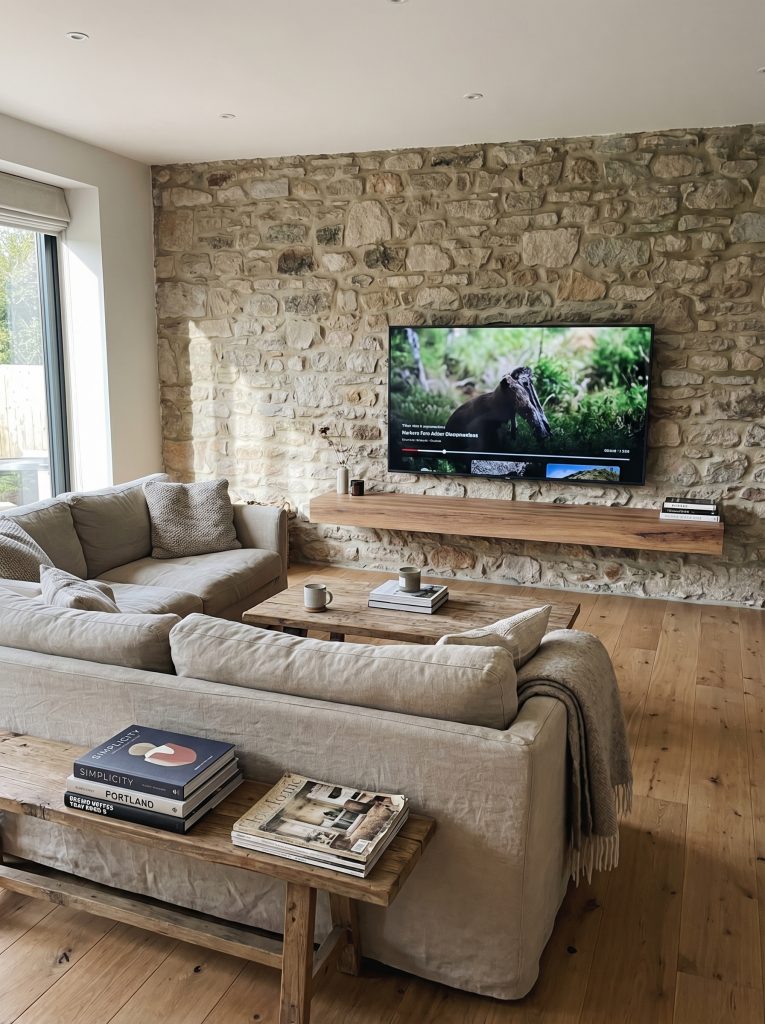
The most useful rule: First, establish the correct height for the TV, then choose the height of the floating unit accordingly.
The right TV height is always a balance between ergonomics and decor. The screen must be pleasant to watch but also fit well within the room, harmonizing with the sofa, furniture, and wall proportions. Choosing well-designed solutions—like the floor-standing or wall-mounted units from Mobili Fiver—helps organize the TV wall with order and proportion, without sacrificing functionality or aesthetics.
Common Mistakes to Avoid
The first is to assemble the TV too high. People do this because “it looks more cinematic.” It might look dramatic, but it’s far less comfortable.
The secondis treating the furniture and TV as separate elements. They must be thought of together. If the stand is tall and the TV is placed on top, the whole setup can easily end up outside the correct visual range.
The third is not to do “test drive” before mounting: It’s easy: sit where you usually watch TV, measure your eye level, and use masking tape to simulate the screen’s footprint on the wall. It might not be the most glamorous part of the project, but it’s the smartest.
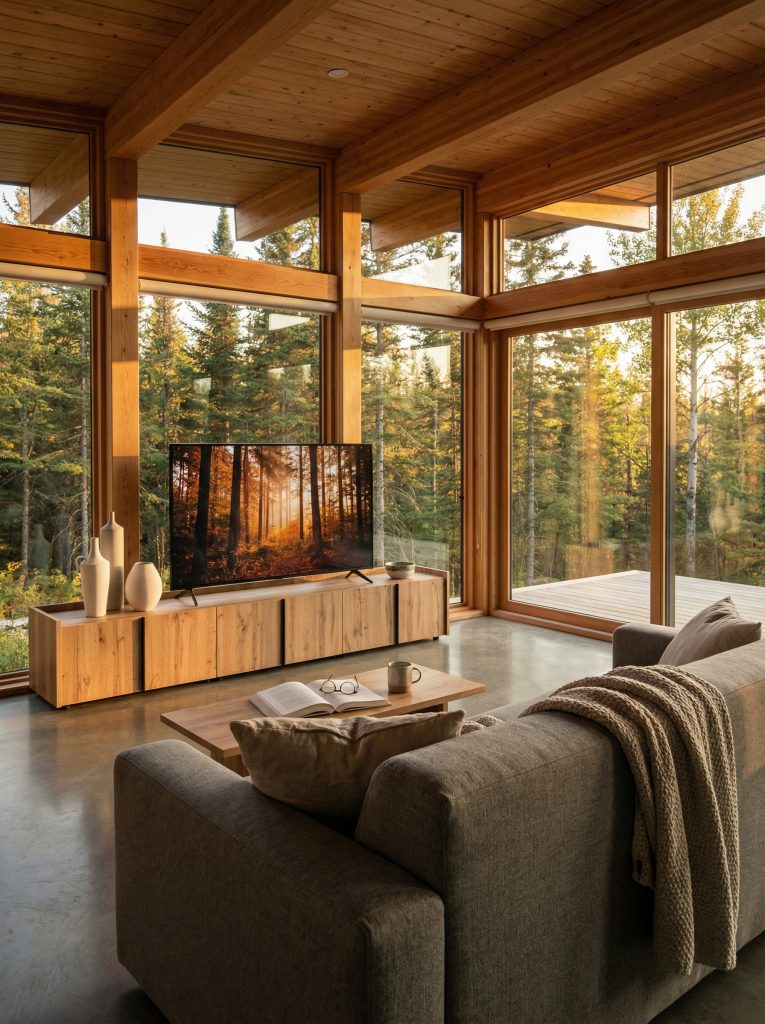
After all, the goal is simple: to create a relaxation corner that actually works—without awkward reflections, improvised measurements, and above all, without needing a chiropractor after two nights on the couch.