


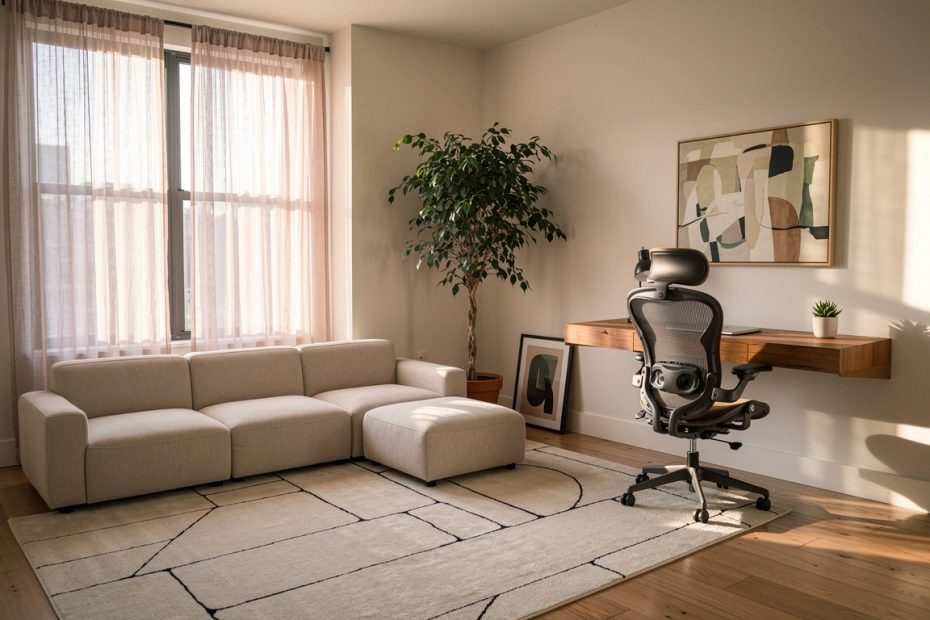
With remote work and home study now the norm, having a dedicated workstation is almost essential. But not everyone has a spare room to turn into an office: the answer, more often than not, is right there, in the living room. Setting up a home office corner in the living room means making use of space you already live in, without giving up the comfort of the day zone.
In this guide we go, step by step, through where to place the workstation, which pieces of furniture to choose, how to handle light and which accessories help keep everything in order.
Where to set up a home office corner in the living room
Position is the first choice, and it matters more than it seems. The best spot is next to a window: natural light reduces eye strain and makes the working day more pleasant. Mind the screen orientation though: the window should not be directly in front of or behind it, to avoid glare and backlight.
If free wall space is scarce, look around: the corner behind the sofa, a recess, the wall next to a bookcase or an underused stretch of wall are perfect candidates. Always leave room to move: a chair that bumps into the coffee table with every shift is more tiring than the work itself. As a rule of thumb, aim for a surface of at least 120 x 60 cm and a clear movement zone behind the seat.
Which furniture to choose for your home office corner
The right pieces make the difference between a real workstation and a table buried in paperwork. You need few items, but well chosen.
The desk
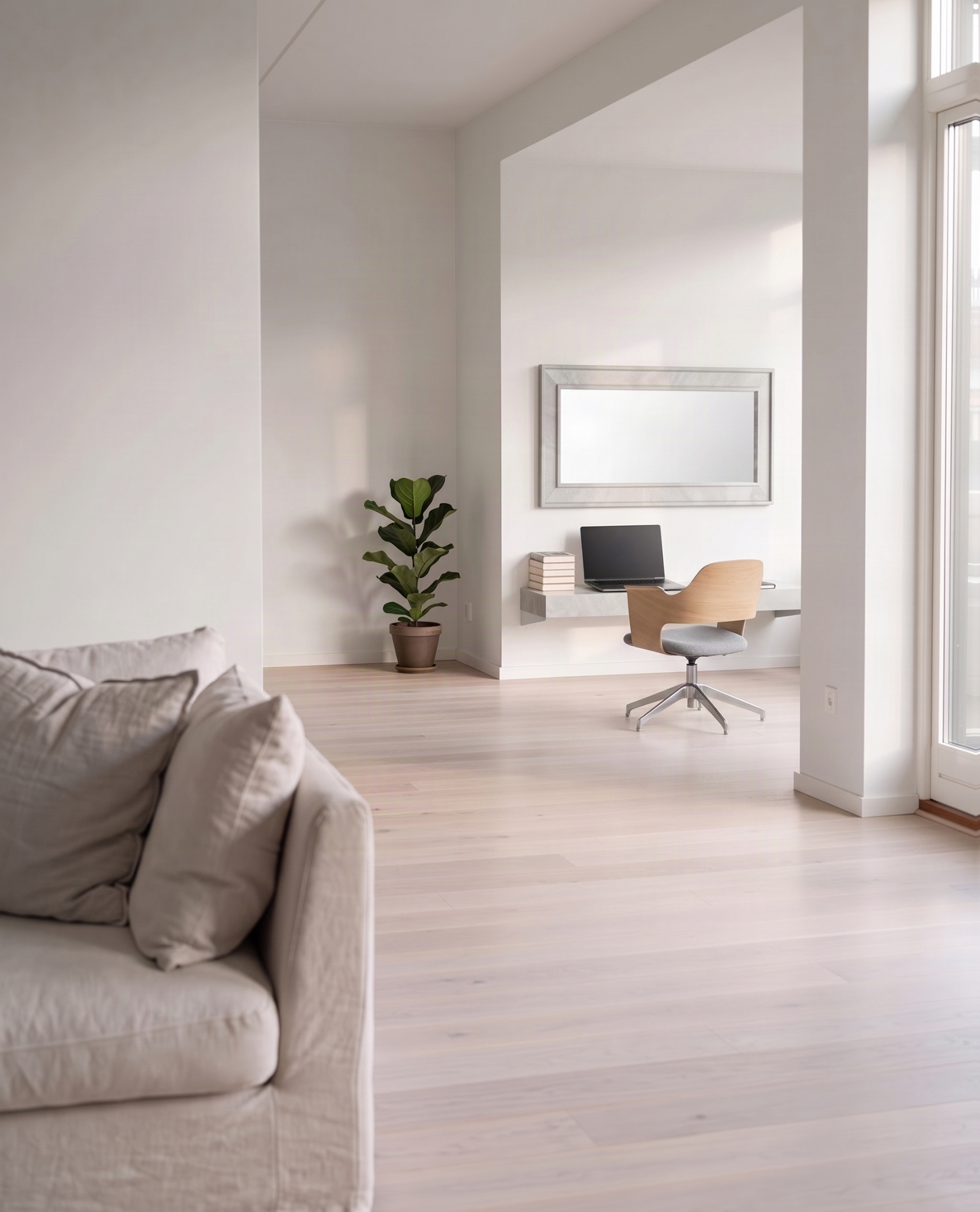
This is the centrepiece. In the living room a compact, light desk works best: a wall mounted desk, fixed to the wall, removes the legs and frees the floor, making the area feel more open.
Another option is an extendable console table: when closed, a slim surface against the wall; when needed, it opens out into a wide worktop. Avoid desks that are too deep or bulky, which can feel cumbersome in the lounge.
The seat
Do not skimp on the chair: if you spend several hours at the desk, choose a seat that supports your back and lower back well and lets you keep a comfortable position at the worktop. Wheels and armrests can make the setup more practical, as long as there is enough space to move freely. In the living room, looks matter too: better an office chair that pairs comfort with lines matching the rest of the room.
Storage, shelves and vertical space
For filing, a drawer unit on castors that slides under the desk keeps documents and stationery within reach. If you prefer to use the wall, a bookcase or a few shelves above the desk add space without taking up the floor.
Ideas to organise a home office corner in your living room
Once you have picked the space and the furniture, you can decide how to lay out the workstation based on the living room layout and how visible you want it to be.
A hidden home office corner in the living room
If the idea of always having the desk on show is not for you, the keyword is one: hidden. A hidden home office corner in the living room is designed to disappear at the end of the day, giving the lounge back its relaxed feel.
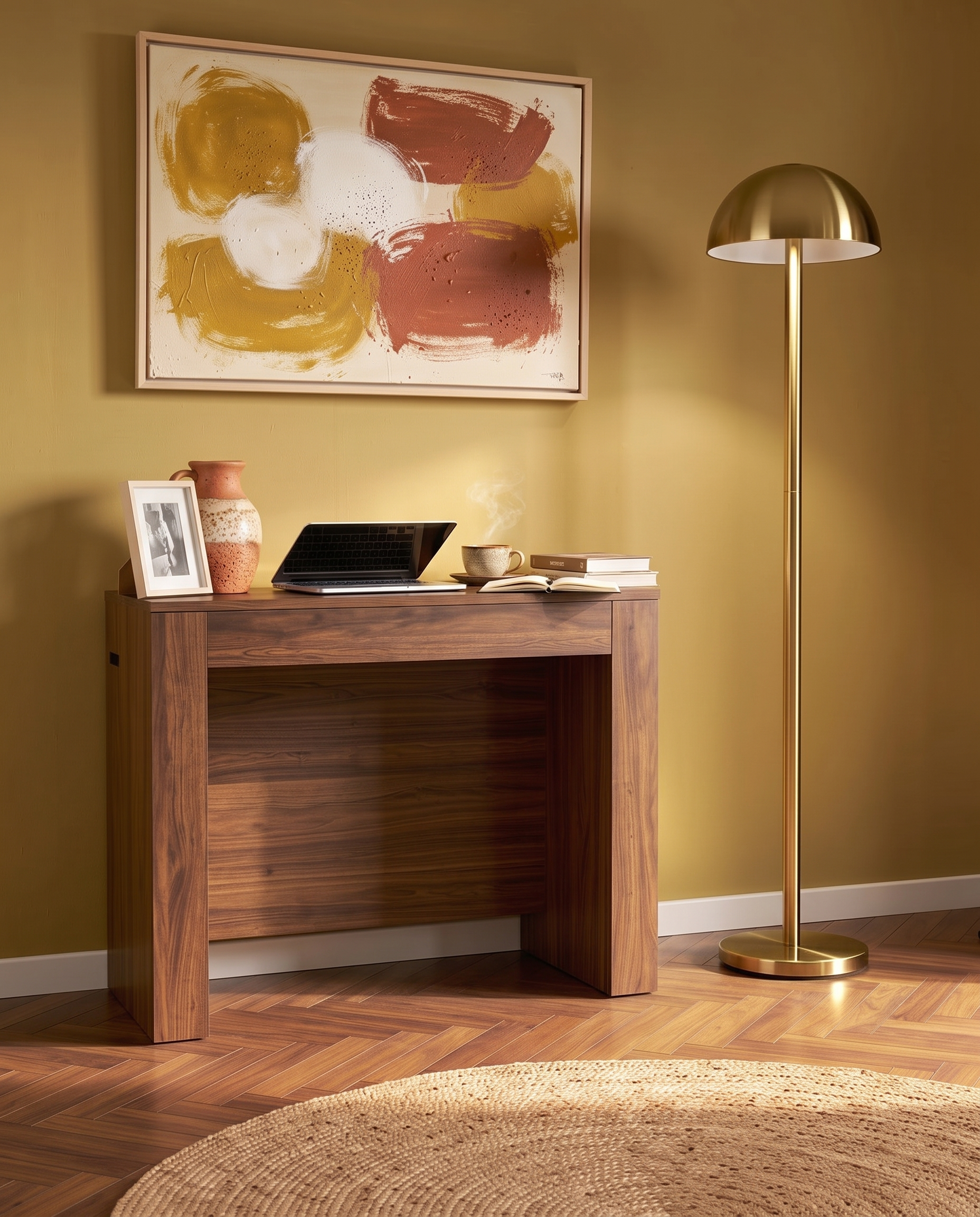
Options are not lacking: an extendable console that closes when work is done, a fold down desk with a panel that hides everything, or a station built into a wall unit behind flush doors. The principle is always the same: when you stop working, work disappears from sight, and, with a bit of luck, from your head too.
Home office corner with a bookcase: divide without closing off
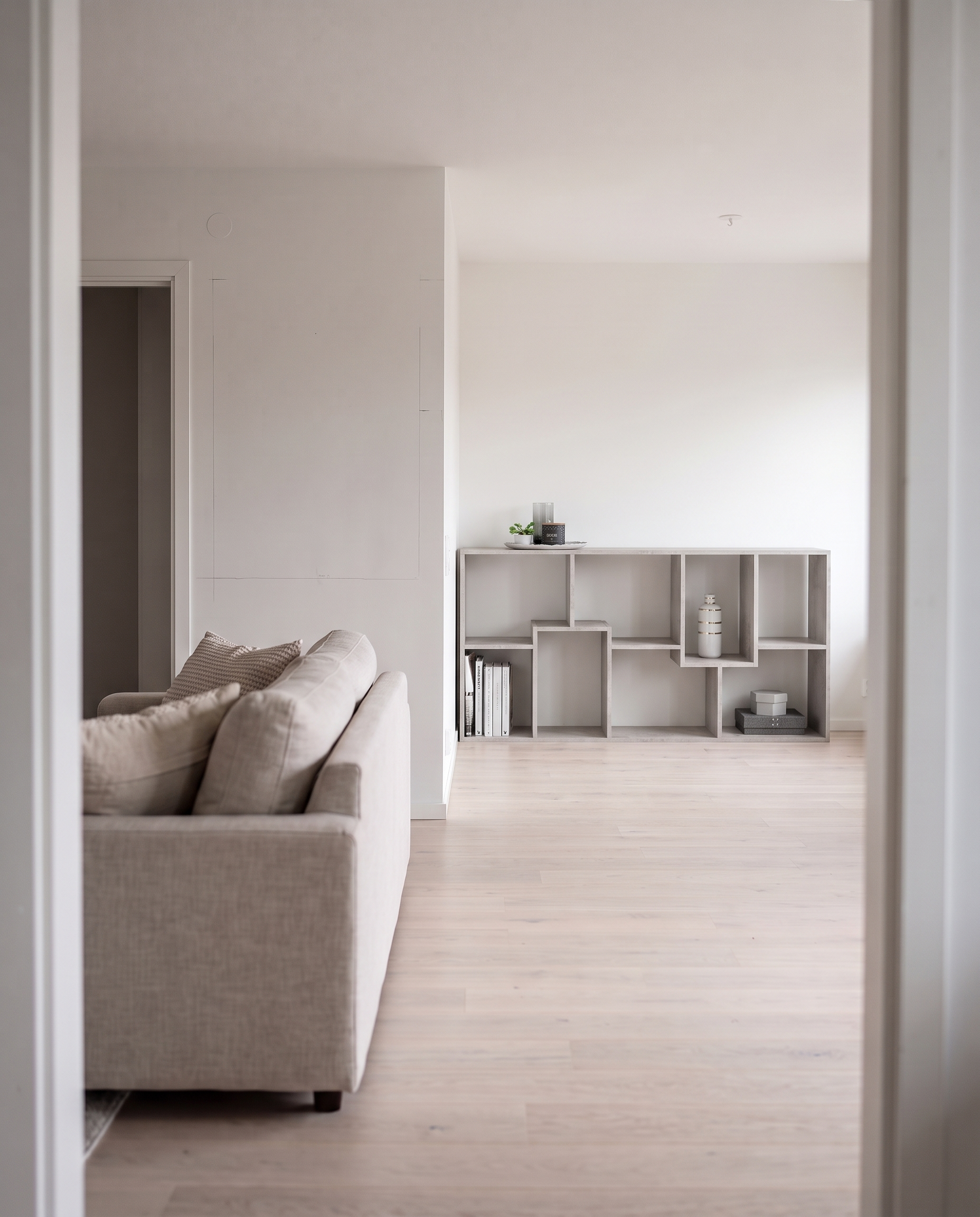
Pairing the office corner with a bookcase is one of the most practical and striking ideas. A bookcase behind the desk works as a backdrop and holds books, files and objects, while a double sided bookcase or an open one can mark off the work zone from the rest of the living room without blocking light, working as a light divider.
Alternatively, a few shelves above the worktop create a small vertical system: everything within reach, nothing on the floor. It is the simplest way to give the corner its own identity and set it apart visually from the relax zone.
How to make the workstation functional
Working well takes more than a desk and a seat: light, order and space management shape the daily practicality of the workstation.
The right lighting for work
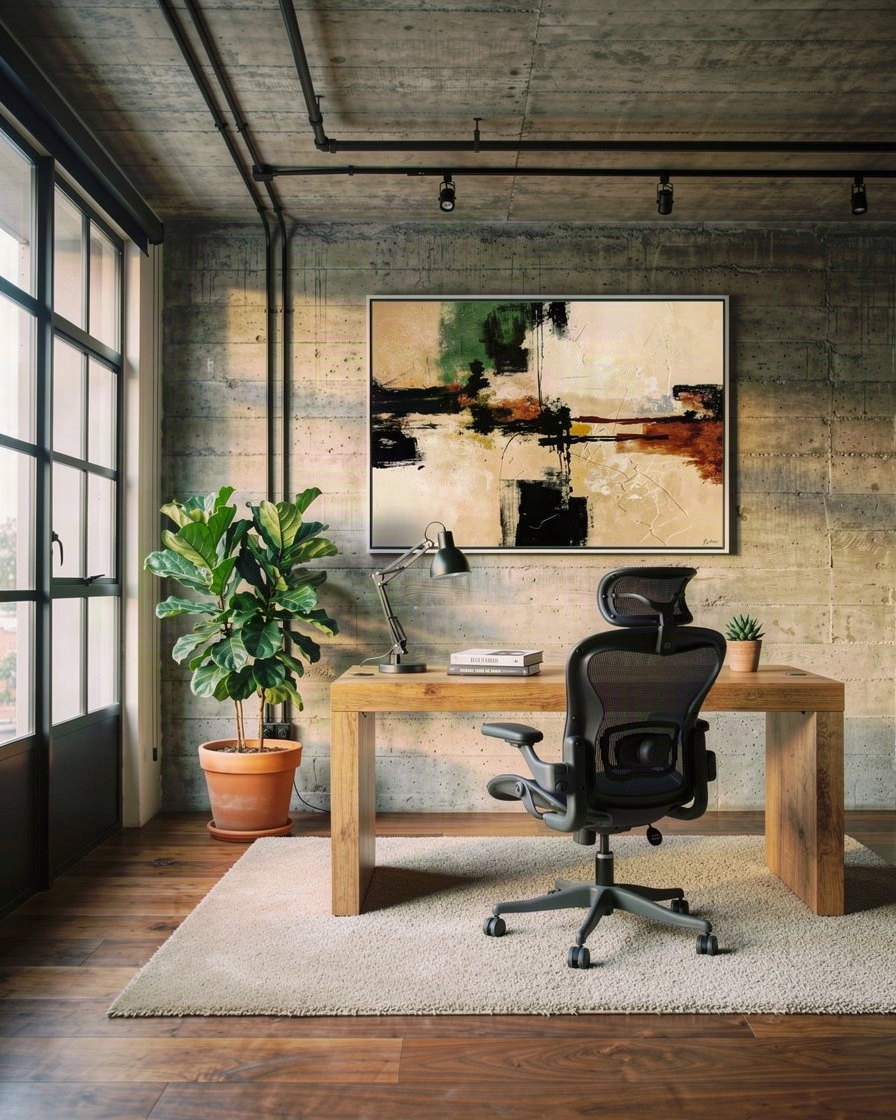
After natural light, you need good artificial light. An adjustable table lamp is a must: it lights the surface without casting shadows and lets you work into the evening. Go for a neutral tone during focus hours, and keep a warmer, softer source elsewhere in the living room to avoid sharp contrasts.
Place the lamp on the opposite side to your writing hand so you do not cast a shadow, and angle the screen to avoid reflections from windows and spotlights. If your lounge is dim on its own, here are more tips on how to light a dark room.
How to organise your worktop
A home office corner works only if it stays tidy: with the desk on full view in the living room, order is not optional. Start with the right accessories: a stationery organiser, a pen holder, a monitor stand that frees up space under the screen and, above all, a cable tray, the real culprits of clutter.
Make the most of the vertical with wall cabinets and wall shelves for what you use less often, and keep only the essentials on the worktop. The less on show, the more your home office corner blends into the rest of the room.
How to fit the home office corner into your living room style
The style of the workstation should talk to the living room. For a modern home office corner in the living room, go for clean lines, white or light wood finishes, black metal details and wall mounted pieces: lightness and pared back design across the board.
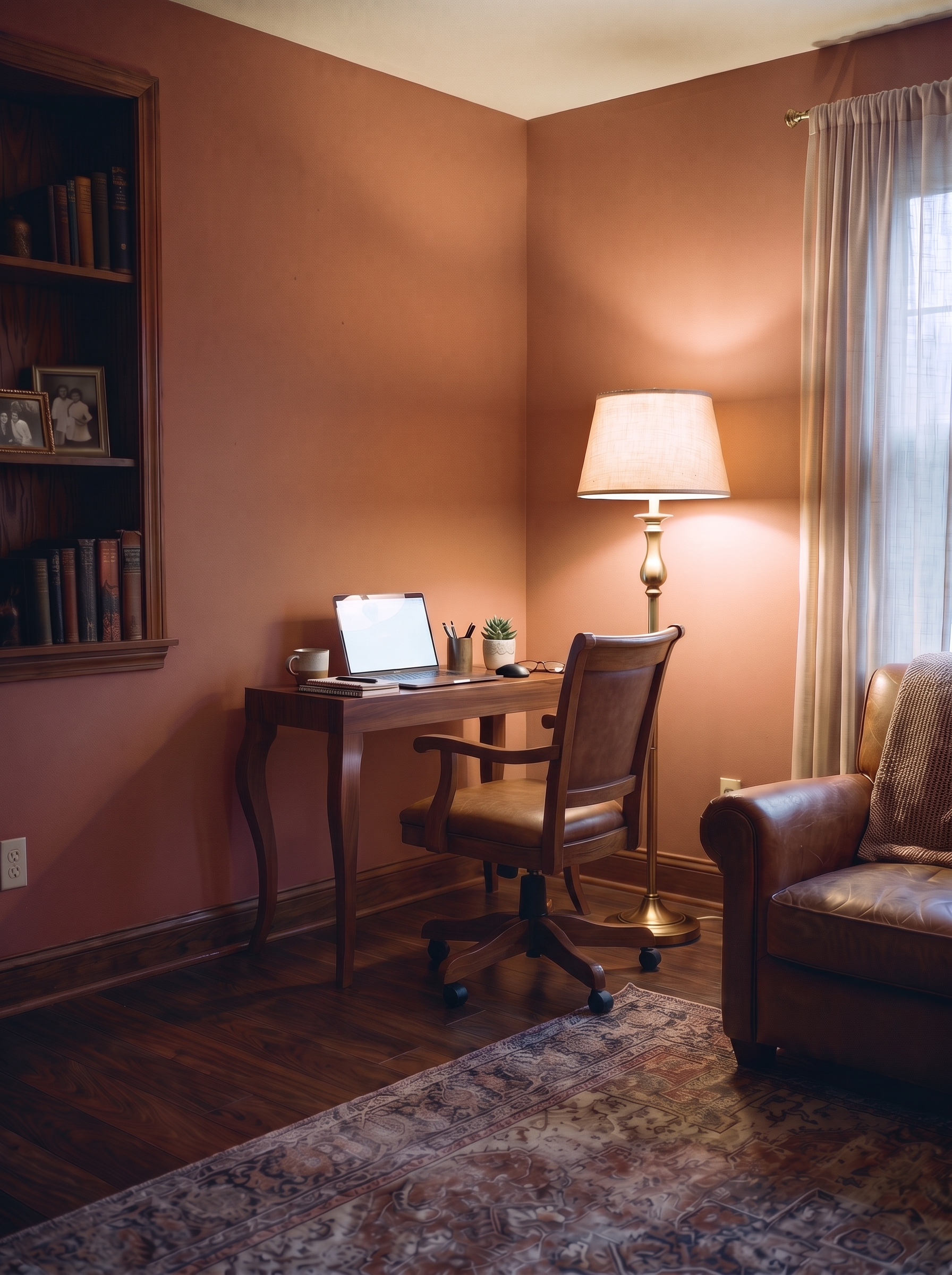
If your lounge has a more classic feel, choose the warmth of woods like walnut, a desk with soft rounded drawers and a few details matched with the rest of the furniture. In both cases the rule is consistency: the office corner should look like part of the living room, not an office that landed there by mistake.
Creating a home office corner in the living room, in the end, is about balance between function and looks: the right spot near the light, compact furniture, a bit of order and a style in tune with the day zone. And if you want to take it further, here are more ideas on how to design a home office space.


