


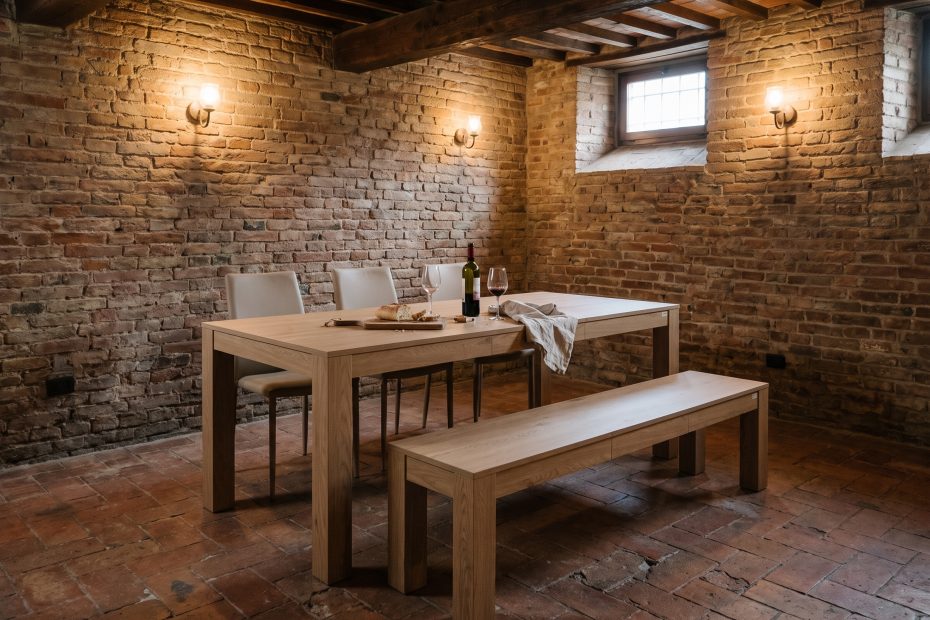
A basement room is that extra space every home secretly wants: a cellar, basement or garage reclaimed and turned into the place for good company, where friends gather for dinner or drinks without any fuss. The best part of furnishing it? Since it’s a room “apart”, you can be bolder with style without having to match the rest of the house.
Rustic or modern, warm and welcoming: let’s look at how to furnish a basement room with the right furniture, the right materials and (the detail that changes everything) the right lighting.
Basement room ideas: where to start
Before the furniture comes the plan. A basement room is multipurpose by nature, so the most useful thing is to split it into zones: a dining area with the table, a bar or kitchen corner for preparing and serving, and a relaxation area to sink into after dinner.
Once that’s done, measure the space and check the existing light sources: they decide how much furniture you can realistically fit. Keep in mind the often low ceilings and the background humidity typical of basements: go for sturdy furniture and finishes that stand the test of time. And remember, a few clear ideas beat ten pieces of furniture piled up “because it’s only the basement”.
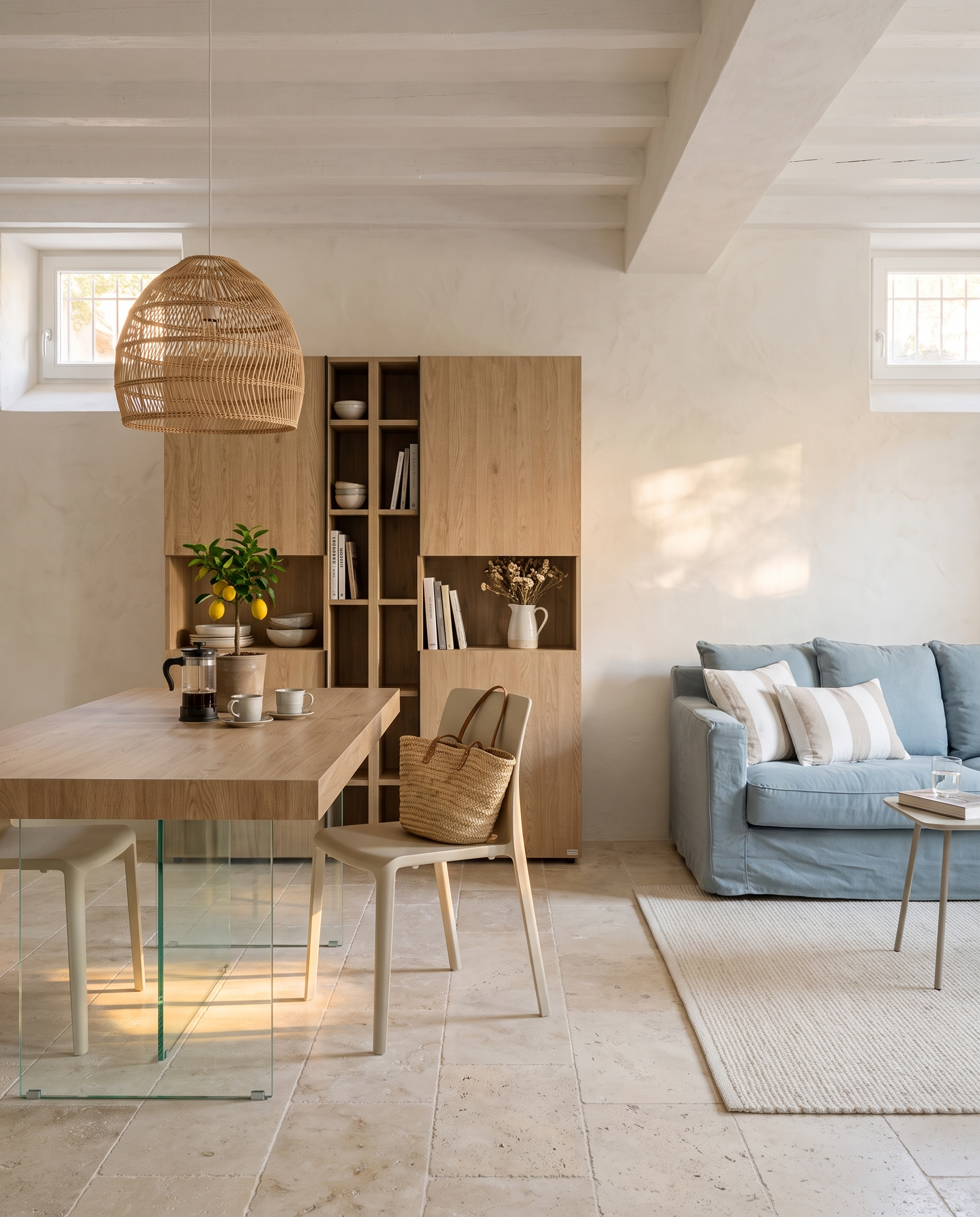
How to use your basement room
Before choosing the furniture, decide what the space will actually be used for. It can have a single purpose or be organised into several zones, especially when there’s enough floor space to visually separate the different activities.
Lunches, dinners and get togethers
One of the classic uses is the social one: a space for lunches, dinners, drinks or parties without taking over the main living room. In this case, arrange the furniture around the dining area and leave enough free space to move around and welcome more people, because the guest list has a mysterious habit of growing at the last minute.
Relaxation and lounge area
A sofa, armchairs and a few side surfaces can turn part of the room into a second living room, more laid back than the one upstairs. It also works well if you want a corner for reading, music or simply unwinding, without having to fight anyone for the living room sofa.
Study and hobby space
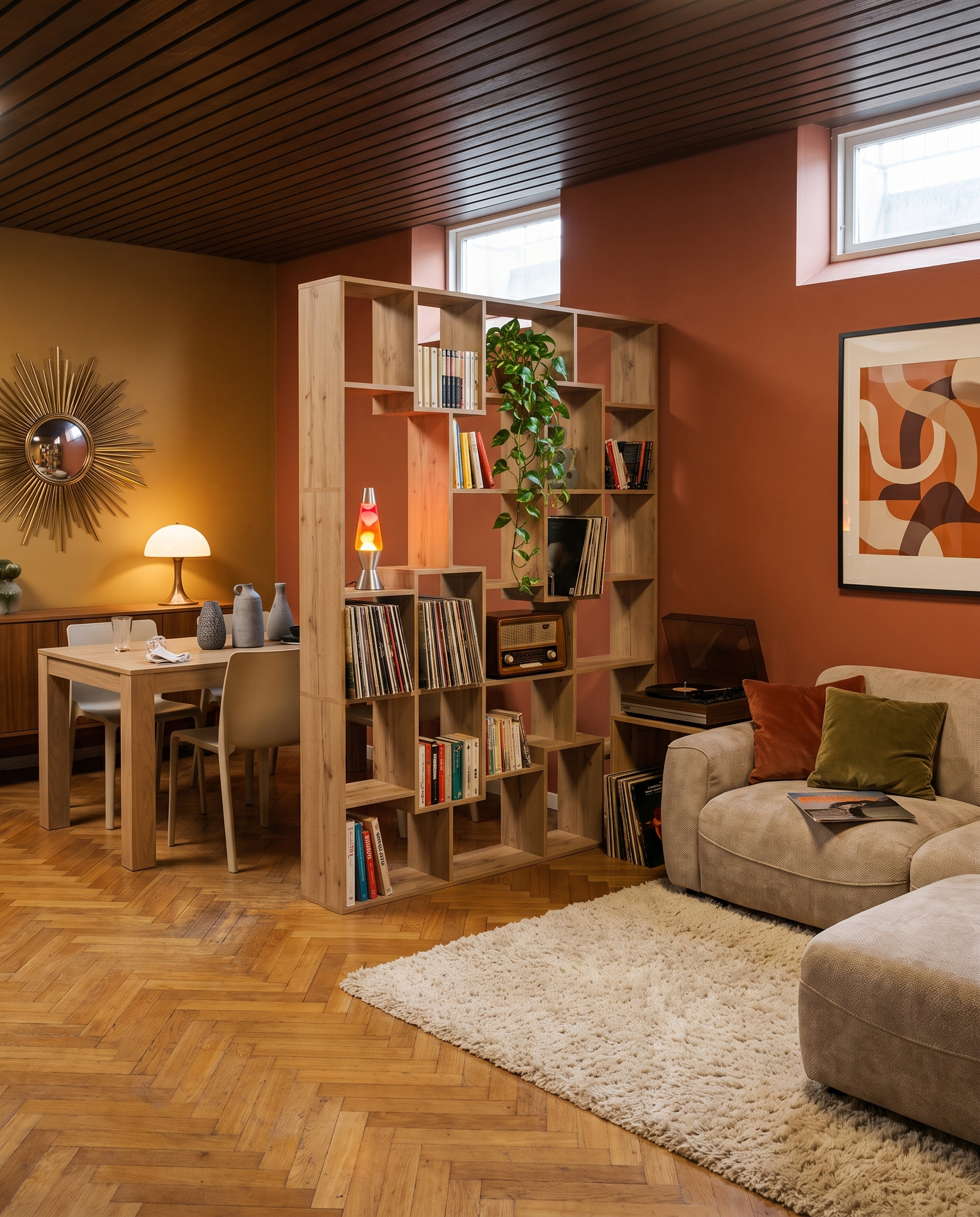
If you need a quieter spot, you can set up a workstation for working or studying, or dedicate part of the space to your hobbies. A bookcase or storage unit helps separate the different functions and keep materials and equipment tidy.
Home gym and free time
Keeping one area free of furniture means you can also use the room for exercise or other hobbies that need space. Here it’s best to keep furniture to the essentials and make the most of the walls for storing what you need.
If the space is big enough, these functions can coexist: the key is to define the zones first and choose furniture in proportion, without filling every available surface.
Rustic basement room: from classic to modern rustic
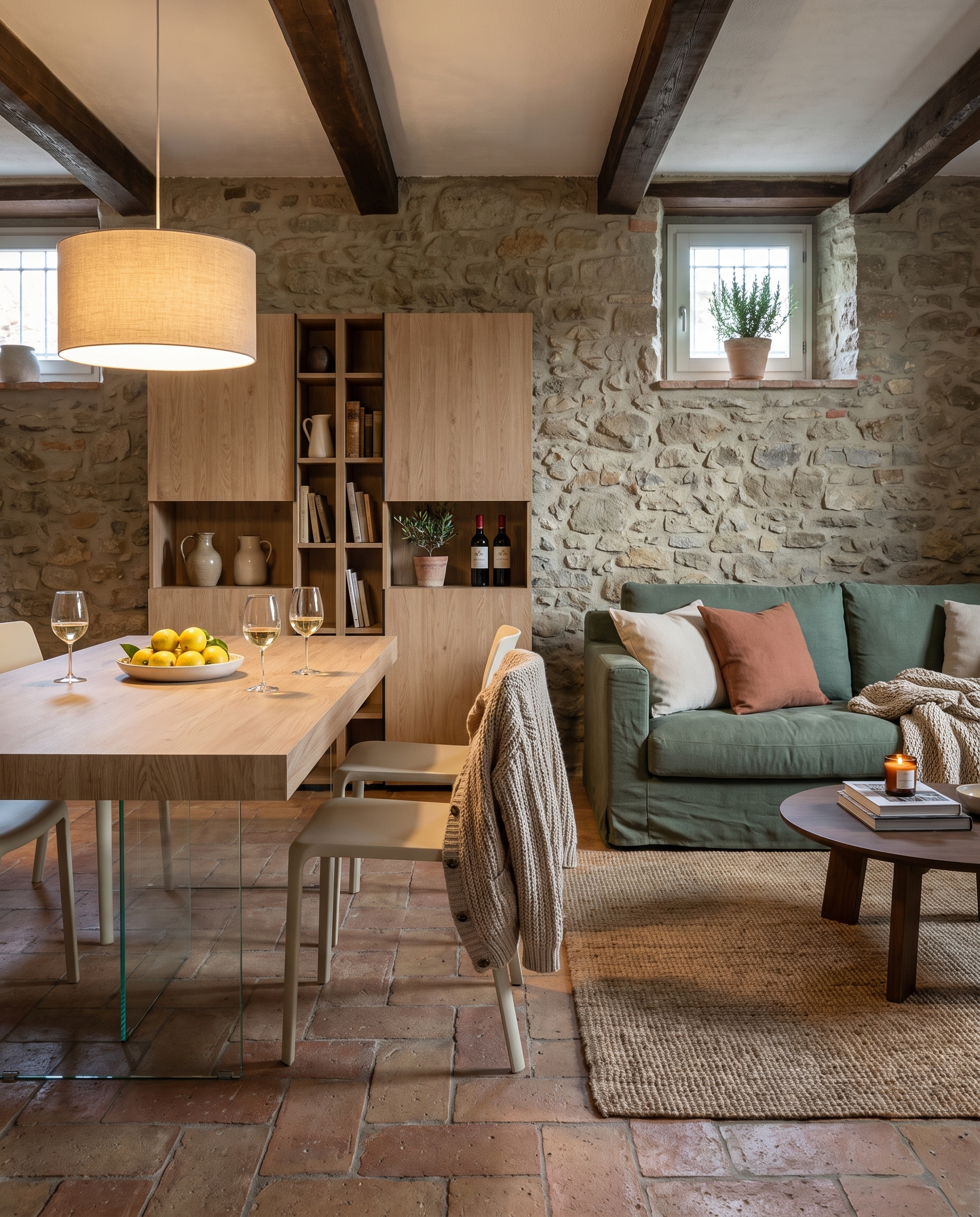
Rustic style is still the great classic for basement rooms, and it’s easy to see why: wood, stone, exposed brick and beams create that warm, sociable atmosphere that always feels right down here. Go for natural materials and warm colours (oak, terracotta, wood tones) and a terracotta style floor that forgives everything, including Saturday night pizza crumbs.
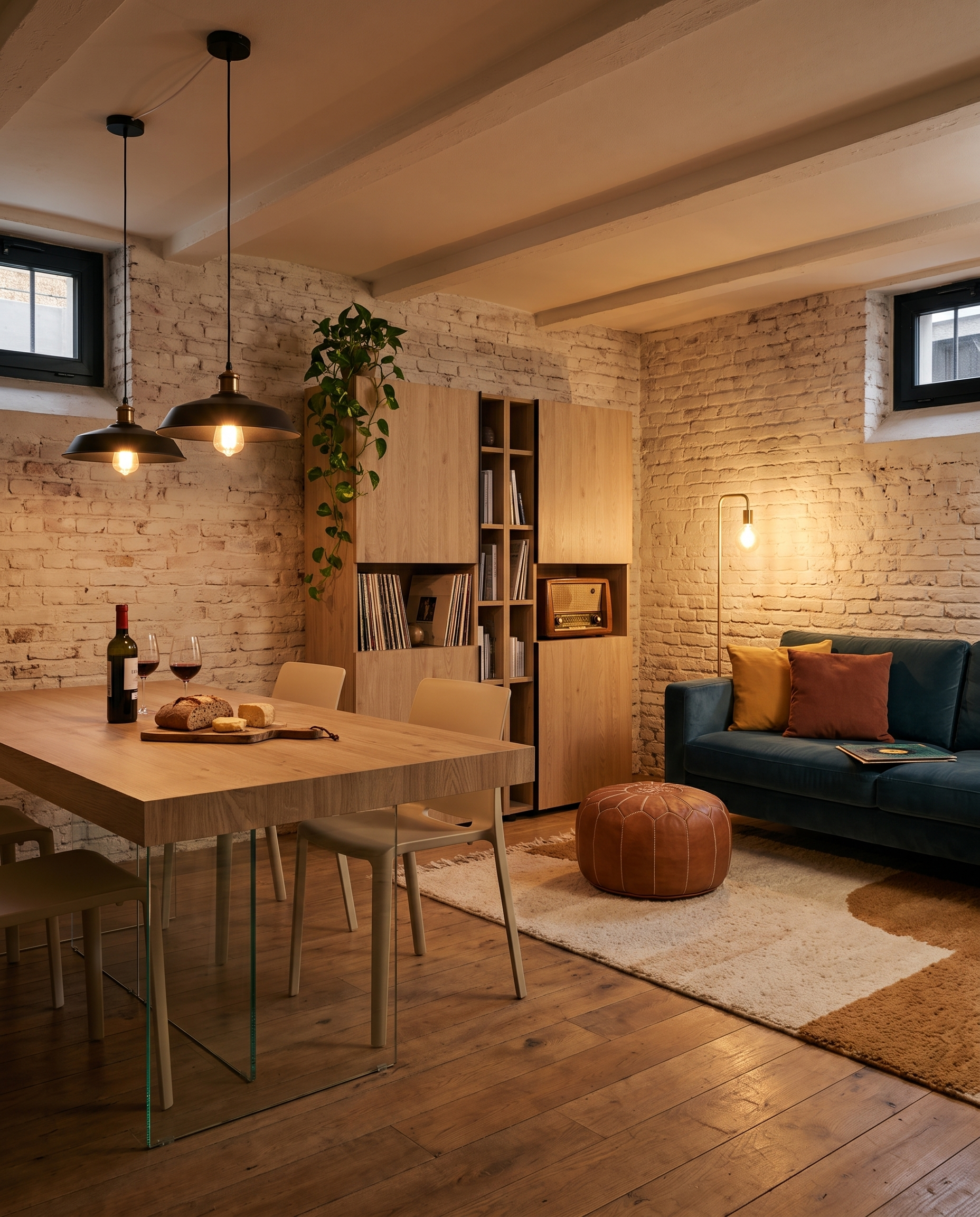
If you prefer a modern rustic look, keep the warmth of wood and stone but lighten the overall feel with clean lined furniture, neutral colours and a few contemporary metal details. That way the rustic elements stay in the spotlight without weighing the room down. A sturdy wooden table is still the centrepiece to build everything else around: choose it first, then furnish accordingly.
Modern basement room: materials, colours and furniture
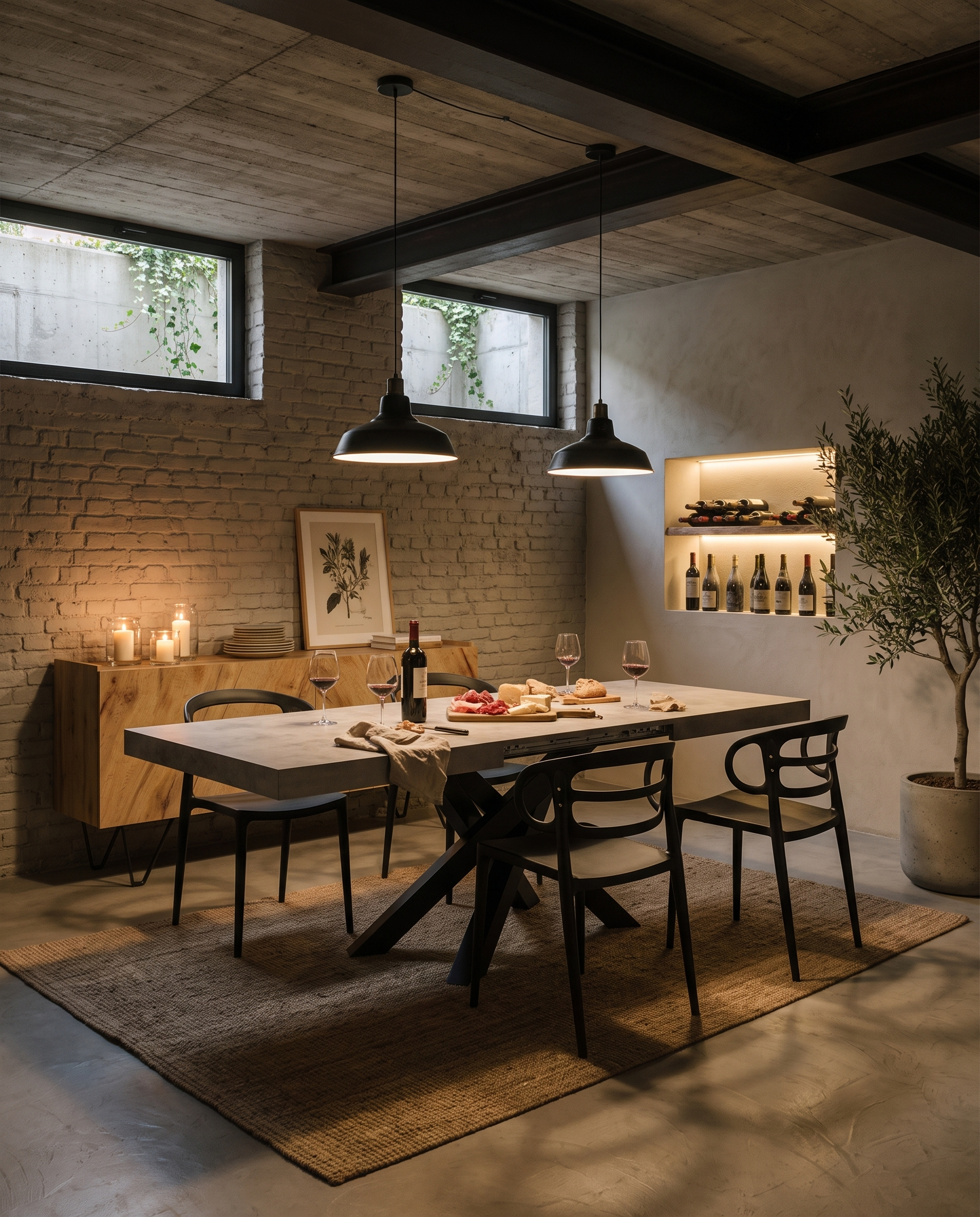
For a more contemporary feel, go for matt finishes, neutral colours, concrete effect surfaces and black metal details. Wood can stay, but use it to warm up the space and create contrast with clean lined furniture and a few well coordinated materials.
Avoid overloading the space with bulky furniture or too many different finishes: a modern basement room works best when it balances practicality, visual lightness and character. In short: modern, yes. Showroom, no.
For more ideas on pairing concrete, wood and metal, take a look at our guide to industrial chic style.
The basement table and sociable seating
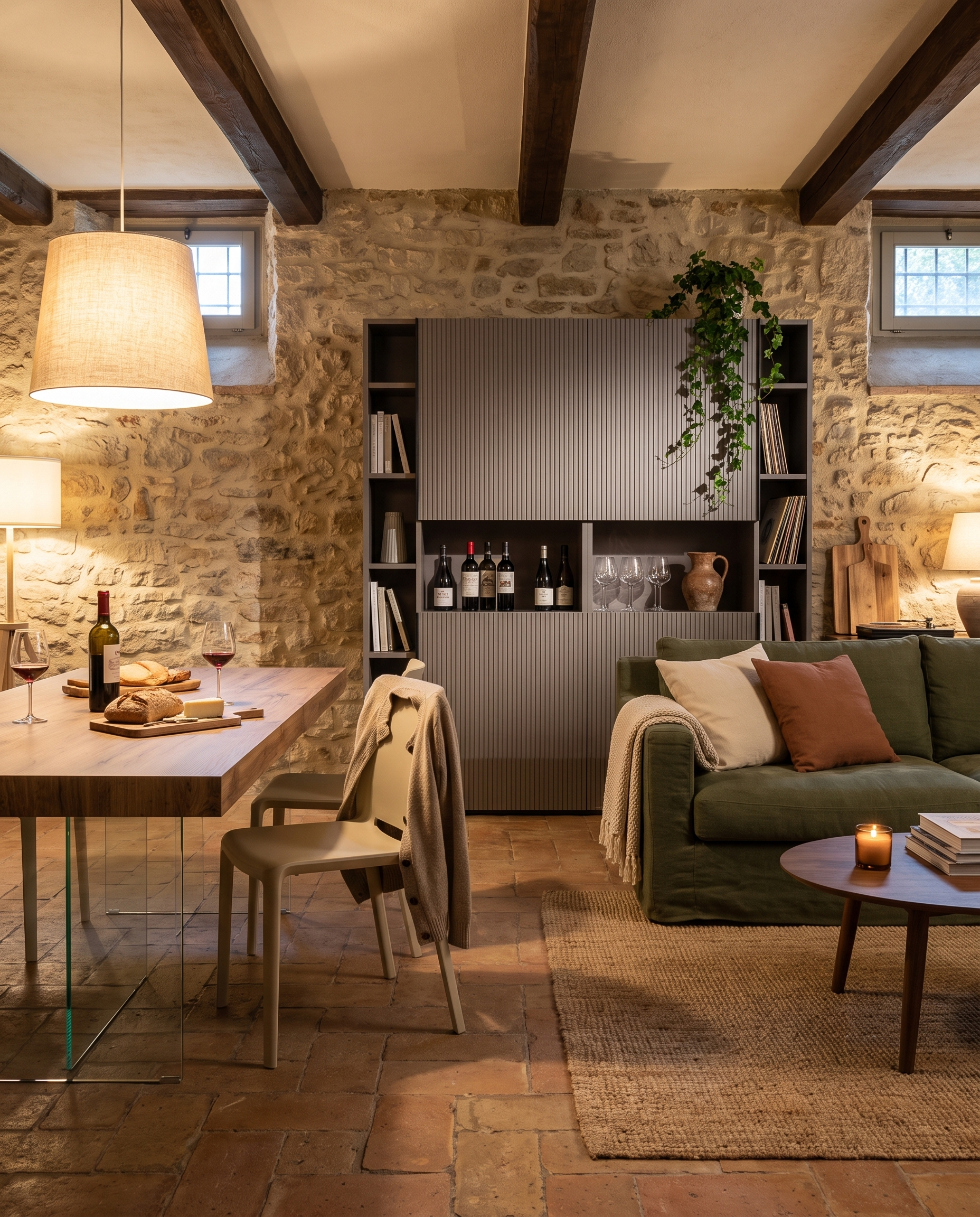
If there’s a star of the show, it’s the table. A basement room needs a generous table built for big gatherings, because down here, sooner or later, there’s always a crowd. An extendable table is the smart choice: normal size day to day, extra room when guests arrive.
To add seats without taking up space, table and bench sets are perfect and bring a cosy trattoria touch (in the best sense); pair them with a few comfortable chairs for anyone who just can’t get used to a bench. What matters is that plenty of people can sit down, and stay a long while.
Bar and kitchen corner
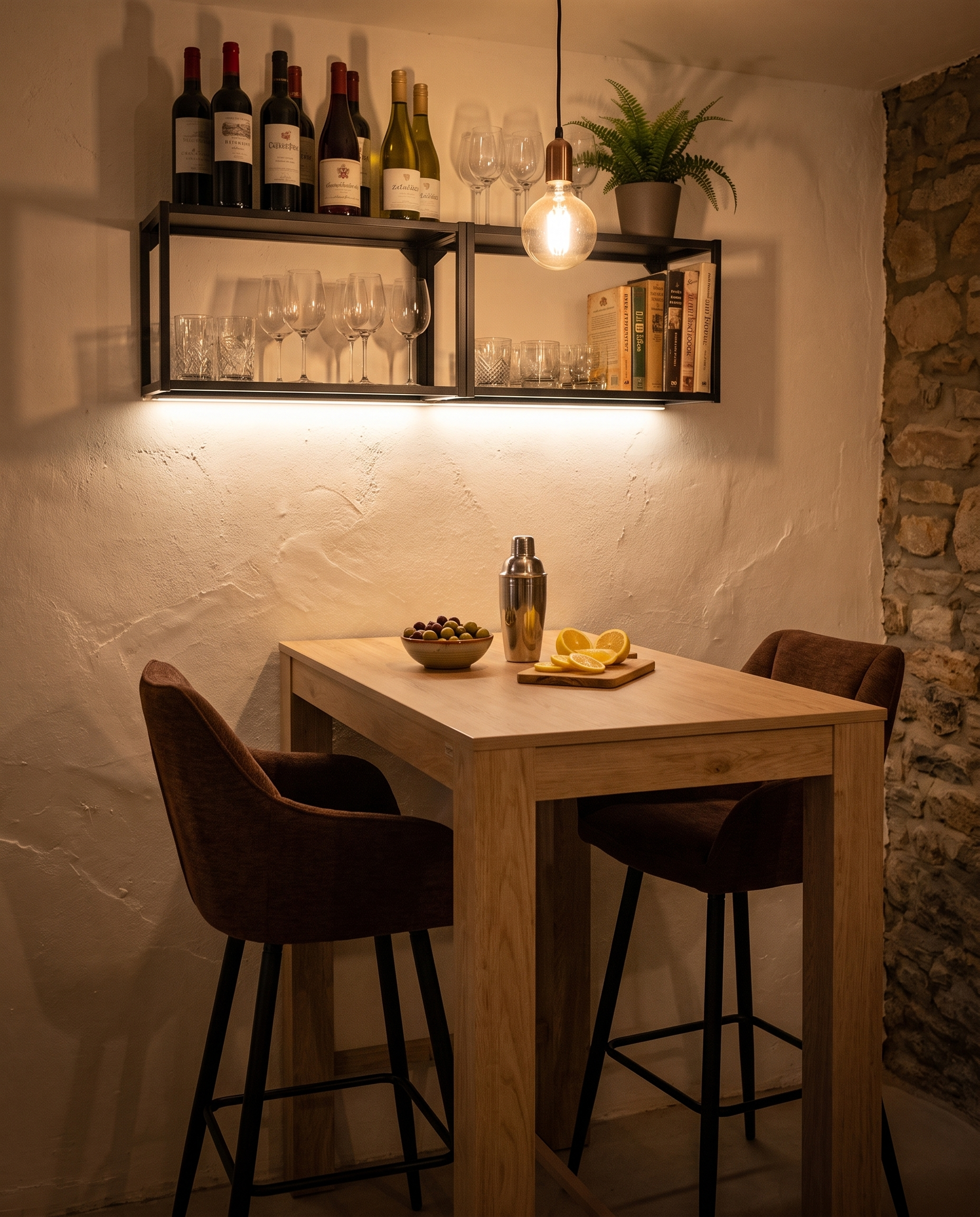
The bar corner is what turns a room into a proper basement hangout. All you need is a high table as a counter and a couple of bar stools: drinks served, atmosphere guaranteed. If the room also has a kitchen or kitchenette, keep only the essentials within reach and make use of the walls.
For bottles, glasses and tableware worth showing off, a set of open shelves does the job and fills the wall nicely.
If space is tight, you can even set up the bar in an unused corner, without taking over a big part of the room. The beauty of a counter is that it gathers people standing, glass in hand, just like at every good party: it’s an invitation to stay, not just another piece of furniture.
Lighting and decor: atmosphere comes first
Let’s face it: many basement rooms don’t see much natural light. The good news is that artificial lighting can work wonders down here.
Choose warm light and spread several light sources instead of one central chandelier: wall lights, spotlights and LED strips under shelves and counters create that intimate atmosphere a ceiling light alone will never give you. For more detail, our tips on how to light up a dark room are made for exactly this situation.
As for decor, a few well chosen pieces are enough: some shelves, a picture, a warm rug and above all a mirror, which reflects light and makes the room feel bigger. A wall mirror can also become a real design feature, giving character to a wall that would otherwise stay bare. Best to stop before every wall asks for its own ornament.
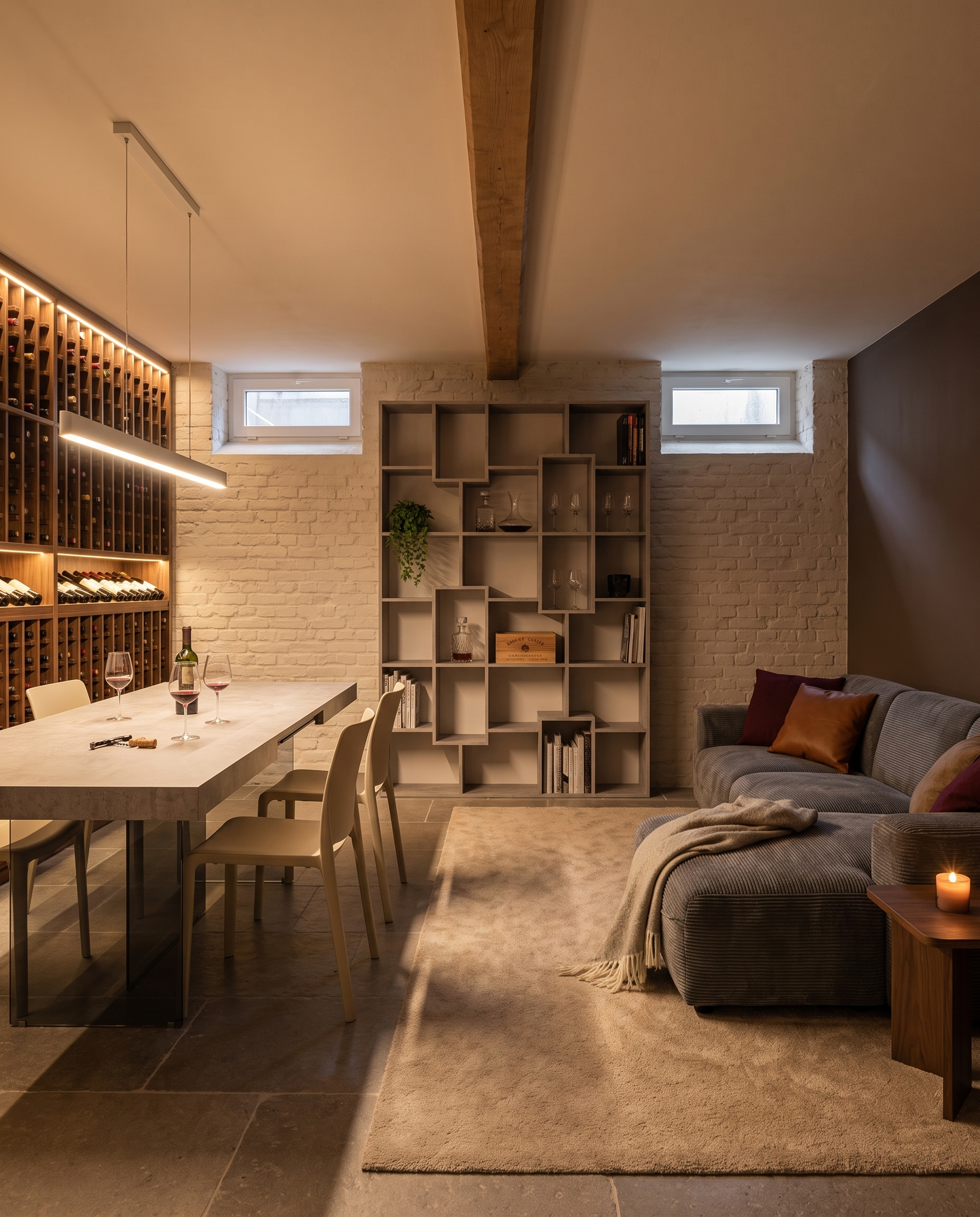
How to furnish a 40 m² basement room
With a 40 m² basement room you have enough space for two or three functions: dining, bar and relaxing, maybe with a small bathroom. If it’s one open space, separate the zones without building walls: an open bookcase, a rug or a simple change of wall colour is all it takes. The tricks for organising an open plan space apply down here too.
One tip: use two different shades to distinguish the dining area from the relaxation area, but avoid overly sharp contrasts, which in a small space risk breaking the room up instead of organising it. The idea is to create two zones, not two different houses.


