


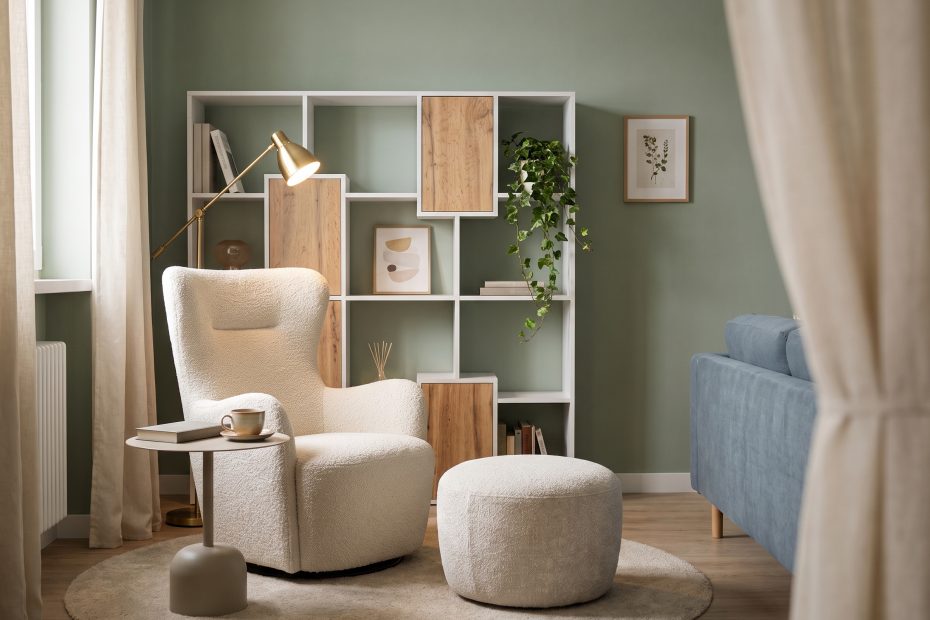
A reading nook at home comes down to four things: a comfortable seat, the right light, somewhere to put your book and your cuppa, and enough peace and quiet not to be interrupted every five minutes.
Let’s build it: first the ingredients, then where to fit it, with ideas for when space is tight.
How to create a reading nook at home
The ingredients are always the same, in the living room as in the bedroom. The rule is to choose for comfort, not just for looks: a gorgeous corner that makes your back ache after twenty minutes will never get used.
The seat: armchair, pouf and footstool
This is the most important piece. Look for a seat with a high back and good lumbar support, so you can rest your head too, and medium density padding: too soft and your back starts to curl. Among armchairs, wraparound models or ones with a generous seat are best for long reads. Add a pouf or a footstool to stretch out your legs: it costs little and changes everything. If you pick a storage pouf, throws and cushions have somewhere to live.
A reading nook with a bookcase
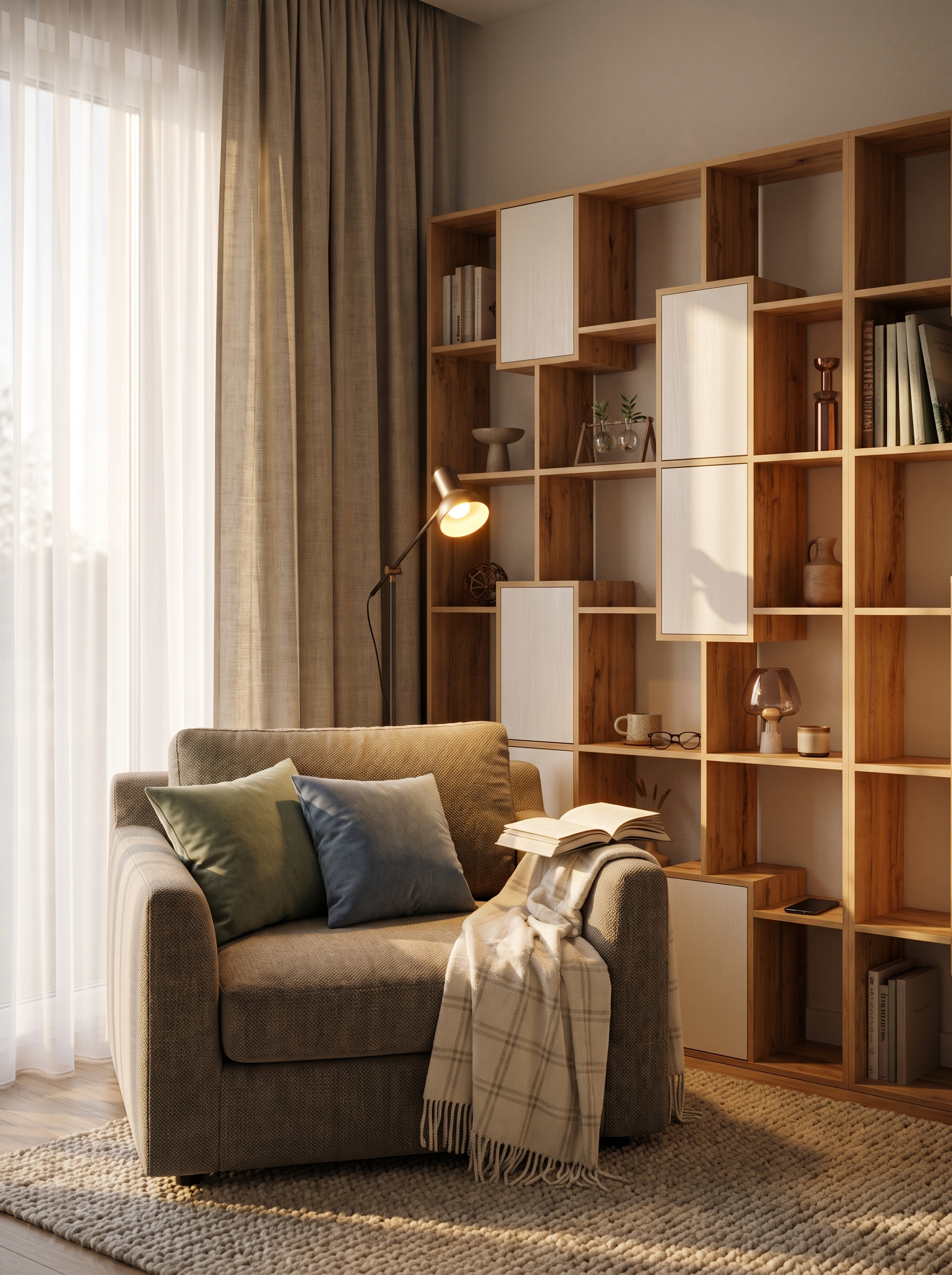
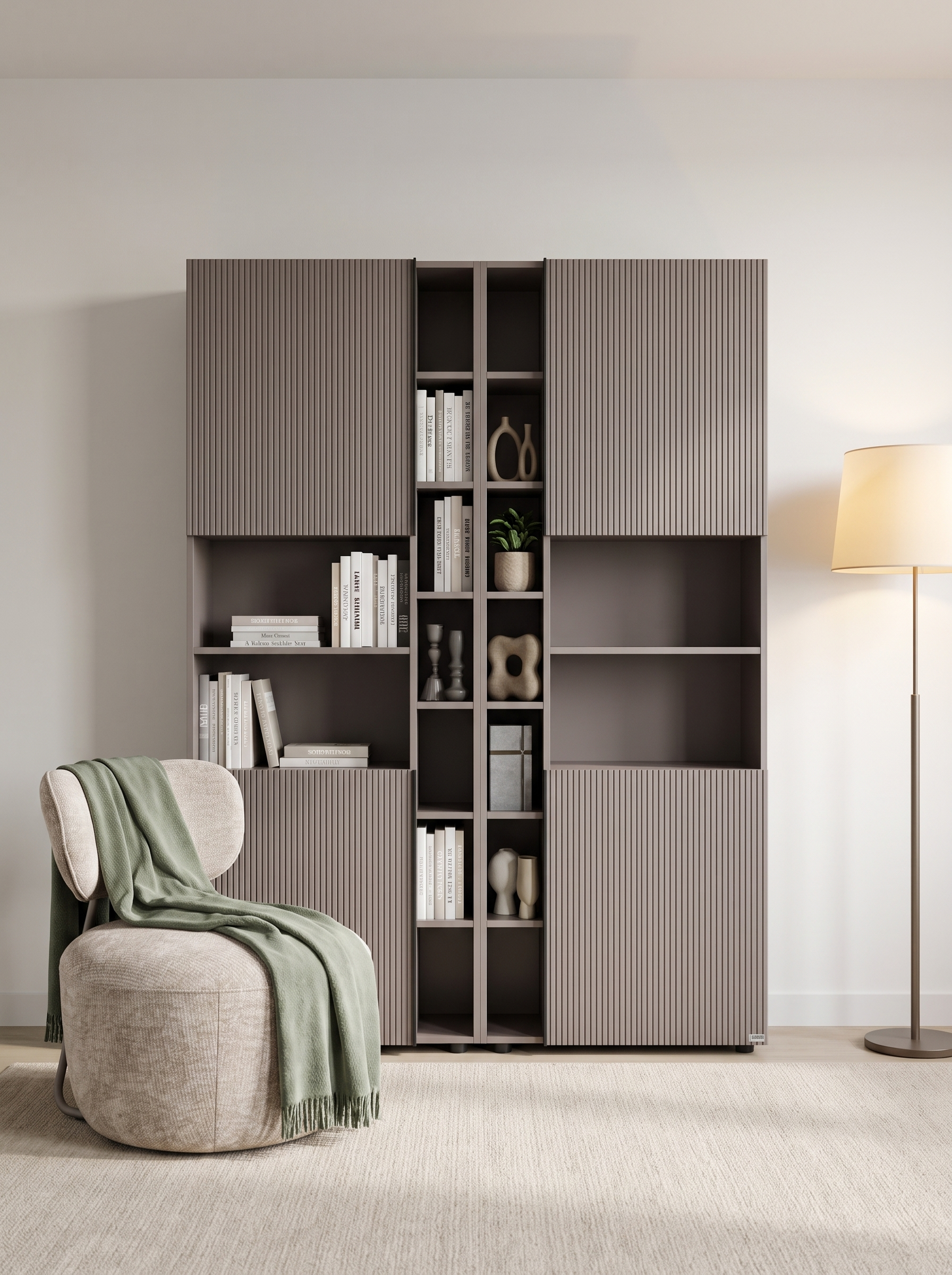
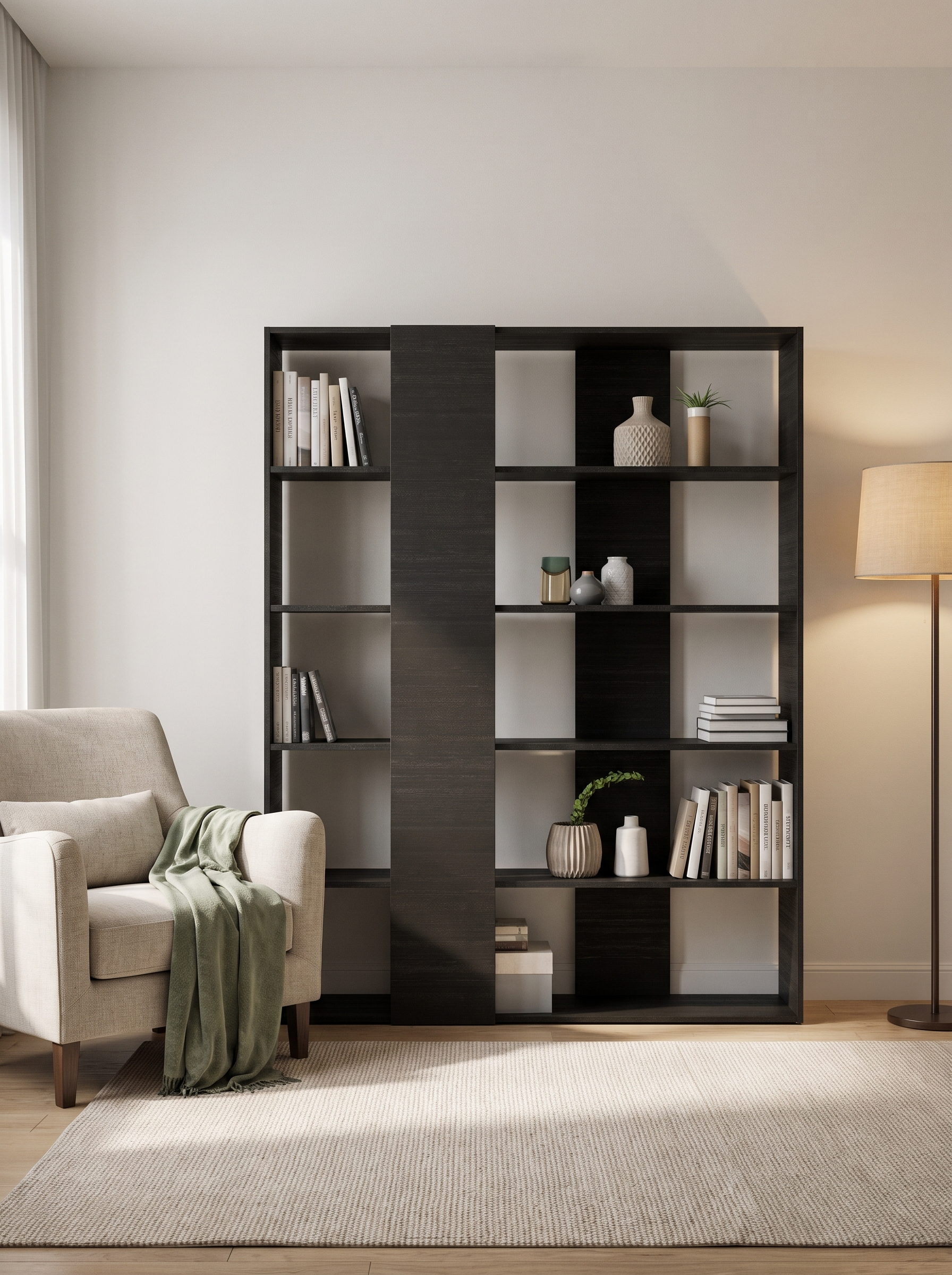
Having your books within reach is half the fun. A bookcase behind or beside the armchair marks out the area and makes it recognisable; if space is tight, a few shelves above the seat or some wall cubes for the books you’re currently reading will do. Stick to neutral shelving: the book covers already bring the colour.
Balanced lighting
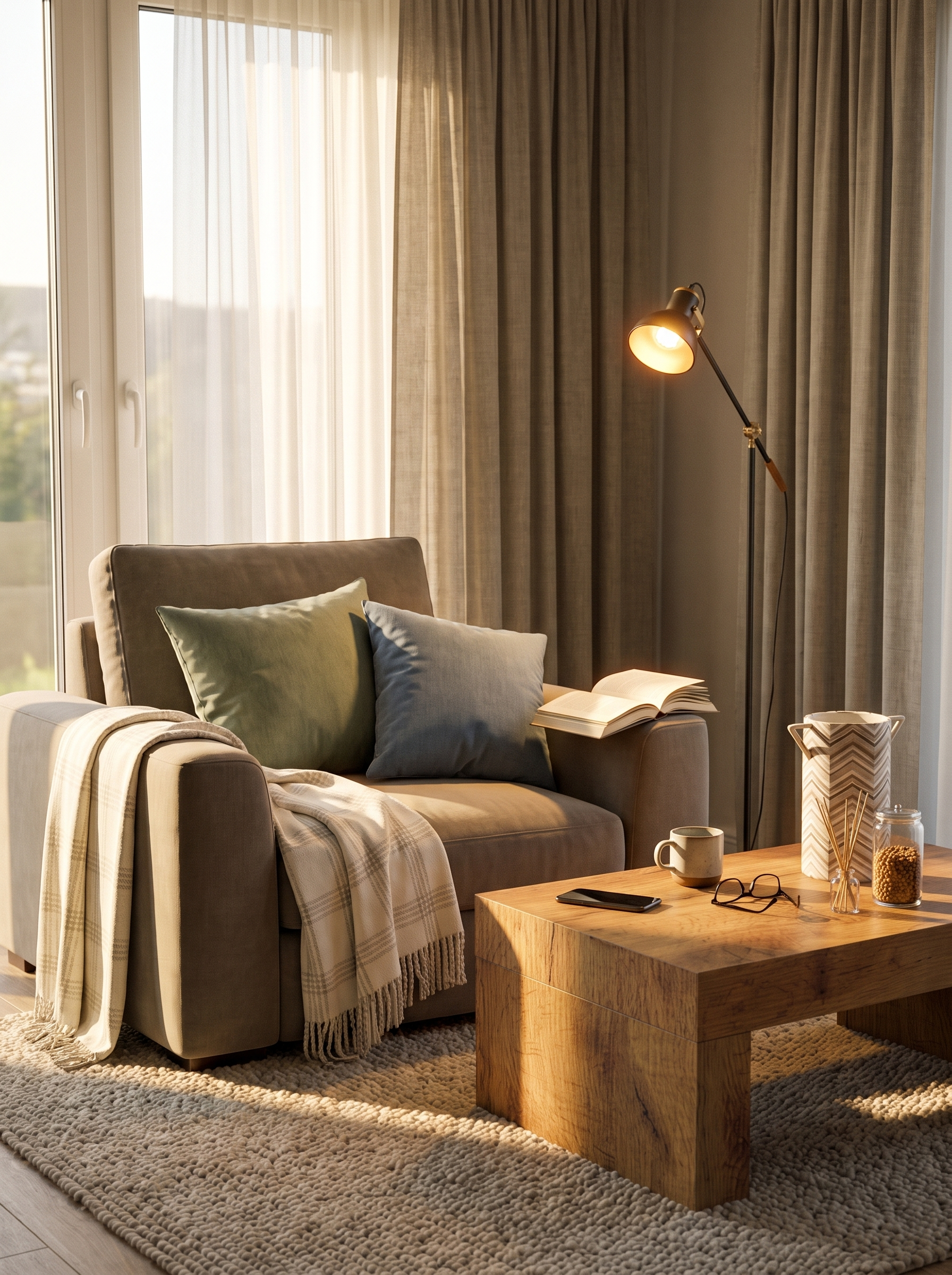
By day, natural light matters: put the armchair near a window, with light coming in from the side so there are no shadows on the page and no glare. In the evening you need two layers: soft ambient light and an adjustable reading lamp aimed at the book, with warm bulbs between 2700 and 3000 K, better suited to the evening hours. If the nook is in a dim corner, here are our tips on how to light up a dark room.
Fabrics and colours: rug, cushions and throw
Fabrics are what make the nook cosy and, not a small thing, quieter: rugs, heavy curtains and cushions soak up echo and help you concentrate. A rug under the armchair is also the easiest way to draw the boundary of the zone. Finish with a soft throw and a couple of cushions, and stick to muted colours: beige, cream, sage green, dusty blue, which are more restful than saturated shades.
The side table and the details
You need somewhere within reach for your cup, glasses and phone, ideally with the phone face down. A small side table, with a spare shelf for books you’ve started, is plenty. Finish with the details that set the mood: a plant, a candle, a print on the wall.
Where to create a reading nook at home
The ideal spot for a reading nook is a quiet area, away from busy walkways and the main sources of noise. You can carve one out in the living room, in the bedroom, or use a niche, the space by a window or an unused corner of the home.
A reading nook in the living room
This is the most natural spot, with one caveat: turn the armchair with its back to the TV or towards the window, to separate it from the sofa area. A bookcase or a rug different from the living room one is enough to signal that this is another space, without building anything.
A reading nook in the bedroom
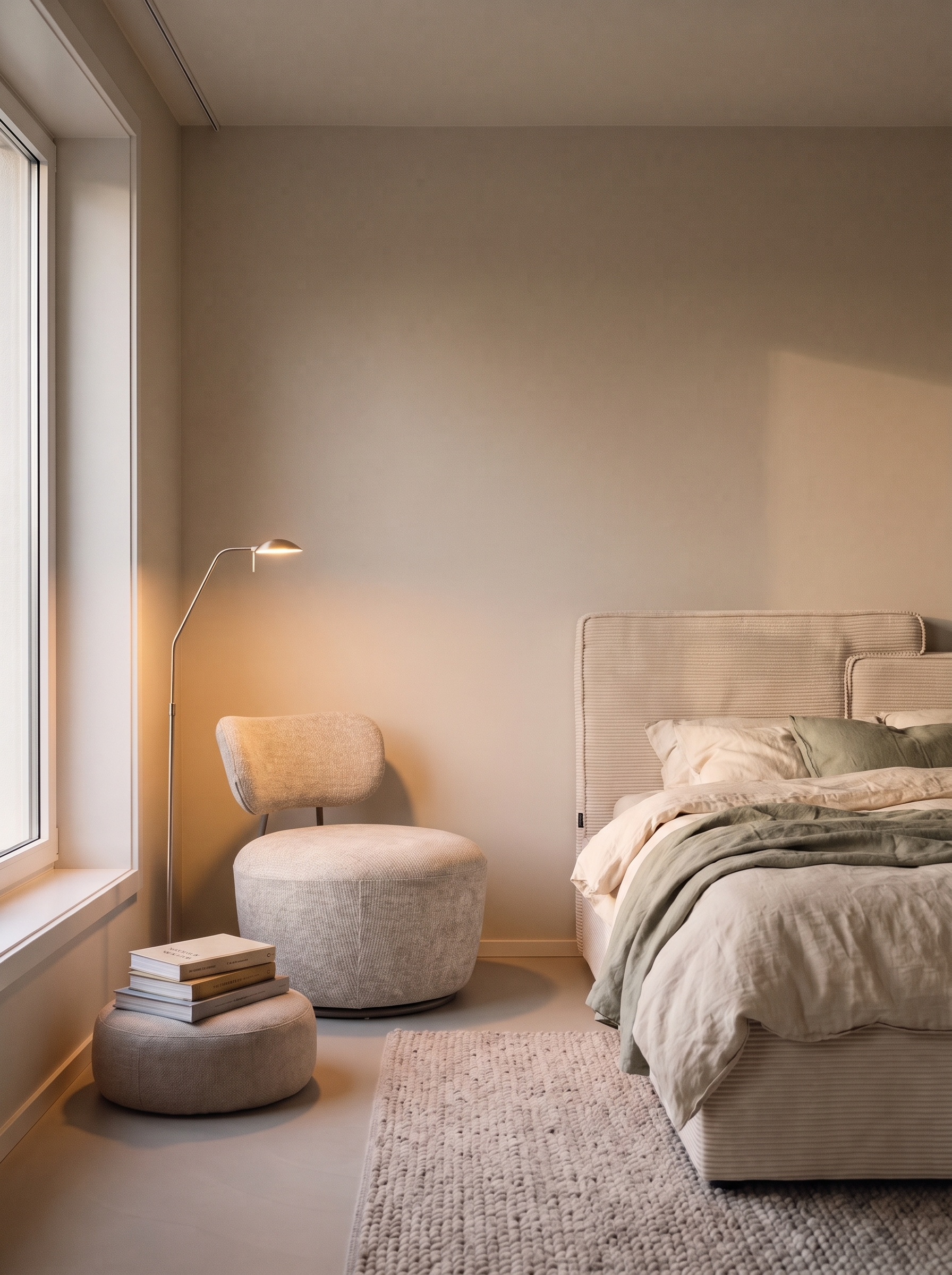
The bedroom is often one of the quietest rooms in the house, so it works brilliantly. Use the free corner by the window or at the foot of the bed, with a small armchair and a floor lamp. There’s a practical upside too: half an hour of reading before bed, away from screens, can help build a more relaxing evening routine.
A reading nook in the kitchen, kids’ room and leftover spaces
In the kitchen a dresser can hold cookbooks and novels next to a small armchair, while in a kids’ room the classic solution is still a bookcase above the desk, with low shelves children can reach: more ideas in our study room guide. Then there are the leftover spaces: the deep windowsill, the space under the stairs, the end of the hallway and even the entryway, where a seat and a made to measure bookcase bring a zone people only walk through to life.
Design ideas for a reading nook
If you want the nook to become a focal point too, work on a single strong element. Three routes work best: an iconic armchair with soft shapes, in bouclé or velvet; an accent wall behind the seat, painted a deep shade or covered in wallpaper, which acts as a frame; or a gallery of pictures and prints, as we explain in our guide to decorating a bare wall. Keep everything else simple, otherwise it feels like a shop window, not a retreat.
Mistakes to avoid
Even a well furnished reading nook can end up uncomfortable if some elements are badly chosen or placed. Here are the most common mistakes to avoid:
- choosing the seat with your eyes only: try it out, and ask yourself if you’d sit there for an hour
- relying on the central ceiling light alone, which leaves the book in shadow
- putting the armchair in the middle of a walkway or in front of a TV that’s on
- filling the nook with objects until there’s no room left for your cup
- piling up books you’ve already read on the shelf: keep the ones still to read, so the nook keeps inviting you to sit down.


