


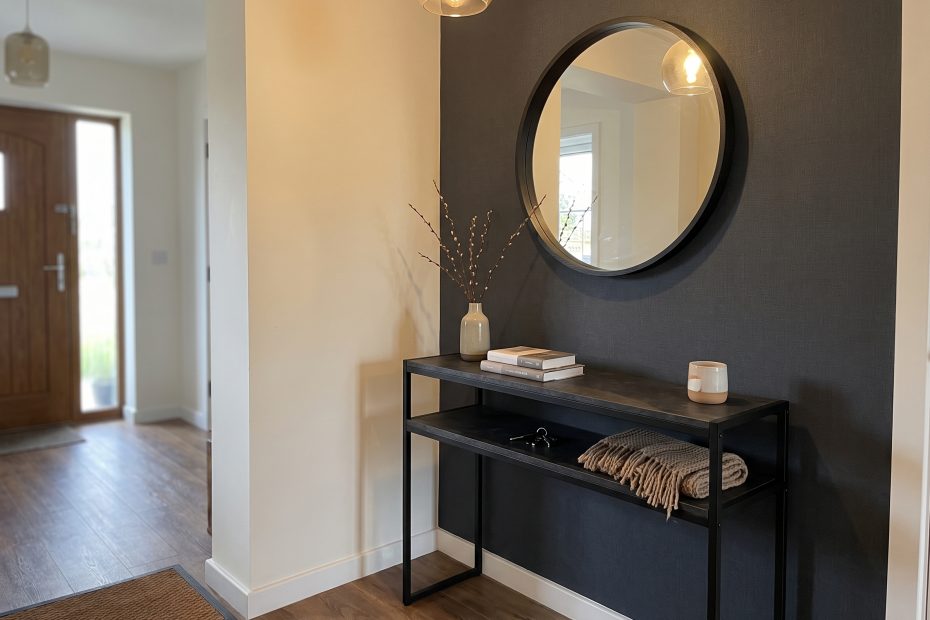
Open the door and you’re already in the living room, or nearly. The small entryway is the modern-home classic: a couple of square metres that have to welcome keys, jackets, bags, shoes and, on the worst days, a dripping umbrella too. Working out how to furnish a small entryway means choosing few pieces, but the right ones: space-saving, multifunctional and sized down to the centimetre.
The good news is that a tight space isn’t a life sentence: with mirrors in the right spot, wall-mounted furniture and the right colours, even two square metres can welcome you in style. Here’s how.
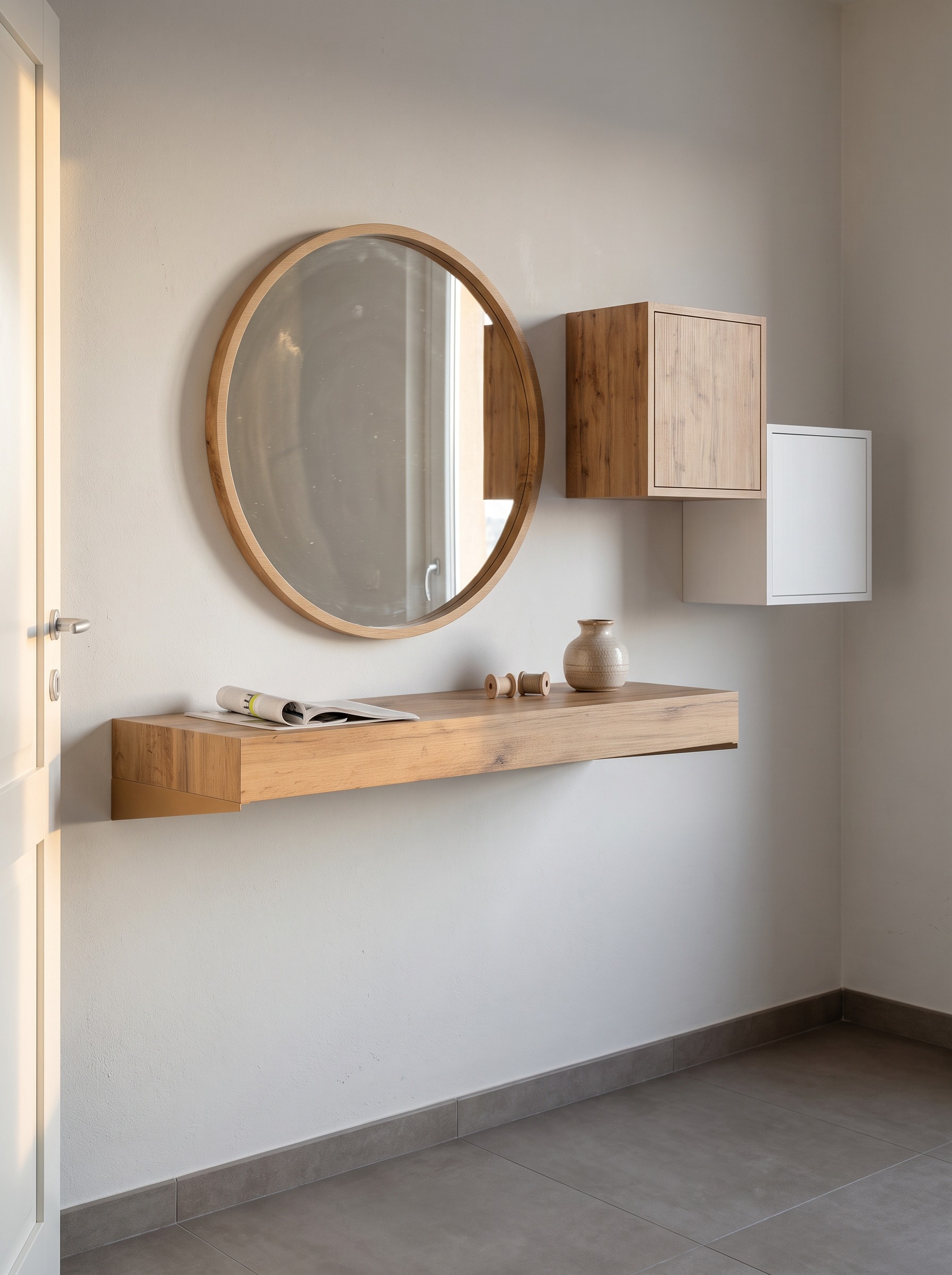
Where to start when furnishing a small entryway
Before you buy anything, tape measure in hand. In a small entryway every centimetre counts, so:
- measure the available walls, with doors and drawers open
- leave at least 70-80 cm free for passage: getting into your home shouldn’t require a parking manoeuvre
- pick furniture with reduced depth, around 35-40 cm, ideally wall-mounted.
Then ask yourself what your entryway really needs to do: hang, hold or store? If a function isn’t useful, drop it with no guilt. A small entryway works when it only holds what you use every day: everything else has a home, and it’s called a wardrobe.
The right furniture for a small, functional entryway
The console: the surface that doesn’t steal space
If there’s a piece of furniture born for tight spaces, it’s the console: narrow, elegant and with a surface where keys, post and sunglasses can land.
Entryway consoles around 40 cm deep slip into spots where a regular piece wouldn’t even fit sideways.
Wall-mounted consoles go one step further: fixed to the wall, they leave the floor clear and give the room a pleasant sense of lightness. And if you also want somewhere to hide the daily chaos, the Rachele entryway console with drawer combines a surface with a catch-all drawer: keys inside, mess gone, dignity intact.
And if you live in a studio flat, play your ace: a First extendable console takes up 45 cm of depth closed, and opens into a table up to 3 metres long. The entryway that turns into a dining room.
Wall-mounted coat racks: the wall works, the floor rests
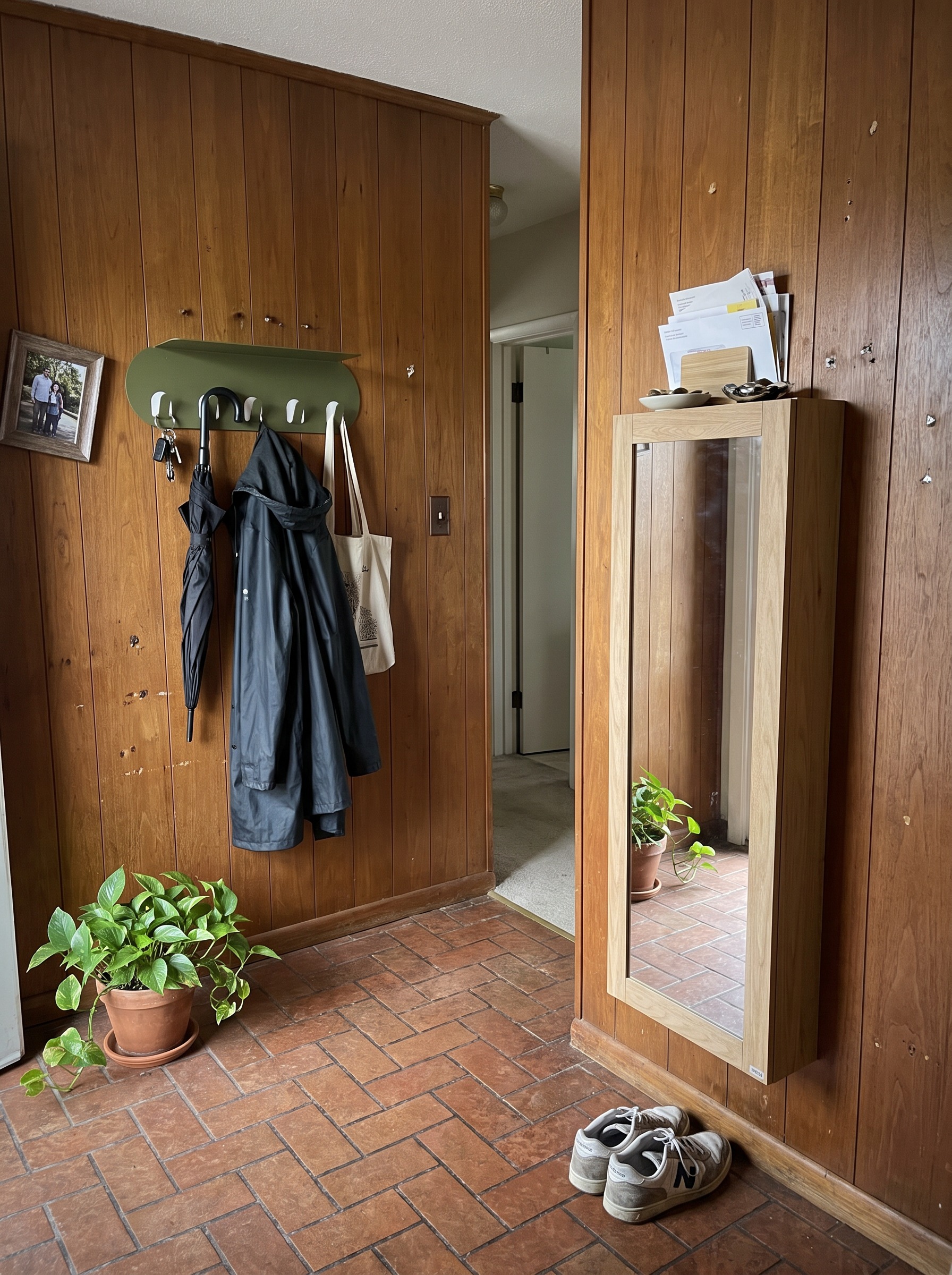
In a small entryway the golden rule is use the vertical. Wall-mounted coat racks take up a few centimetres of depth and keep jackets and bags tidy without blocking the passage.
Extra tip: hang only the items you wear every day. Two or three hooks are enough; the entryway isn’t a satellite wardrobe. And if wall space is scarce, remember that the space behind the door also exists, and it’s almost always empty.
The space-saving shoe rack: end of the daily trip hazard
Shoes scattered by the door are the quickest way to make even two clean square metres look messy. Slim shoe racks with reduced depth tuck behind the door or along the wall and hold more pairs than you’d think.
Wall-mounted models free up the floor; ones with a mirror pull double duty: they store and visually expand the space. Two functions in one piece: in a small entryway that’s the bare minimum.
Benches, shelves and multifunctional pieces
In a tight space every piece should do at least two things, like in a job interview. A storage bench gives you a seat to tie your shoes and a compartment to stash them. A shelf with a few hooks below becomes catch-all and coat rack in one, while a wall-mounted cabinet closes the deal for scarves, gloves and anything you’d rather not see.
The keyword is one: closed storage. What isn’t visible doesn’t create clutter, and in two square metres clutter shows up instantly.
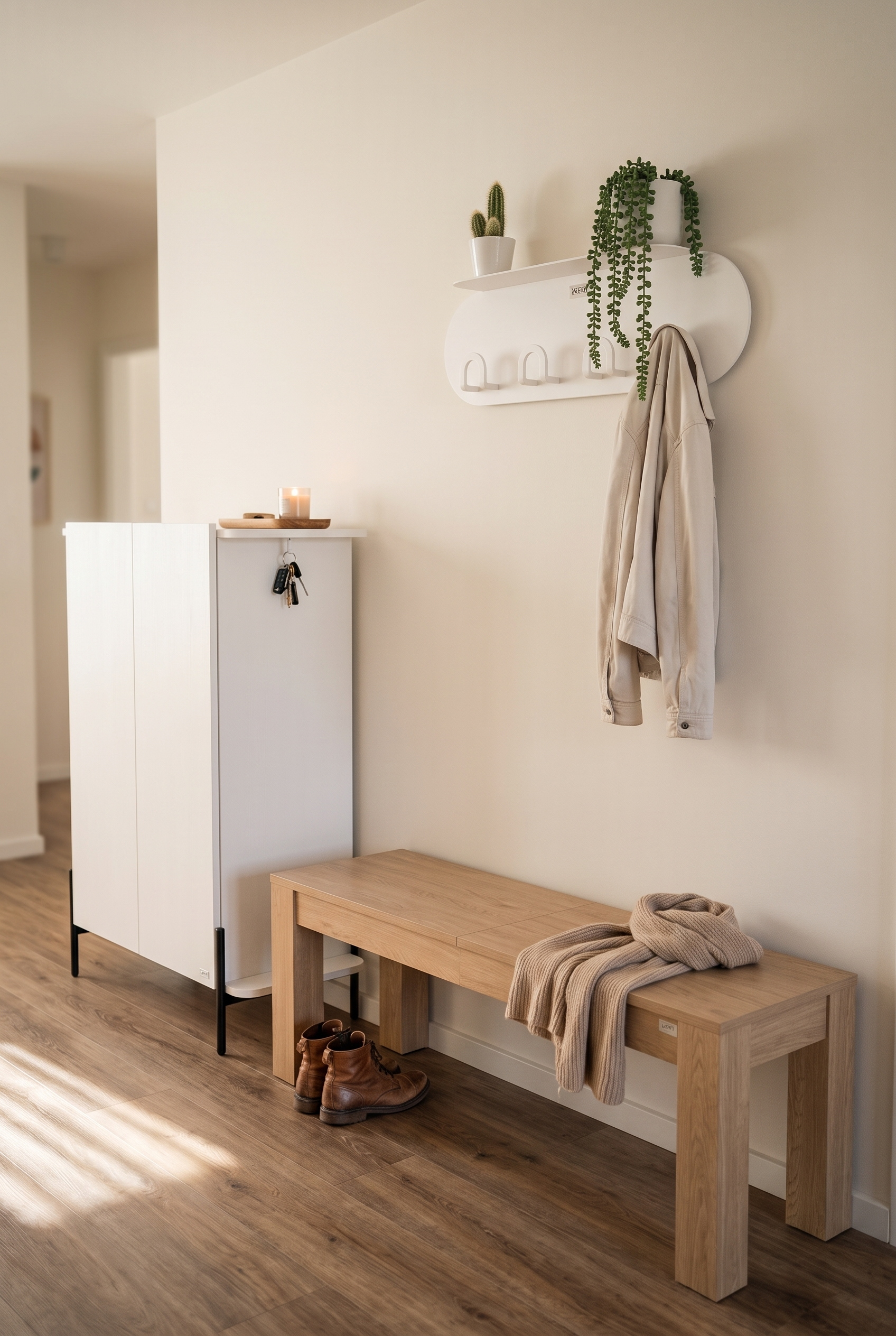
Mirrors: the most effective trick to expand the space
If the entryway is small, the mirror is your best ally: it reflects light, visually doubles the space and gives you a last check before heading out. It’s not magic, it’s optics, but the effect is remarkable.
A full-length vertical mirror next to the door creates instant depth; a mirror above the console completes the classic entryway pairing that never disappoints. Best placement? Near or facing a light source, natural or artificial, so the reflection multiplies it across the whole space.
Among our entryway mirrors you’ll find round, square and rectangular shapes to match the finish of your other pieces. And if you want to go deeper, here’s our guide to decorating with mirrors.
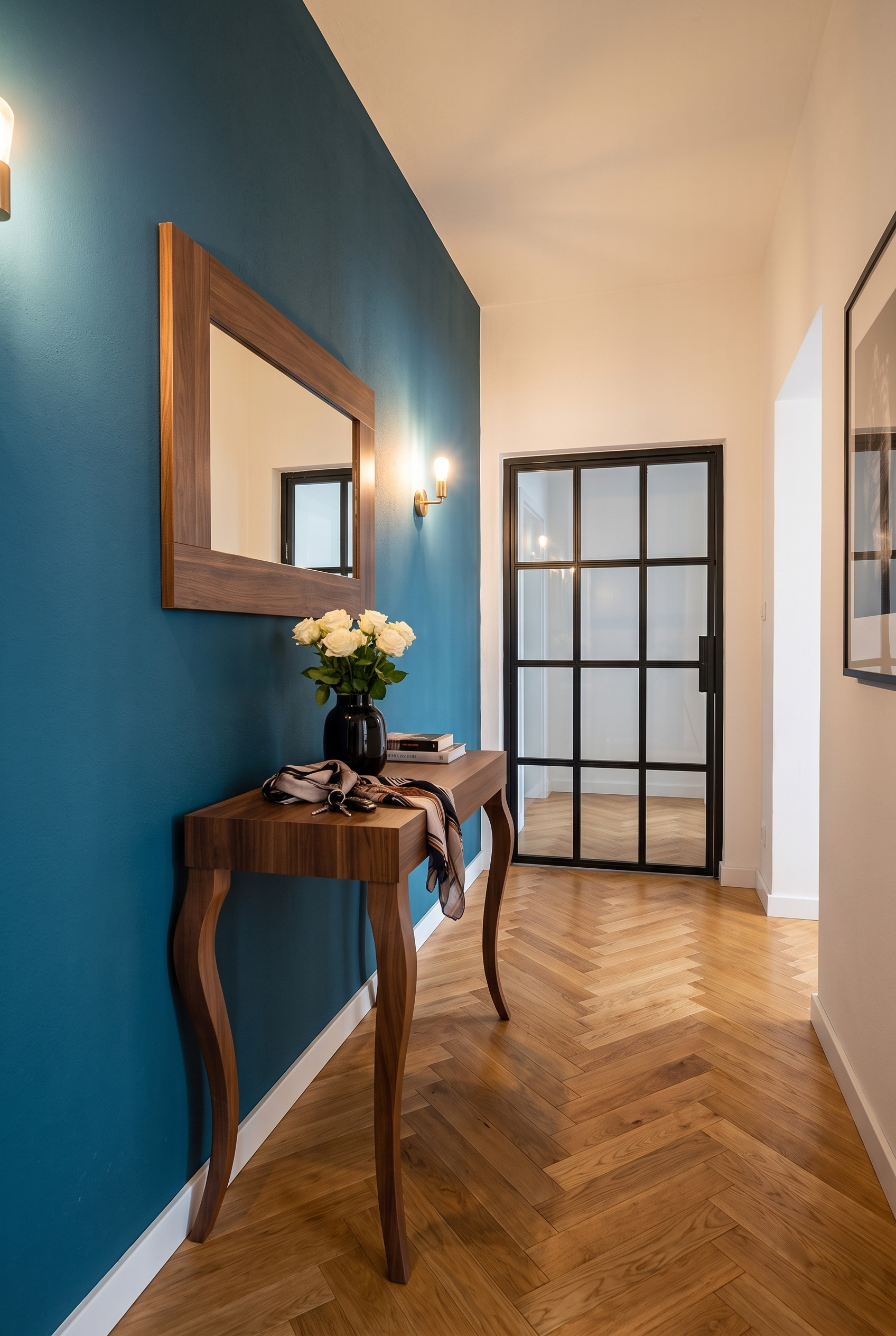
Colours and materials to make the entryway look bigger
Colours are the cheapest way to gain (visual) metres. In a small entryway what works is:
- light, neutral tones on walls and furniture: white, sand, taupe, light grey
- a palette of 2-3 colours maximum, repeated across walls, furniture and textiles
- the same flooring as the rest of the home, to avoid breaking visual continuity.
Dark tones aren’t banned, but they need to be dosed: a single accent wall can add character, a full dark treatment in two square metres turns the entrance into the set of a gothic film. As for materials, light wood-effect finishes and smooth surfaces reflect light and lighten the whole look.
How to furnish a small, dark entryway
Small and windowless too: the full package. No panic, it’s solved by working on artificial light:
- pick warm light (2700-3000 K) and multiple light points instead of a single central ceiling light, which lights everything and highlights nothing
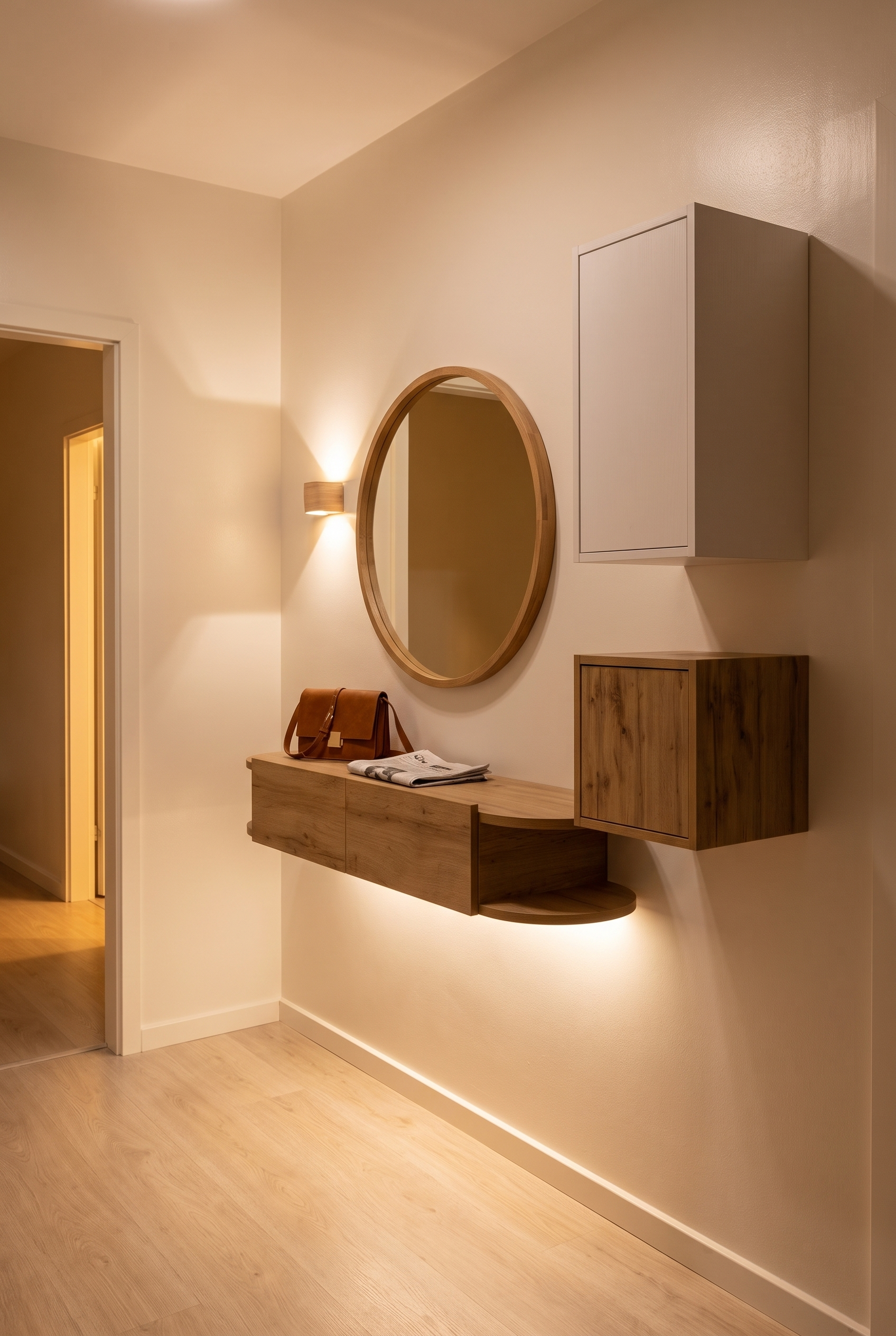
- wall sconces and spotlights create depth, while LED strips under shelves and wall-mounted furniture add a scenographic effect that looks expensive and isn’t
- position the mirror so it catches the light from nearby rooms: it’ll bounce it into the entryway at zero cost.
Finish with light, glossy finishes on furniture and walls. And if the problem covers more rooms, here you’ll find our tips on how to lighten a dark room.
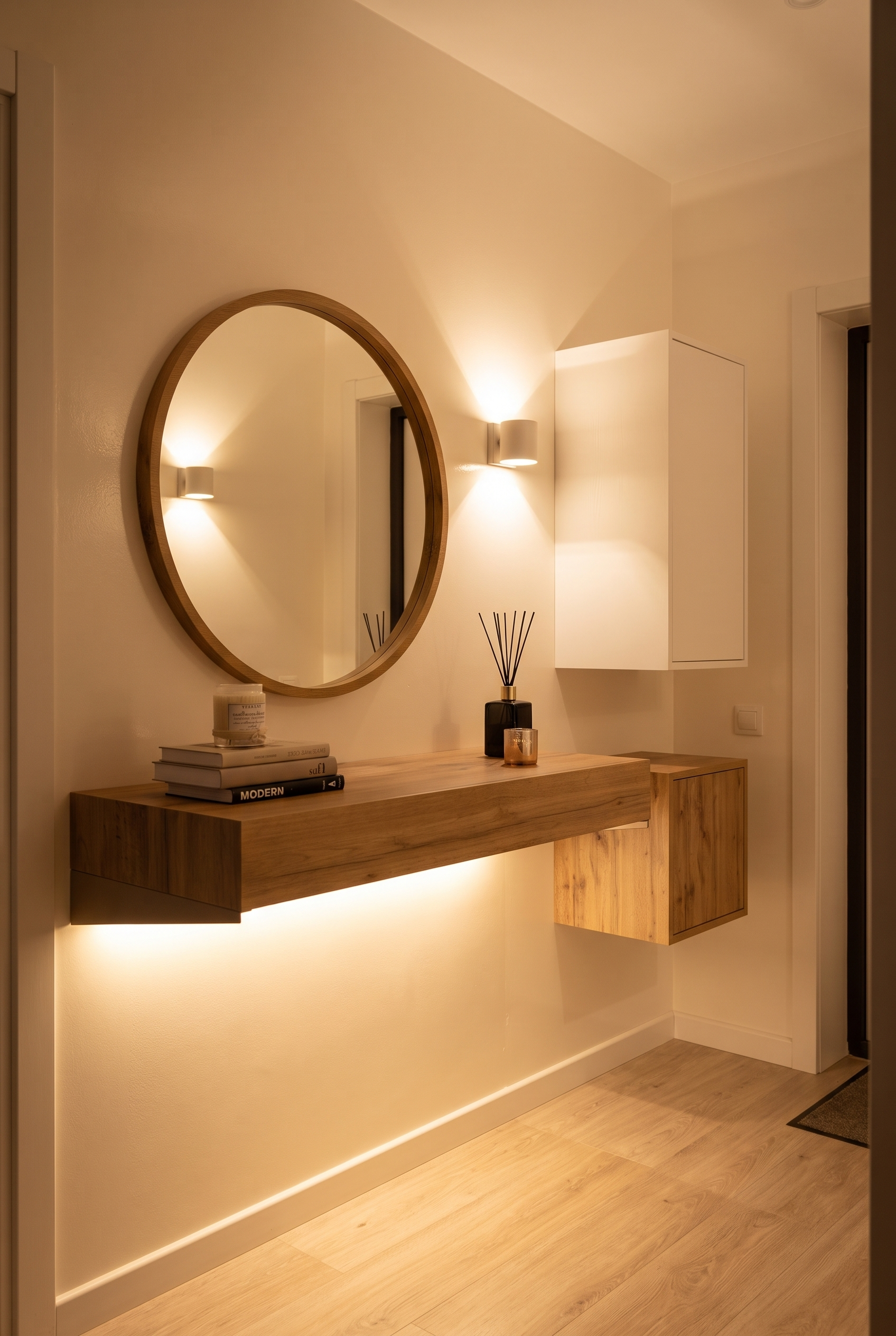
Furnishing a small, narrow entryway (or one that doesn’t exist)
Narrow, long entryway: furnish one wall only
When the entryway coincides with a corridor, the strategy is to concentrate everything on one side only and leave the other clear. Wall-mounted, shallow pieces, a mirror at the far end to “punch through” the perspective, and a full-length entryway rug that guides the eye and stretches the space visually.
For the rest, our advice on decorating a narrow hallway applies: few elements, all flush against the wall, no corner lying in wait at little-toe height.
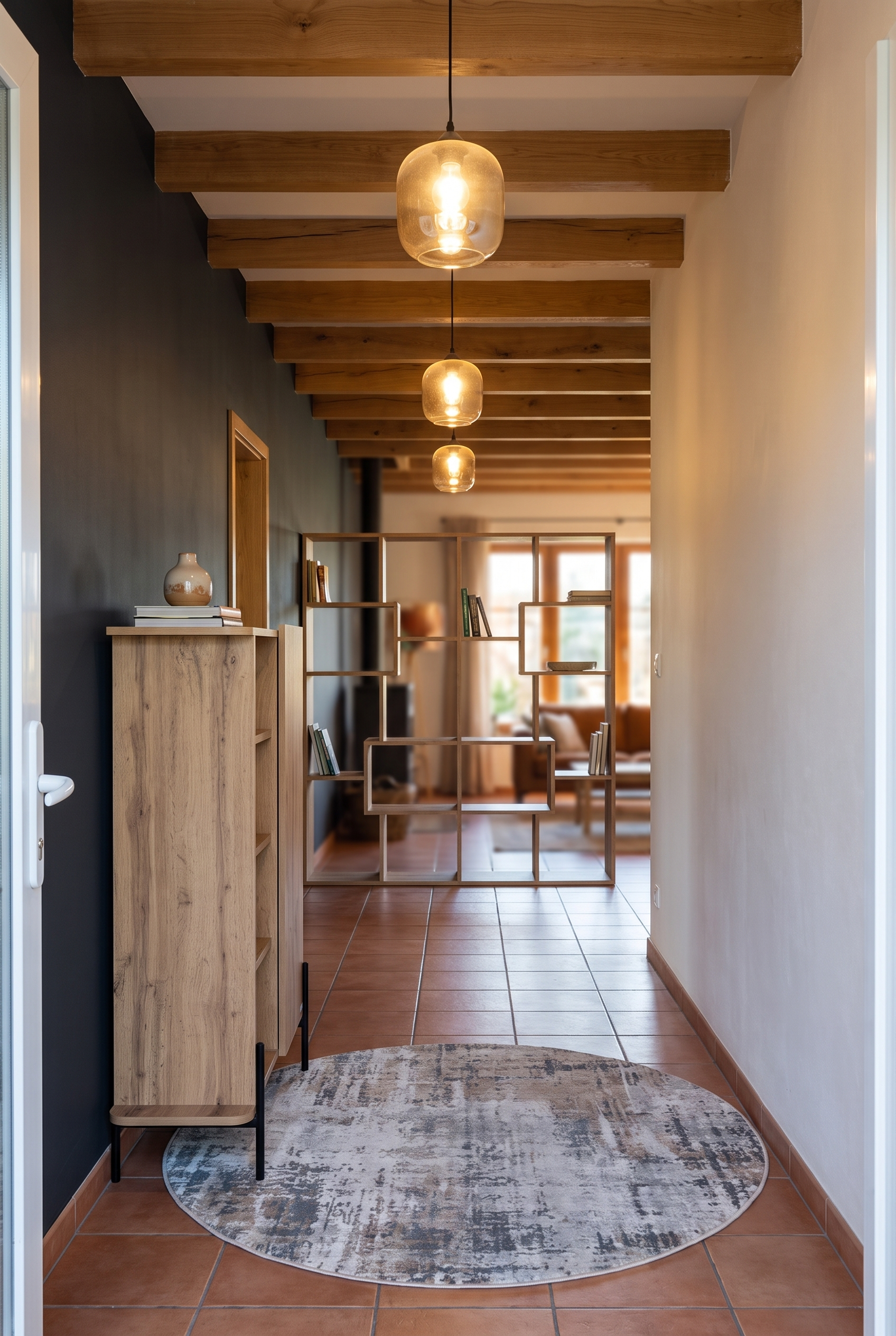
A home without an entryway: when the door opens onto the living room
More and more homes don’t have a proper entryway: you walk in and you’re already in the living room. In this case the entryway should be suggested, not built:
- a low or open double-sided bookcase marks the zone without blocking light: take a look at our bookcases
- a rug by the door draws the perimeter of the entry area
- a wall-mounted console with mirror next to the door creates the drop point without declaring war on the living room.
The secret is keeping a common thread of colours and finishes with the living zone: you’ll find all the details in the guide on decorating an open-plan space.
Small entryway: modern, classic, elegant or original?
Furnishing a small modern entryway
Clean lines, wall-mounted furniture, matte white finishes, concrete or light woods, black metal details. Modern loves subtraction, and in a small entryway subtraction is already a requirement: two birds, one console.
Furnishing a small classic entryway
Classic, in mini format, leans on warm woods like walnut, on symmetry (a mirror centred over the console, two matching light points) and a few frames on the walls. The point is to keep proportions in check: a classic entryway shouldn’t look like the anteroom of a 19th-century notary.
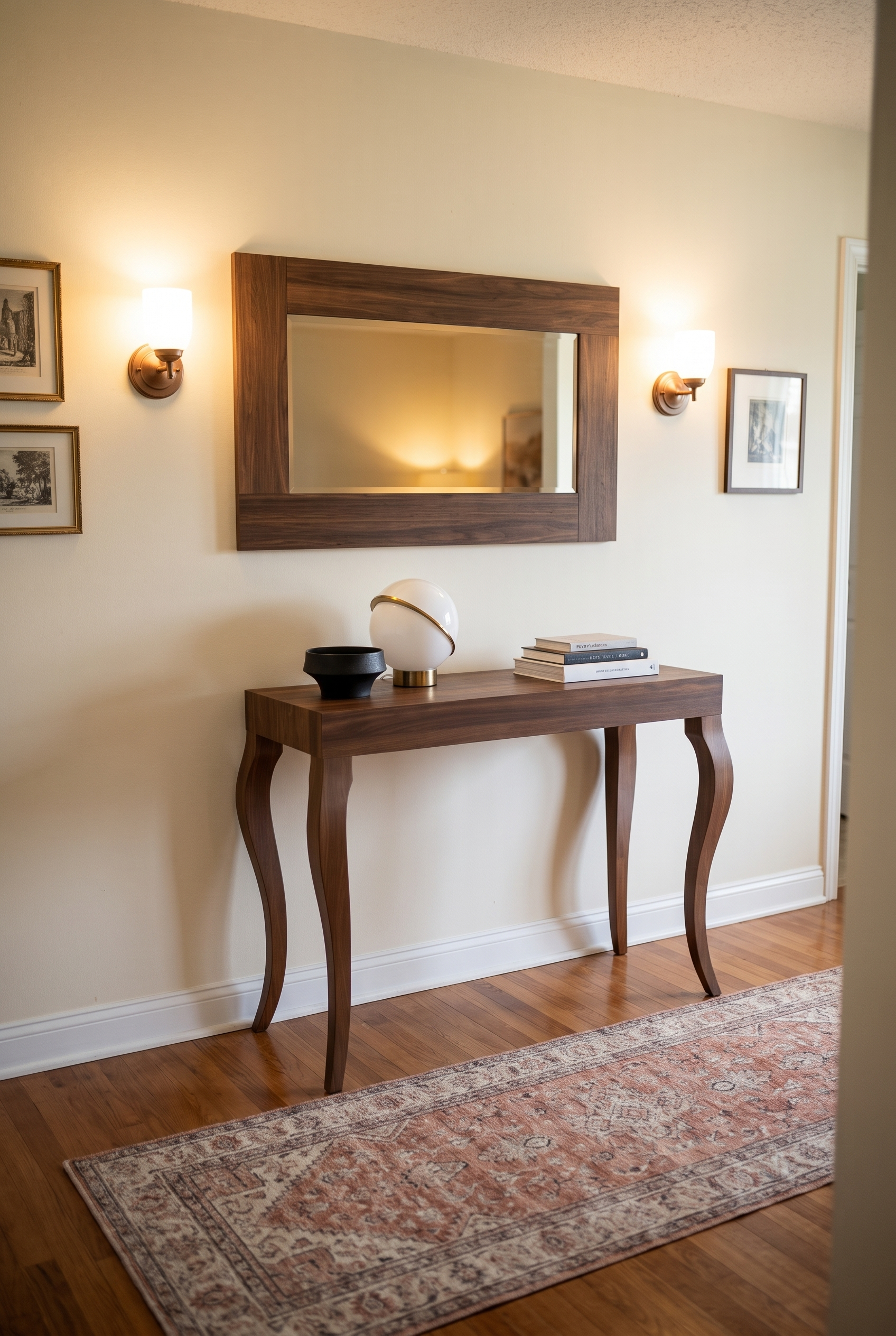
Furnishing an elegant entryway
Elegance in a few square metres is a question of balance, not quantity: a neutral warm palette, coordinated materials, one star piece like a Luxury console, and a lamp with soft light. Everything else stays essential: it’s the well-dosed emptiness that makes the whole look curated.
Furnishing an original entryway
If the entryway is small, being bold costs little, literally: there’s only one wall to transform. A characterful wallpaper, an internal door in an unexpected colour, coloured hooks arranged like an installation, a mini gallery wall of paintings and photos: for the last one, here are our ideas on optimising space with wall decorations. One warning: pick a single strong idea, not all of them together.
Mistakes to avoid in a small entryway
Before we sign off, a quick recap of the most common slips:
- overcrowding: every extra piece steals passage and visual lightness
- picking furniture that’s too deep, perfect in photos and cumbersome in real life
- relying on a single cold central light, waiting-room effect included
- leaving everything on display: shoes, twelve jackets and three weeks of post tell a story, but not the one you’d want.
For the rest, furnishing a small entryway functionally is mostly a question of choices: few multifunctional pieces, a mirror in the right spot, light colours and warm light.
If the restyling bug has caught you, carry on with our ideas for decorating your entryway and, while you’re at it, make a good impression outside the door too with our tips on beautifying your outdoor entrance.


