


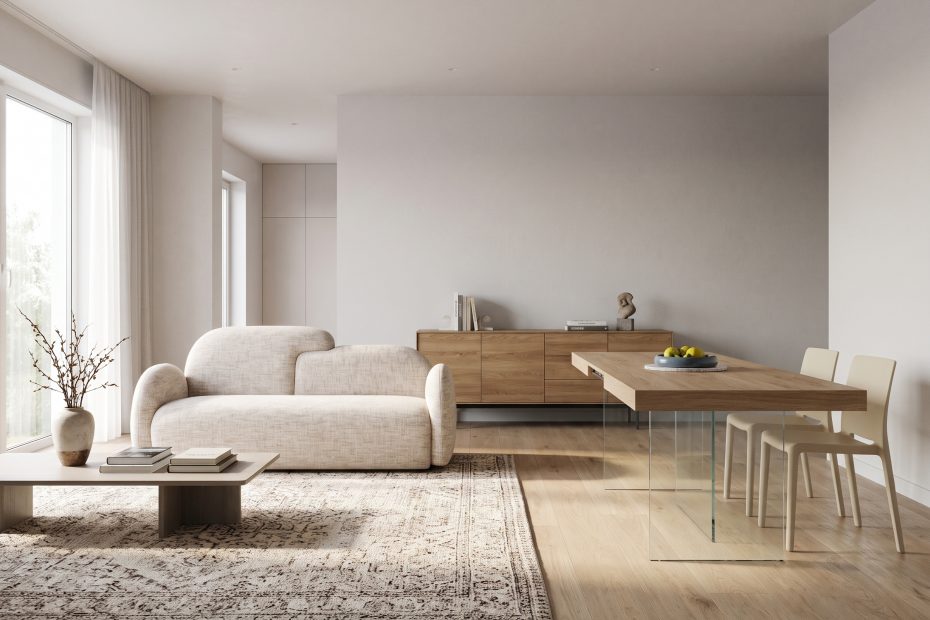
Sunday it hosts your relatives, Monday you work from the sofa with your laptop, Tuesday night you crash on it to binge the latest series. When the living room and dining room share the same space, every square metre pulls a double shift.
The good news? With the right layout and a few smart pieces, the two zones can coexist without stepping on each other’s toes like touchy roommates. In this article you’ll find the best ideas to decorate a living room and dining room together: practical, doable, and thankfully knock-down-the-walls-free.
Ideas to decorate a living room and dining room together in an open-plan space
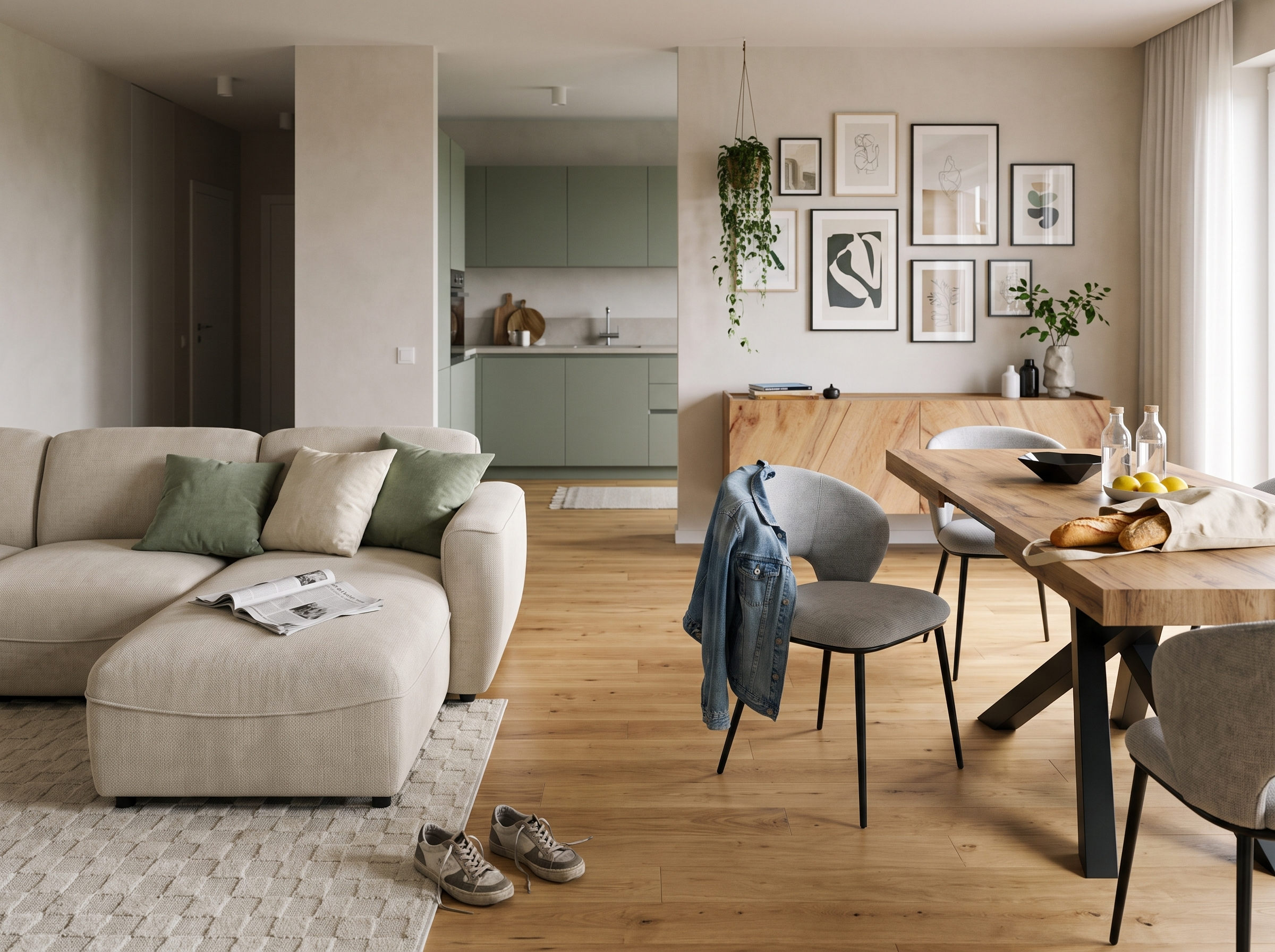
Decorating a living room and dining room together in an open-plan space means thinking in zones, not rooms. Before running out to buy furniture “because it looked nice in photos”, decide where you eat and where you unwind. Each area needs:
- a focal point: the table on one side, the sofa on the other
- a clear walkway between the two, chairs pulled out included: sitting down at the table shouldn’t require the flexibility of a gymnast.
Keep a few visual echoes between the two zones, so the room feels unified without looking like it was decorated by copying a catalogue page. For the full guide, read our tips on decorating an open-plan space.
If the same room also includes the kitchen, the dining area becomes the natural link between the stove and the sofa. Pick at least one colour, one finish, or one material to repeat across zones, so everything hangs together. And if you’d rather give the kitchen a bit more autonomy, check out our take on how to separate the kitchen and living room.
Living room with dining table and sofa: how to arrange them?
Looking for ideas to decorate a living room and dining room together? Start with the layout of sofa and table: you should be able to walk between pieces without pulling off a slalom worthy of the World Cup. Only then pick the arrangement. Here are three that almost always work.
Table behind the sofa
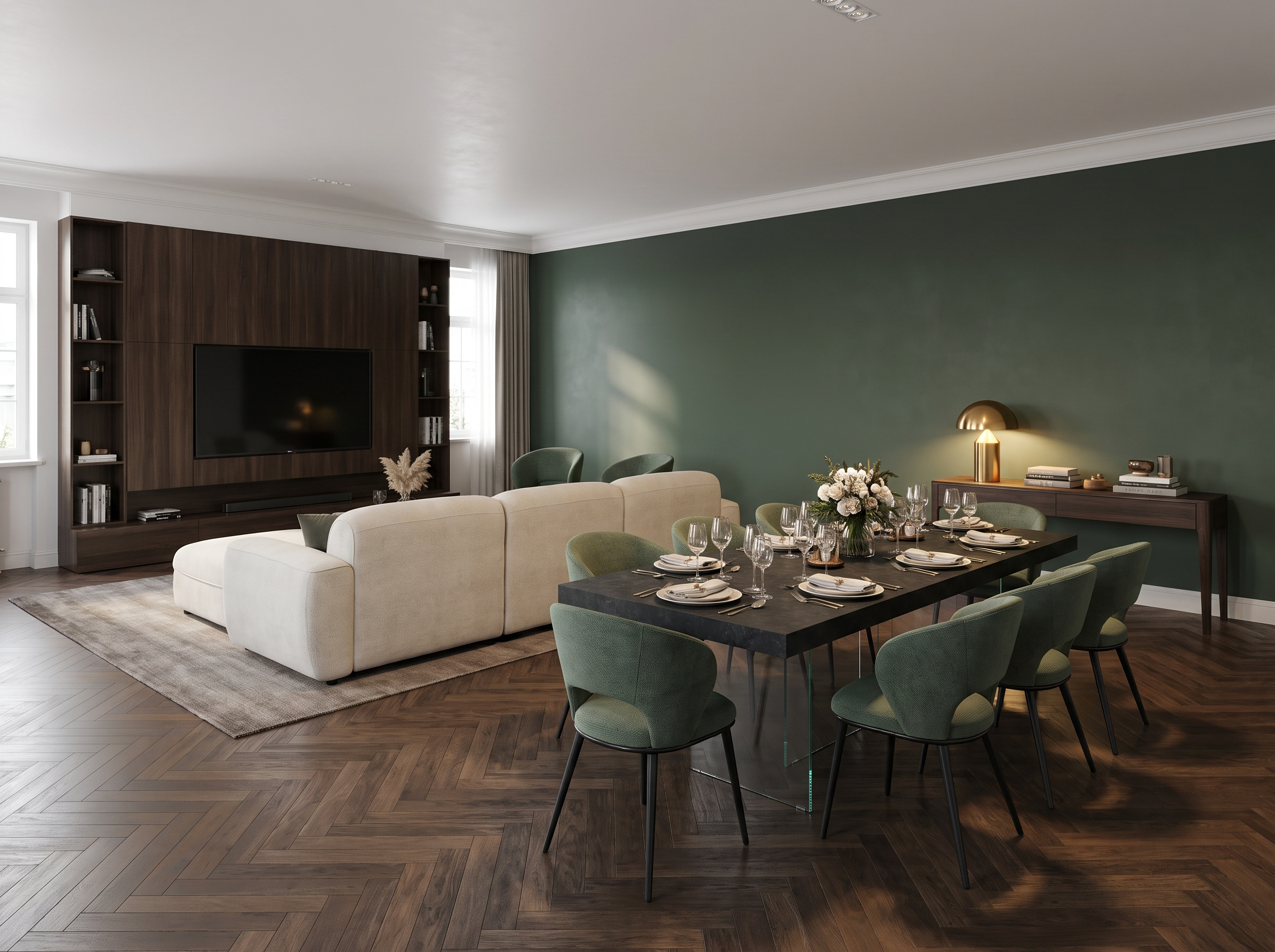
Sofa in the middle of the room, dining table right behind it: this is the most effective layout in rectangular spaces. The sofa back becomes a natural border, a soft customs line — eat on one side, comment on the day (and gossip, let’s be honest) on the other.
A low console behind the sofa closes the deal and gives you extra surface for lamps, books, and daily-use bits.
Sofa and table on opposite sides
If the room is large or square-shaped, put the two functions on opposite walls, each with its own anchor wall:
- on one side, the sofa facing the TV stand
- on the other, the dining table flanked by a sideboard keeping crockery and linens within arm’s reach.
The two zones acknowledge each other across the room like good neighbours, without ever getting in each other’s way.
Table near the kitchen and sofa in the relax zone
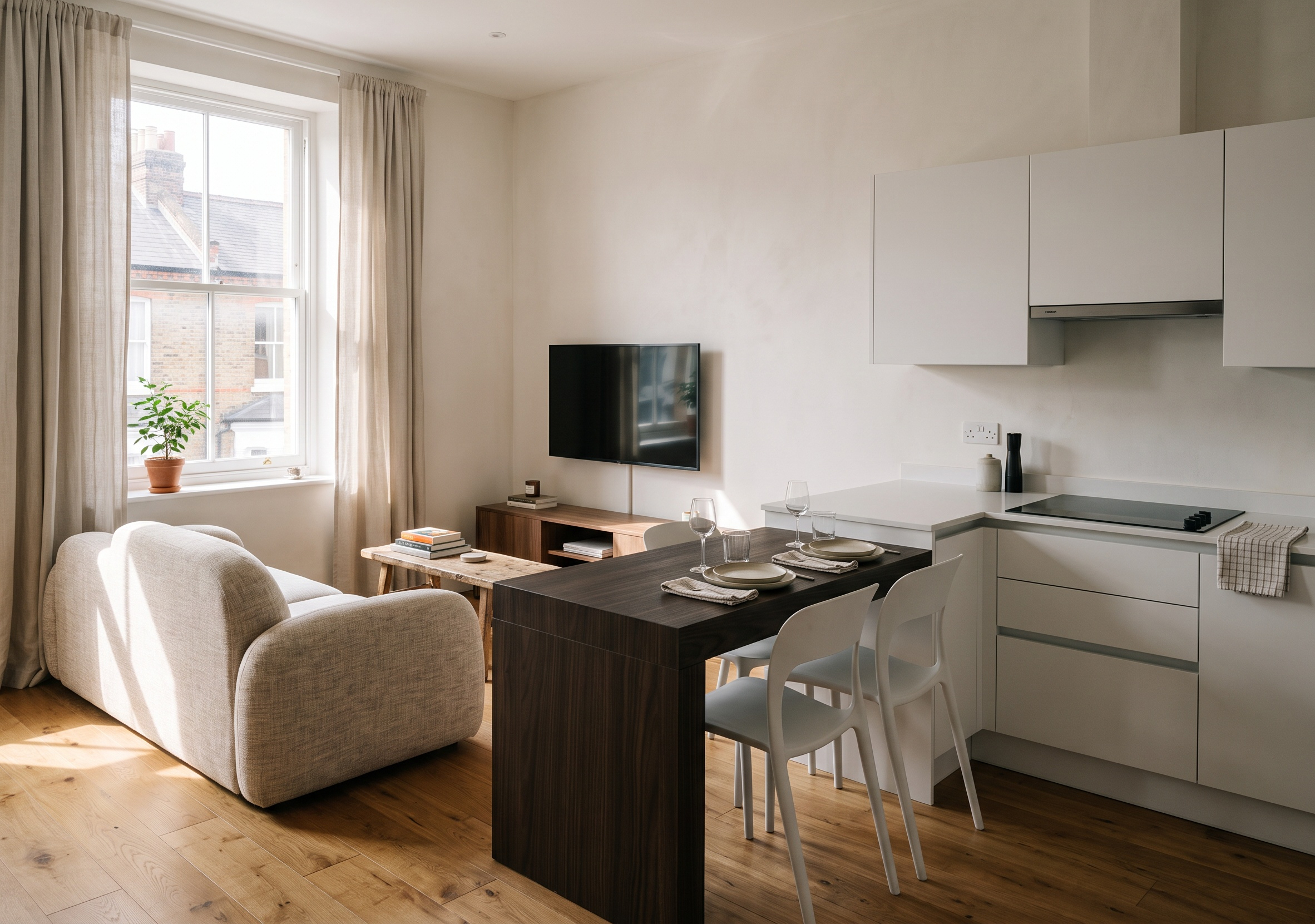
When the room borders the kitchen, logic wins: table near the stove, so plates travel less and glasses actually arrive intact.
The sofa gets the quietest corner instead, ideally near a window to catch daylight during the day.
How to separate a living room and dining room without walls?
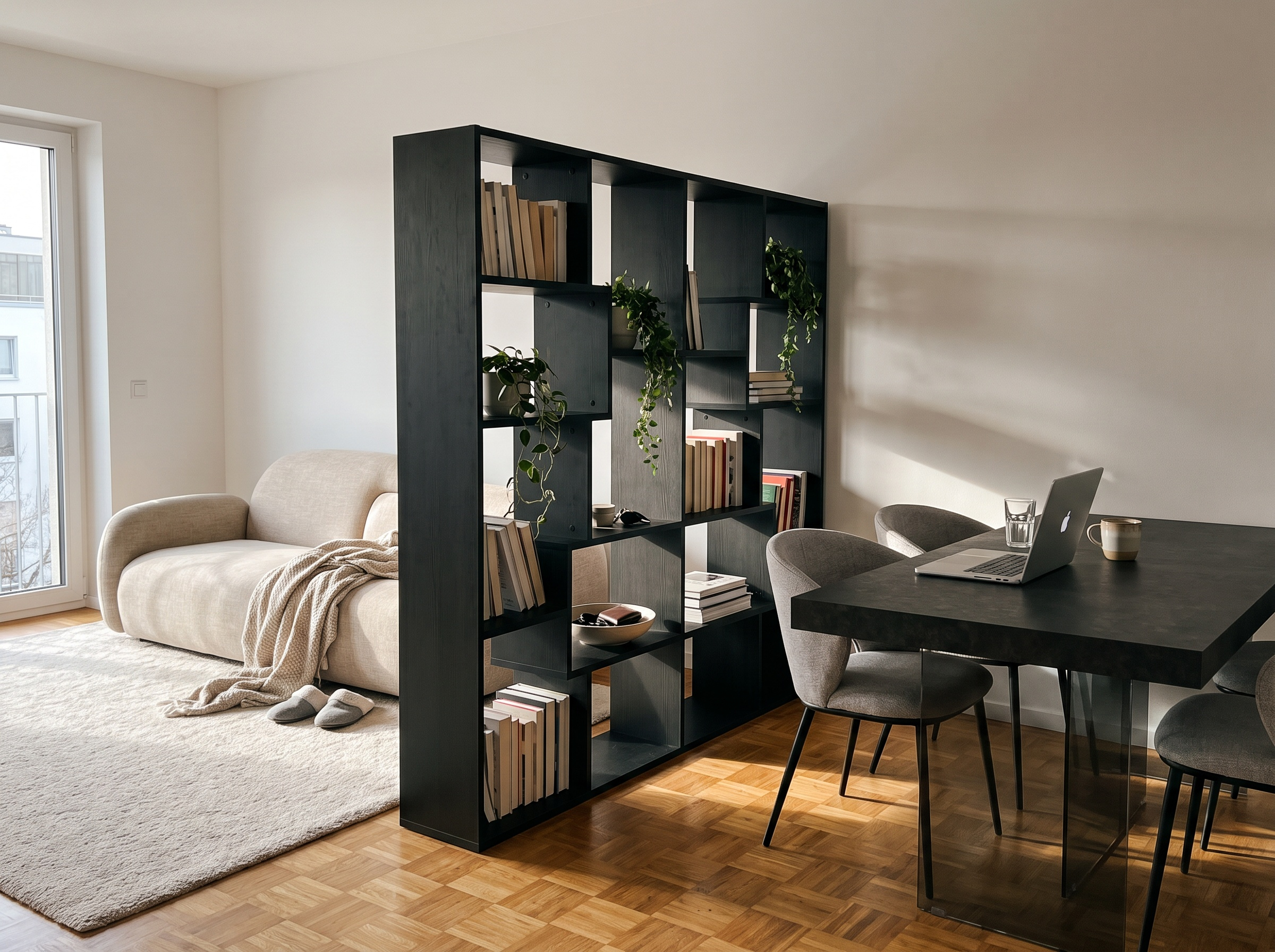
Distinguishing the two zones doesn’t mean building a wall. The trick is “light” dividers — the kind that let light and sightlines through.
A double-sided bookshelf is perfect: it splits the room, gets used from both sides, and quietly holds books and ornaments in the meantime.
A large rug under the sofa area also draws the living room perimeter without eating up floor space. Also effective: a low sideboard as a border, two coordinated wall colours, or different lighting per function.
Long story short, before calling the builder, try a rug. It’s less permanent and doesn’t leave dust everywhere.
Ideas to decorate a living room and dining room together in a small space
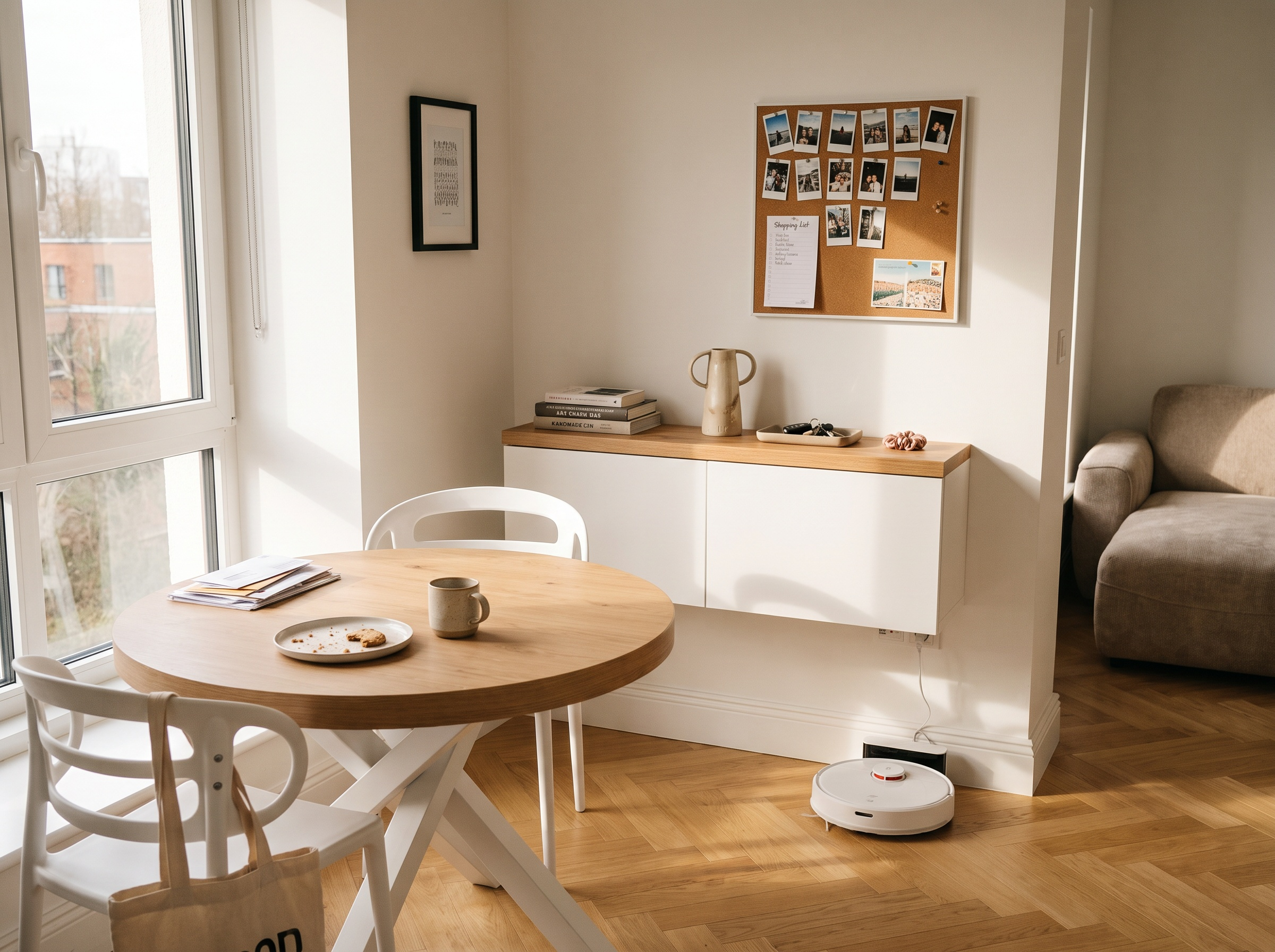
When living and dining share a small room, pick furniture that knows how to step aside.
The Emma round extendable table is ideal: no sharp corners, so visually it takes up less, and it only opens up when reinforcements arrive for dinner.
Even more chameleon-like is the Easy extendable console: closed, it takes the space of a hallway console; open, it stretches to nearly 3 metres. Roll it out for parties and forget about it the rest of the year. Round it out with:
- a bench to slide under the table instead of chairs
- wall-mounted units that free the floor (cleaning will thank you)
- light colours.
More tips in our guide on how to furnish a small living room.
How to match colours and materials between living and dining room
To coordinate colours and materials between living and dining room, start with a common thread: pick a palette of two or three colours and repeat it across both zones. Same finish on the sideboard and TV stand, for instance, ties the room together instantly.
Same goes for materials: wood, metal, and fabric coexist just fine, as long as each shows up at least twice in the room. Just a cameo and it looks like it wandered in by mistake.
Between zones you can change the quantity, never the essence: use more wood in the dining area and more fabric in the lounge, keeping a shared language throughout.
Ideas to decorate a living room and dining room together in modern style
For a modern living-dining combo, focus on:
- clean lines
- smooth surfaces
- few decorative pieces, but chosen with intent.
Ideal picks: concrete-effect finishes, black, and light wood, with metal legs for tables and seats. A wall unit with floating modules tidies up the TV zone and visually lightens the whole room, tangled cables included.
Ideas for living and dining room together in classic style
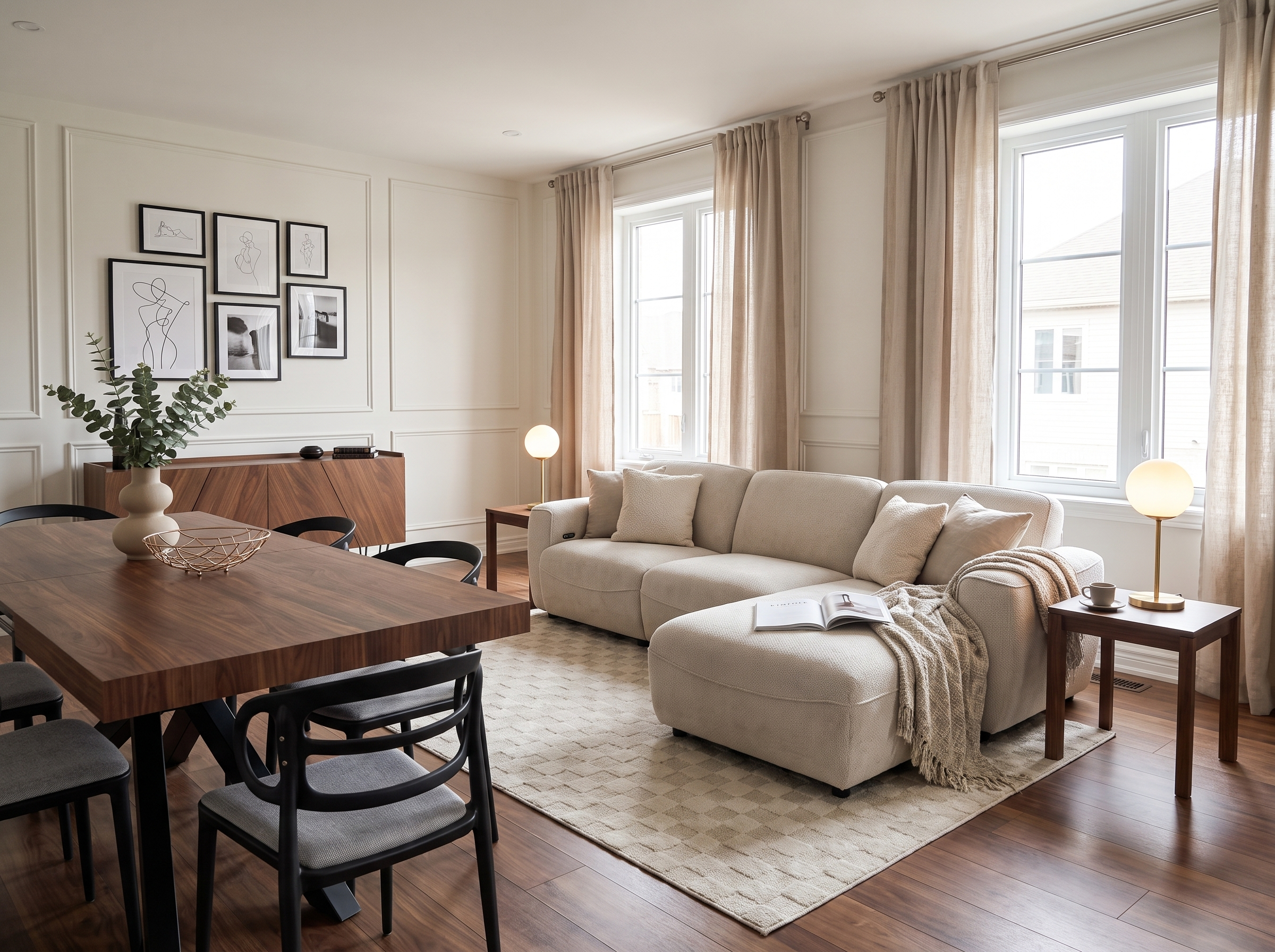
For a classic living-dining combo, you can lean on:
- warm woods like walnut
- a symmetrical layout: central sofa with twin lamps on either side, like two polite sentries
- a substantial table paired with its own sideboard.
Soft fabrics, matching curtains, and a few frames on the walls close the picture: welcoming and put-together, without that “special-occasion parlour” feeling where you’re not even allowed to breathe.
How to light a living room with a dining area
To light a living room with a dining area, pick different lights for different jobs.
A single ceiling light blasting everything turns dinner into an interrogation and movie night into a guaranteed nap. Better: a pendant lamp over the dining table, which draws the dining zone even when off, and softer lights in the relax area — a floor lamp beside the sofa or a couple of wall sconces.
If you can, install a dimmer: the same room slides from Sunday lunch to movie night with one touch, no room swap, no mood swing.
Keep a warm light temperature throughout, so the two zones stay distinct but on the same wavelength.
Ideas to refresh a living and dining room together without changing everything
Refreshing a living-dining combo doesn’t require a construction site or taking out a mortgage. Often three moves are enough:
- swap the chairs, always the first to show wear: here you’ll find our tips on how to match chairs to the dining table.
- replace just the table with an extendable model: you refresh the style and solve the “and now where do I seat everyone?” problem in one go.
- refresh lights and textiles: rug, cushions, and curtains change the room’s face without making your wallet cry.
And no, you don’t necessarily need new purchases: the most effective solutions almost always start from what you already have — add less, but better.


